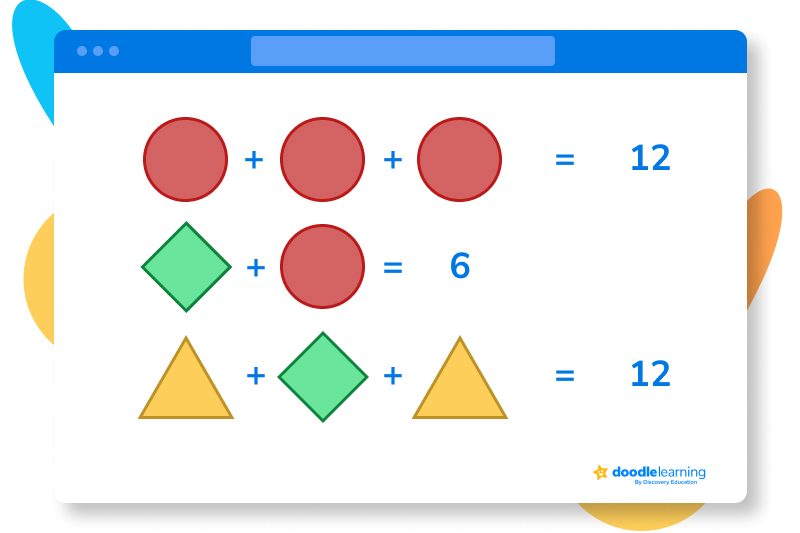
Math brain teasers are puzzles that combine numbers, logic, and creative thinking to challenge the way your brain processes information. They are not your standard classroom equations. These are carefully designed problems that force you to slow down, think differently, and arrive at an answer that often surprises you.
In this guide, you will find a full breakdown of what math brain teasers are, why they are worth solving, different types with real examples and answers, and tips to solve them faster. If you enjoy math riddles, number puzzles, or arithmetic puzzles, this post is built for you.
What Are Math Brain Teasers?
Math brain teasers are number-based challenges that require both mathematical skill and logical reasoning to solve. They go beyond simple calculations and ask you to think about patterns, relationships, and hidden rules within numbers.
Unlike a standard math problem that has a straightforward formula, a math brain teaser often disguises its solution. The numbers may seem random at first. The answer may feel impossible. But once you find the right angle, everything clicks.
They sit at the intersection of math riddles and structured logic, making them a powerful tool for anyone looking to improve their analytical thinking.
Why Math Brain Teasers Are Worth Solving
They Go Beyond Basic Arithmetic
Standard math teaches you how to follow steps. Math brain teasers teach you how to figure out which steps to follow in the first place. That is a completely different and far more useful skill.
Solving them builds pattern recognition, flexible thinking, and the ability to work through problems without a ready-made formula.
They Are Used in Real Assessments
Arithmetic puzzles and number puzzles appear regularly in IQ tests, competitive entrance exams, job interviews at top firms, and standardized academic assessments. Based on available data, many leading technology and consulting companies include math-based logic problems in their hiring process to evaluate candidate thinking ability.
Practicing these puzzles consistently gives you a real edge in those situations.
They Make Math Feel Enjoyable
Many people carry anxiety around math from school. Math riddles reframe numbers as something playful and curious rather than stressful and rigid. When you are solving a puzzle, your brain shifts from performance mode to exploration mode, which is where real learning happens.
Types of Math Brain Teasers With Answers
1. Number Sequence Puzzles
These number puzzles give you a series of numbers and ask what comes next. The challenge is identifying the hidden rule connecting them.
Example: 3, 6, 11, 18, 27, ?
Answer: 38
The differences between each number are 3, 5, 7, 9, 11. The pattern is adding consecutive odd numbers. So 27 plus 11 equals 38.
These puzzles sharpen your ability to spot structure within what looks like random data.
2. Missing Number Puzzles
A grid or equation has a number removed. You must find it using the logic applied to the surrounding values.
Example: If 4 = 20, 5 = 30, 6 = 42, then 7 = ?
Answer: 56
The rule is n multiplied by (n plus 1). So 7 multiplied by 8 equals 56.
These are among the most popular math brain teasers used in aptitude tests and competitions.
3. Arithmetic Riddles
These look like word problems but hide a twist that makes the obvious answer wrong.
Example: A farmer has 17 sheep. All but 9 run away. How many sheep does he have left?
Answer: 9
The phrase “all but 9” means 9 remain. Most people rush to subtract and get 8. Careful reading is the key skill here.
These arithmetic puzzles train you to slow down and read every word before calculating.
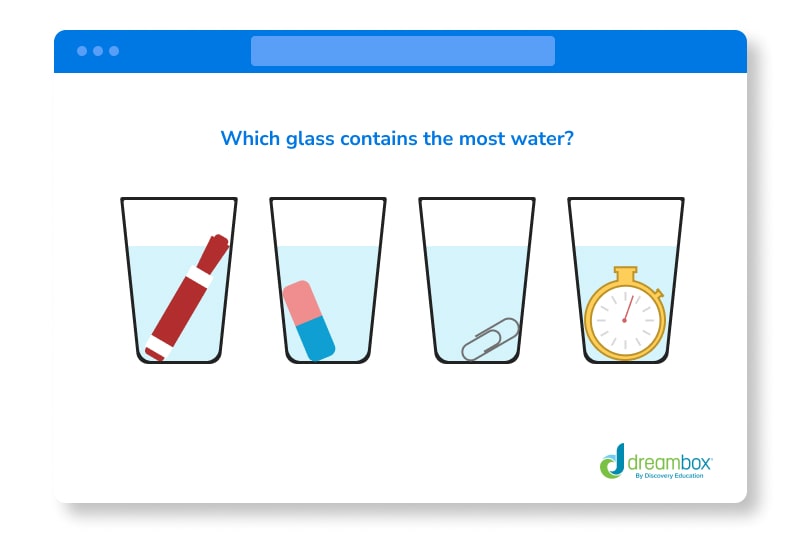
4. Math Riddles With Tricky Wording
Math riddles often use language to mislead you into a wrong calculation path.
Example: If you have a 10-foot rope and you cut it every 2 feet, how many pieces do you get?
Answer: 5
Many people say 4 because they think of 10 divided by 2 as the number of cuts. But 5 cuts produce 5 pieces, and in this case the math works out to 5 pieces directly. Draw it out if you need to verify.
5. Age and Relationship Puzzles
These are classic math brain teasers involving two or more people and their ages at different points in time.
Example: A father is 30 years older than his son. In 5 years, he will be three times as old as his son. How old is the son now?
Answer: 10 years old
Let the son’s current age be x. Father’s current age is x plus 30. In 5 years: (x plus 30 plus 5) equals 3 times (x plus 5). x plus 35 equals 3x plus 15. 20 equals 2x. x equals 10.
Age puzzles combine algebra with storytelling, making them one of the more satisfying number puzzles to crack.
6. Visual and Grid Number Puzzles
These present numbers in a grid and ask you to find the pattern row by row or column by column.
Example:
| 2 | 4 | 8 |
|---|---|---|
| 3 | 9 | 27 |
| 4 | 16 | ? |
Answer: 64
Each row follows the rule: first number, first number squared, first number cubed. So 4, 16, 64.
Grid-based number puzzles are excellent for building spatial and logical reasoning together.
How to Solve Math Brain Teasers More Effectively
Read Before You Calculate
The most common mistake in math riddles is jumping straight into arithmetic without fully understanding the question. One overlooked word can completely change the correct approach. Read the problem twice before doing anything with numbers.
Look for the Pattern First
Before applying any formula, ask yourself: what is changing here? Is the difference between numbers constant? Is it multiplying? Is it alternating? Identifying the rule is the entire job.
Write It Out
Do not solve arithmetic puzzles entirely in your head. Write down what you know, what you need to find, and what relationships exist between them. A few seconds of setup saves minutes of confusion.
Work Backwards When Stuck
Many math brain teasers become easy when you start from the answer and reverse-engineer the logic. If you know the result and the rule, working backwards often reveals the missing piece quickly.
Check Your Answer Against Every Condition
A correct solution satisfies every part of the problem, not just the final calculation. Before confirming your answer, test it against all the information given.
Common Mistakes to Avoid
- Assuming the puzzle uses basic operations when it involves a pattern
- Trusting the obvious interpretation of a tricky word problem
- Skipping the writing step and relying only on mental math
- Giving up after one failed attempt instead of trying a different angle
- Confusing “how many cuts” with “how many pieces” in division riddles
Avoiding these mistakes alone will noticeably improve your score on any arithmetic puzzle or number-based assessment.
Where to Practice Math Brain Teasers
Consistent practice is the only way to genuinely improve. If you are looking for a reliable source of fresh, well-structured math brain teasers, math riddles, and number puzzles across all difficulty levels, visit riddlepuzzle.com. The platform offers a wide variety of challenges sorted by type and difficulty, making it easy to start simple and work your way up.
Conclusion
Math brain teasers are one of the smartest ways to build your numerical reasoning, pattern recognition, and problem-solving confidence. They meet you where you are, challenge you to go further, and make numbers feel like an adventure rather than a chore.
Here is a quick summary of what this guide covered:
- Math brain teasers combine numbers and logic in ways that go beyond standard calculation.
- Types include number sequences, missing value puzzles, age problems, arithmetic puzzles, and grid challenges.
- The best solvers read carefully, identify the pattern first, write everything down, and check their work.
- Based on estimated cognitive research, regular practice with math riddles and number puzzles leads to measurable improvements in analytical thinking.
- Visit riddlepuzzle.com to find high-quality puzzles at every skill level.
Pick one puzzle from this page, try it without looking at the answer, and see how your brain handles the challenge. That one attempt is where progress begins.
Frequently Asked Questions
Q1: What are math brain teasers?
Math brain teasers are number-based puzzles that require both arithmetic skill and logical reasoning. They go beyond standard formulas and challenge you to find hidden patterns or rules.
Q2: Are math brain teasers good for learning?
Yes. Based on available cognitive research, solving math riddles and number puzzles regularly improves pattern recognition, working memory, and flexible thinking over time.
Q3: What is the difference between math riddles and arithmetic puzzles?
Math riddles often use tricky wording to mislead you before the calculation. Arithmetic puzzles are more directly number-focused but still require logical reasoning to solve correctly.
Q4: How can I get better at number puzzles?
Practice consistently, write down your steps, look for the pattern before calculating, and review every puzzle you get wrong to understand where your thinking went off track.
Q5: Where can I find math brain teasers with answers online?
Visit riddlepuzzle.com for a curated collection of math brain teasers, math riddles, arithmetic puzzles, and number puzzles with clear answers and explanations.