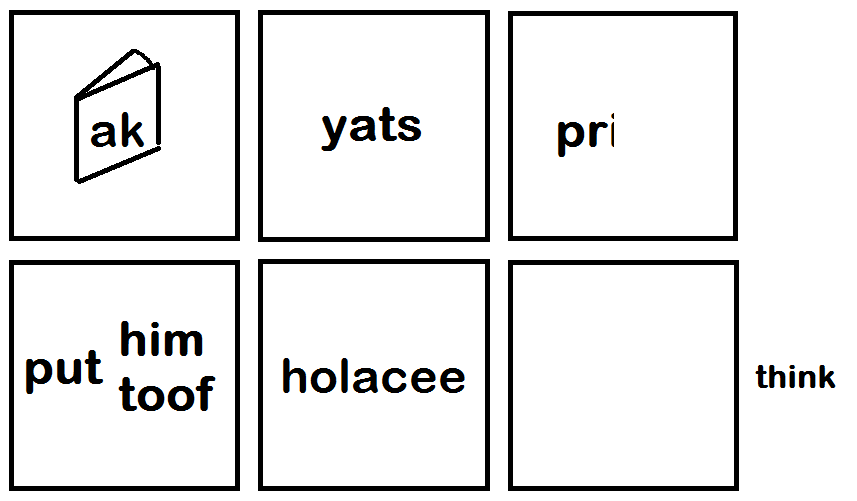
In the digital era of 2026, where information is processed in milliseconds, the human brain is constantly seeking new ways to stay sharp. While standard crosswords and Sudoku have their place, a new tier of cognitive challenge has emerged for those who find traditional riddles too easy. We are talking about impossible rebus puzzles—the kind of visual enigmas that leave 99% of people scratching their heads in confusion.
At riddlepuzzle.com, we have seen a massive surge in users hunting for hardest picture puzzles to test their lateral thinking. These aren’t your typical “apple + pie = apple pie” riddles. These are genius puzzles designed to bypass your logical filters and force you to look at the world through a completely different lens. Are you part of the elite 1% who can crack the code, or will these tricky rebus entries leave you stumped?
What Makes a Rebus “Impossible”?
To the uninitiated, a rebus puzzle looks like a collection of random words and symbols. However, for the elite solver, it is a map. The transition from a “standard” puzzle to an impossible rebus puzzle usually involves three layers of complexity:
1. The Multi-Step Phonetic Shift
Standard puzzles use a single image to represent a sound. An impossible rebus might require you to identify an object, translate it into a different language, and then use a phonetic part of that word to build the final phrase.
2. Positional Abstractism
In a tricky rebus, the position of a word is often a metaphor rather than a preposition. For example, a word written in a “shaky” font might represent an emotional state rather than a physical location.
3. Cultural Deep-Dives
The hardest picture puzzles often rely on idioms, historical references, or scientific concepts that aren’t common knowledge. This is why they are often categorized as genius puzzles—they require a broad base of general knowledge to decode.
The 1% Challenge: 5 Impossible Rebus Puzzles
Let’s put your brain to the test. Below are five of the most difficult challenges currently trending in the 2026 puzzle community. You have no timer here, but remember: only 1% of our visitors solve all five without looking at the hints.
Challenge 1: The Chemistry of Language
The Visual: The letters “C” and “O” written inside a large, transparent “CON”.
-
Hint: Think about the relationship between the letters and the container. It’s more than just “in.”
Challenge 2: The Double Negative
The Visual: The word “JUSTICE” written in a perfectly straight line, but the letter “I” is missing its dot and is slightly shorter than the other letters.
-
Hint: What is missing? And what does “small” or “short” imply in a legal context?
Challenge 3: The Temporal Loop
The Visual: The word “HISTORY” written in a circle, but the letters are mirrored (backwards).
-
Hint: Think about the phrase “History repeats itself,” but add a twist regarding how we look back at it.
Challenge 4: The Mathematical Idiom
The Visual: An image of a “CAGE” with the number “0” inside it, followed by an equals sign “=” and an image of a “BIRD”.
-
Hint: This is a tricky rebus that relies on a very famous 20th-century Maya Angelou reference.
Challenge 5: The Ultimate Genius Puzzle
The Visual: The word “EMPLOYMENT” written in a very light, almost invisible grey, situated underneath a heavy, bold, black line.
-
Hint: Think about the position of the word relative to the line and the “weight” of the colors.
Why Your Brain Struggles with Hardest Picture Puzzles
If you are finding these difficult, don’t worry—your brain is actually working exactly as it was evolved to. Humans are “pattern matchers.” We like things to be literal. When you see the word “CAGE,” your brain wants to think about an animal.
To solve impossible rebus puzzles, you have to shut down the “Literal Processing” center of your brain and activate the “Abstract Reasoning” center. This is known as cognitive shifting. In 2026, researchers have found that people who regularly solve genius puzzles have higher levels of “plasticity” in their neural pathways, allowing them to switch between different modes of thinking more rapidly.
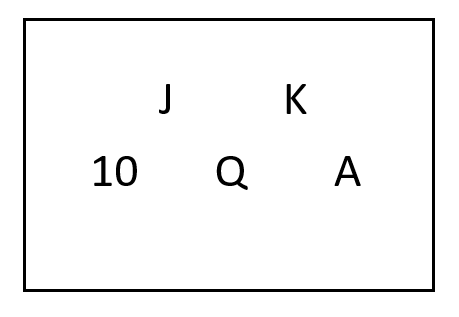
5 Secrets to Solving Tricky Rebus Puzzles
If you want to join the 1%, you need to master the internal “cheat codes” used by professional solvers.
-
Speak the Visuals: Don’t just look at the puzzle; describe it out loud. “The word ‘Time’ is after the word ‘Time’.” (Time after time).
-
Look for the Negative Space: Sometimes what is not there is the clue. A gap in a word or a missing letter is a deliberate choice.
-
Check the Font Style: Is it bold? Is it italic? Is it “shadowed”? In hardest picture puzzles, the font style is never accidental.
-
Count the Elements: If a word is repeated exactly six times, the number “six” is almost certainly part of the answer.
-
Reverse the Perspective: Turn your screen or tilt your head. Some of the most impossible rebus puzzles rely on an anamorphic perspective.
The Rise of Genius Puzzles in 2026 Digital Wellness
Why are we so obsessed with these tricky rebus challenges lately? In 2026, we are living in the “AI Overload” era. We know that computers can calculate faster than us, but impossible rebus puzzles tap into a very specific human trait: Nuance.
Computers struggle with the “double meanings” and “visual puns” found in the hardest picture puzzles. Solving these is a way for us to affirm our human intelligence. It’s not just a game; it’s a mental workout that keeps our human “edge” in an increasingly automated world. At riddlepuzzle.com, we believe that a healthy mind is a questioning mind.
The Answer Key (For the 99% Who Need a Hand)
Before you scroll down, give Challenge 5 one more look. Are you sure you can’t get it?
-
Challenge 1 Answer: “Confidence” (C and O in “Con”).
-
Challenge 2 Answer: “A Miscarriage of Justice” (The ‘i’ is “miss-carried” or missing its top).
-
Challenge 3 Answer: “Looking back on History.”
-
Challenge 4 Answer: “I know why the caged bird sings” (The ‘0’ represents “nil” or “nothing,” or in some variations, it implies the bird is free from the cage).
-
Challenge 5 Answer: “Underpaid” (The word “Employment” is literally under the line and “faded/grey” implying a lack of value).
Conclusion: Are You a Rebus Genius?
If you solved at least three of these without help, your lateral thinking skills are well above average. If you got all five, you truly belong in that 1% category of visual thinkers. Impossible rebus puzzles are more than just a distraction; they are a testament to the complexity and creativity of the human mind.
Don’t let your brain go stagnant. The world of hardest picture puzzles is constantly evolving, with new genius puzzles being created by our community every day. Keep challenging yourself, keep looking for the “hidden” meaning, and remember: in a rebus, the truth is always hiding in plain sight.
For more tricky rebus challenges and the largest collection of logic games on the web, visit us at riddlepuzzle.com. Your next mental breakthrough is just one image away.
FAQs
Q1: Why are these called “impossible” rebus puzzles? They are labeled “impossible” because they require multiple layers of deduction. Unlike basic puzzles, you cannot solve these with a single glance; you must analyze the font, the position, and the phonetic sounds simultaneously.
Q2: Can I improve my score on genius puzzles? Yes. Lateral thinking is a skill, not just a talent. The more you expose yourself to the hardest picture puzzles, the more your brain learns to recognize the “patterns of the unconventional.”
Q3: Are there different types of tricky rebus? Yes! There are positional (where the word is placed), phonetic (how the word sounds), and symbolic (using icons). The most impossible rebus puzzles usually combine all three types into one image.
Q4: How often should I solve these for brain health? Experts in 2026 suggest a “10-minute mental sprint” every day. Solving two or three genius puzzles a day is enough to keep your cognitive flexibility at its peak.
Q5: Where can I find more? Visit riddlepuzzle.com for our daily “Impossible” category. We also have a community board where users submit their own hardest picture puzzles for others to try and crack!