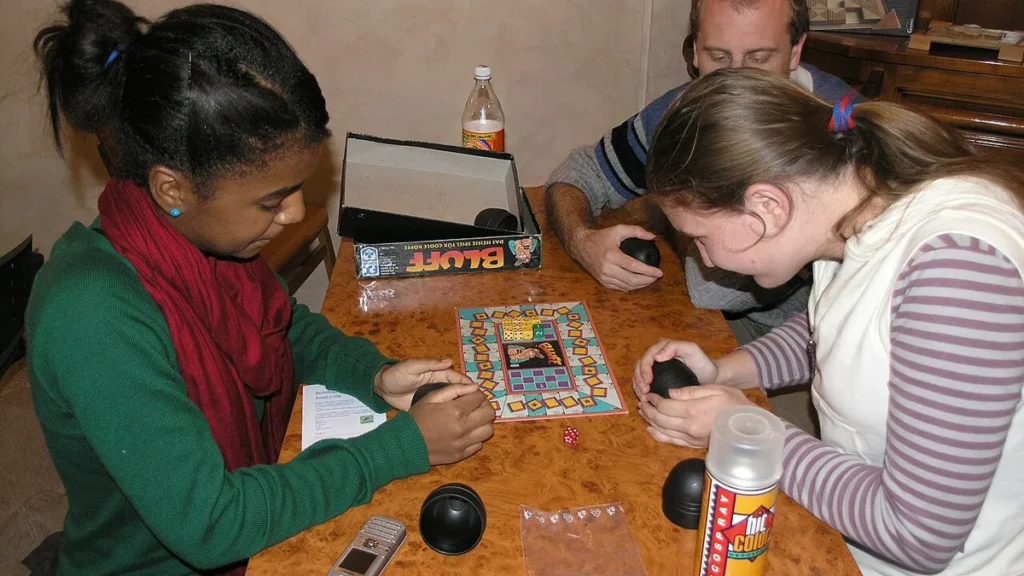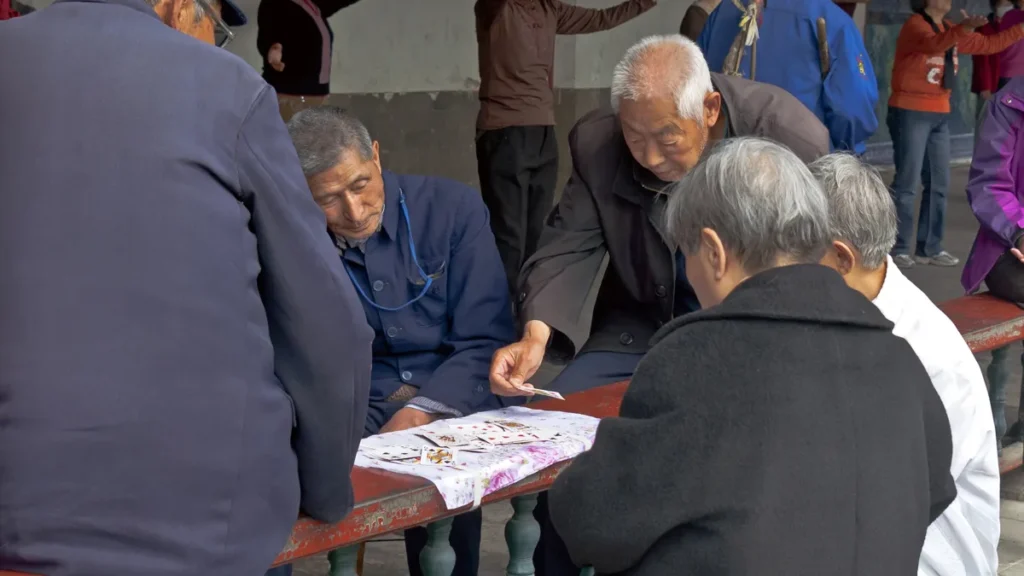
Card games for 382 players sound impossible the first time you hear the number, yet the idea works beautifully once you stop picturing one giant table and start picturing a room full of small tables. A group of 382 people does not need a single deck, a single dealer, or a single winner. It needs a plan, a set of games that many people already know, and a way for everyone to play at the same time without waiting around for their turn. When those pieces are in place, a huge group stops feeling like a crowd and starts feeling like a festival, with laughter coming from every corner of the room.
The trick is to think in ranges rather than in one fixed number. Card games for 382 players really means card games that work anywhere from three players up to 382 players, because almost no event has exactly the same headcount on the day. Some people arrive late, some leave early, and a few tables always end up with an extra player or one fewer than planned. A good format absorbs all of that. It lets a table of four play the same game as a table of eight, it lets new players join between rounds, and it lets the whole event keep moving even when one table finishes early and another runs long.
This guide explains how to make that happen. You will learn the three scaling methods that turn any ordinary card game into a huge-group game, the formats that work best at each size, the games that scale cleanly, and the practical setup that keeps 382 players organised, included, and having fun. Whether you are planning a school event, a company gathering, a community night, a youth camp, or a family reunion that has grown far beyond one living room, the same principles apply, and they are simpler than they look.
Key takeaways
- Card games for 382 players work through teams, stations, and tournaments, never through one giant table.
- The same plan covers the whole 3-to-382 range, so late arrivals and uneven tables never break the event.
- Choose simple, fast games with short rounds so every table finishes at roughly the same time.
- Use several identical decks and printed rule cards at every table to stop rules arguments before they start.
- Rotate players between stations so everyone meets new people and no one is stuck at a slow table all night.

What Card Games for 382 Players Actually Means
When someone searches for card games for 382 players, they are rarely asking for a game with 382 people holding cards at the same table. They are asking a planning question: how do we give 382 people something fun to do together with cards? The answer is a system, not a single game. You divide the crowd into tables, you give every table the same kind of game or a game from the same family, and you connect the tables with shared scoring, rotation, or a tournament bracket. Everyone plays at once, everyone has a real chance to win something, and the event feels shared even though no two tables are playing the same hand.
How the 3-to-382 Range Works
The range from three players to 382 players is not a gimmick. It is the honest size of the problem, because huge events are never exact. A school may invite 382 pupils and have 350 turn up. A company may book for 382 staff and have 360 on the night. A community group may plan for 200 and watch the number grow as friends bring friends. If your plan only works at exactly 382, it will fail on the night. If it works at any number in the range, it will survive whatever the real headcount turns out to be.
The second thing to decide is how long a round lasts. Short rounds are the secret to keeping a huge event together. A round of ten to fifteen minutes means that tables finish at roughly the same time, that rotation is painless, and that a player who does not enjoy one game is never stuck with it for long. Long rounds, by contrast, create drift. Some tables finish in twenty minutes and sit idle, while others take an hour and hold up the whole schedule. When you choose games, choose them for round length first and for cleverness second. A simple game that finishes on time beats a brilliant game that runs over.
Teams: The Simplest Way to Include Everyone
Teams are the easiest scaling method, and they work from the smallest groups right up to the largest. Instead of every person playing alone, players form teams of two, three, or four, and the team shares a hand, a score, and a decision. A table of eight becomes two teams of four. A hall of 382 becomes roughly ninety teams, and each team only needs one set of cards between its members. Teams also solve the confidence problem. A shy player who would never sit down alone at a table of strangers will happily join a team with a friend, and a new player who does not know the rules can watch a teammate for a round before taking a turn.
Team play changes the feel of a game in useful ways. It adds conversation, because teammates have to agree on what to play. It adds drama, because a team can come back from behind together. And it adds fairness, because a strong player cannot simply dominate a table; they have to bring their teammates along. For huge groups, that is exactly the dynamic you want. Keep teams small enough that everyone gets a say, and big enough that no one feels exposed. Teams of three or four are usually the sweet spot, and they work for almost every game in this guide.
Stations: Many Small Games Running at Once
Stations are the second scaling method, and they are the one that makes a huge event feel like a festival. Instead of every table playing the same game, you set up different games at different stations around the room. One corner plays a fast matching game, another plays a trick-taking game, another plays a memory game, and another plays a party game with big, colourful cards. Players move from station to station every fifteen minutes, trying each game, collecting points or stamps, and meeting new people at every stop.
The station model has several advantages for very large groups. It spreads the crowd out, so no single area becomes overcrowded. It gives people choice, so a player who dislikes one game can simply wait for the next rotation. And it makes the event easy to run, because each station needs only one helper who knows that one game well, rather than one expert who knows everything. You can also scale stations up or down on the night. If a station is too popular, you duplicate it. If a station is quiet, you merge it with its neighbour. The event bends instead of breaking.
Tournaments: One Winner From Hundreds of Players
Tournaments are the third scaling method, and they are the one that gives a huge event its climax. In a tournament, tables play short rounds, the winners move up, and the field narrows round by round until a small number of finalists play for the overall title. A tournament can start with 382 players and end with a final table of eight, and every step along the way feels meaningful, because every round is a chance to advance. The key is to use a game that is quick, fair, and easy to score, so that nobody waits long between rounds and nobody feels that they lost because of a confusing rule.
A simple tournament structure works best. In the first round, every table plays the same game for a fixed time, and the top two players or teams from each table advance. In the second round, the advancing players are mixed into new tables, so they meet fresh opponents. This continues until the final. Mixing players between rounds is important. It stops one table from becoming a private contest between the same people all night, and it gives every player the chance to play against someone new. It also keeps the event honest, because a player who was lucky at one table still has to prove themselves at the next.
The Best Formats for Huge Groups
Not every format suits every crowd, so it helps to compare the main options side by side before you commit. Some formats are best for a relaxed social evening, some are best for a competitive night, and some are best when you have a mixed crowd of ages and abilities. The table below sets out the four formats that work most reliably at scale, with the table count you would need for 382 players and the kind of event each one suits.
| Format | Players per table | Tables for 382 | Best for | Pace |
|---|---|---|---|---|
| Team play | 4 to 8 | 48 to 96 | Mixed ages, shy players, social nights | Steady, chatty |
| Stations | 4 to 6 | 64 to 96 | Festivals, school events, drop-in crowds | Fast, varied |
| Tournament | 4 to 6 | 64 to 96 | Competitive nights, clubs, finals | Structured, tense |
| Whole-room game | 20 to 40 per zone | 10 to 19 zones | Warm-ups, icebreakers, big laughs | Very fast, loud |
Card Games That Scale Cleanly
Uno is the obvious starting point, and it earns its place. It is known almost everywhere, it plays in minutes, and it scales by adding decks. Two decks shuffled together support eight or ten players without any rule changes, and the colourful cards are easy to read from across a table. For a huge event, Uno works best at stations, where new players can join between games and nobody needs a long explanation. Keep several decks at each Uno station, because the cards wear quickly, and keep a printed rule card on the table so that arguments about stacking and swapping do not slow the game down.
Spoons, also known as Pig in some places, is a classic huge-group game for a reason. It needs only a standard deck, it plays with up to thirteen people at a single table, and it produces exactly the kind of cheerful chaos that a big event needs. Players pass cards around the table, trying to collect four of a kind, and then grab a spoon from the middle. The player left without a spoon is out, and the game continues until one winner remains. It is fast, it is physical in a gentle way, and it works brilliantly as a whole-room warm-up if you set up several spoon tables at once and let the winners move up.
Setting Up a Room for 382 Card Players
Room setup is where huge card events succeed or fail, and it is worth planning in detail. Start with the tables. Round tables seat players evenly and make conversation easy, but rectangular tables pack more efficiently into a hall and are easier to label by station. Either works, provided every player has enough elbow room to hold cards without showing them to a neighbour. Allow at least sixty centimetres of table edge per player, and leave a clear aisle between tables so that helpers can move around and players can rotate without climbing over chairs.
Rules That Keep 382 Players Moving
Rules are the part of a huge card event that most organisers worry about, and the solution is to make the rules shorter, clearer, and more visible than you think you need to. Every game in your event should have a rule card that fits on one side of one sheet, written in short sentences, with no more than five rules. If a game needs more than five rules to explain, it is too complicated for a huge event, or it needs a helper at the table to guide the first round. Print the rule cards in a large, clear font, and place one at every table before the players arrive.
Checklist for Your 382-Player Card Night
- Count your players, then plan tables for the 3-to-382 range, with a spare table and spare decks ready for late arrivals.
- Choose three or four simple, fast games, print a one-page rule card for each, and place one at every table.
- Set up teams, stations, or a tournament bracket, and post a leaderboard where every team can see its score.
- Brief one helper for every eight to ten tables, and give each helper a list of tables and a spare deck.
- Test the lighting, the microphone, and the rotation signal in the real room before the doors open.
- Plan a whole-room warm-up, a clear finish with prizes, and a thank-you for every helper and player.
Frequently Asked Questions
Can card games for 382 players really work, or is the number just for show?
They really work, provided you use teams, stations, or a tournament rather than a single table. The number describes the size of the crowd, not the size of one game. With about 48 to 96 tables, depending on how many players sit at each one, 382 people can all play at the same time, and the leaderboard or the rotation system makes the separate tables feel like one shared event.
What is the best card game for a group of 382 players?
There is no single best game, because the best choice depends on your crowd. For a mixed, social crowd, Uno at stations is hard to beat, because almost everyone knows it and new players can join between rounds. For a competitive crowd, a short tournament using a simple game such as Spoons or Cheat works well. For a family crowd, a mix of Skip-Bo, Go Fish, and matching games covers the widest range of ages. Offer a few games rather than one, and let players choose.
How many decks of cards do I need for 382 players?
Plan on one deck per table, plus a spare for every four tables, and at least two decks per station for games such as Uno that use special cards. That usually means between 60 and 110 standard decks, depending on your table size, plus the special decks for your chosen games. Buy mid-priced cards, label every deck with its station number, and check each deck for missing cards before the event and after it.
How long should a card night for 382 players last?
Two to three hours is the right length for most huge card nights. That allows ten minutes for a warm-up, about ninety minutes of stations or team play in rounds of fifteen minutes, and twenty minutes for a final, prizes, and a goodbye. Longer evenings tire players out, and shorter evenings feel rushed. If your crowd is very keen, add a free-play hour at the end for the players who want to stay, while the main event still finishes on schedule.
What if the number of players changes on the day?
That is normal, and it is why the plan is built around the 3-to-382 range rather than one exact number. If fewer people arrive, merge two quiet tables into one, or close a station and move its helper to a busier table. If more people arrive, open your spare table, split a large table into two, or add players to teams. The station and team systems both absorb changes easily, provided you have spare decks, spare scorecards, and a spare table ready.
Do I need experienced players to run a huge card night?
No, you need organised helpers, not experts. One helper who knows a single game well and is friendly with strangers is more useful than an expert who knows ten games but will not walk around the room. Brief your helpers, give them printed rule cards, and let the players teach each other at the tables. Card games are social by nature, and most tables will sort themselves out within a few minutes, especially if the first round is played with open hands.
Bottom Line
Card games for 382 players work when you stop trying to fit hundreds of people around one table and start building a system of small tables, shared scoring, and simple games that everyone can learn in minutes. Teams include the shy players, stations give everyone choice and variety, and a short tournament gives the evening a finish worth staying for. Choose games for speed and clarity, print the rules, brief your helpers, start on time, and end with a celebration. Do that, and 382 players will not feel like a problem to manage. They will feel like the best card night you have ever run, and the one your players will ask you to repeat. For more ideas in the same spirit, explore the card games that worked for 380 players, compare them with the card games for 378 players, and borrow the station ideas from the party games for 380 players to round out your evening.