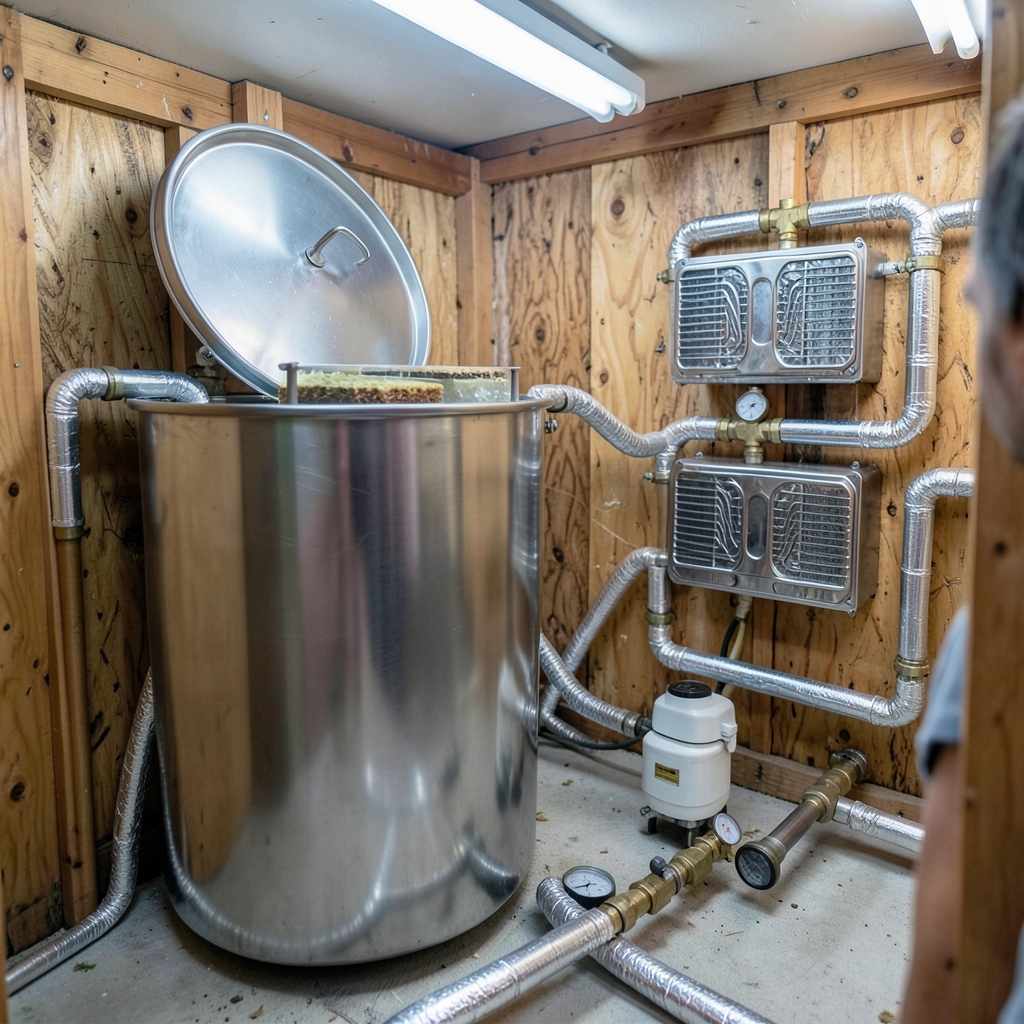
Quick Answer: How much do mining heat recovery systems cost?
There is no standard price list, because nearly every mining heat recovery system is quoted per project. In industry discussion, installed costs are commonly cited at roughly US$50,000 to US$500,000 or more per installation, and payback periods are often discussed at two to seven years. Those figures are indicative estimates rather than verified market data, so treat any single number with caution.
Immersion and hydro-cooled setups usually cost less per kilowatt of recovered heat than air-cooled rigs, because the heat arrives as a concentrated liquid stream instead of low-grade warm air. Air-cooled exhaust sits at roughly 30 to 50 °C, which limits what the heat can be used for and raises the cost per delivered kilowatt-hour.
Before committing, compare cooling type, heat-exchanger capacity, distance to the heat load, local energy prices, permitting and grid-connection costs, and how you will measure levelized cost of heat.
Why the Price Tag Is So Hard to Pin Down
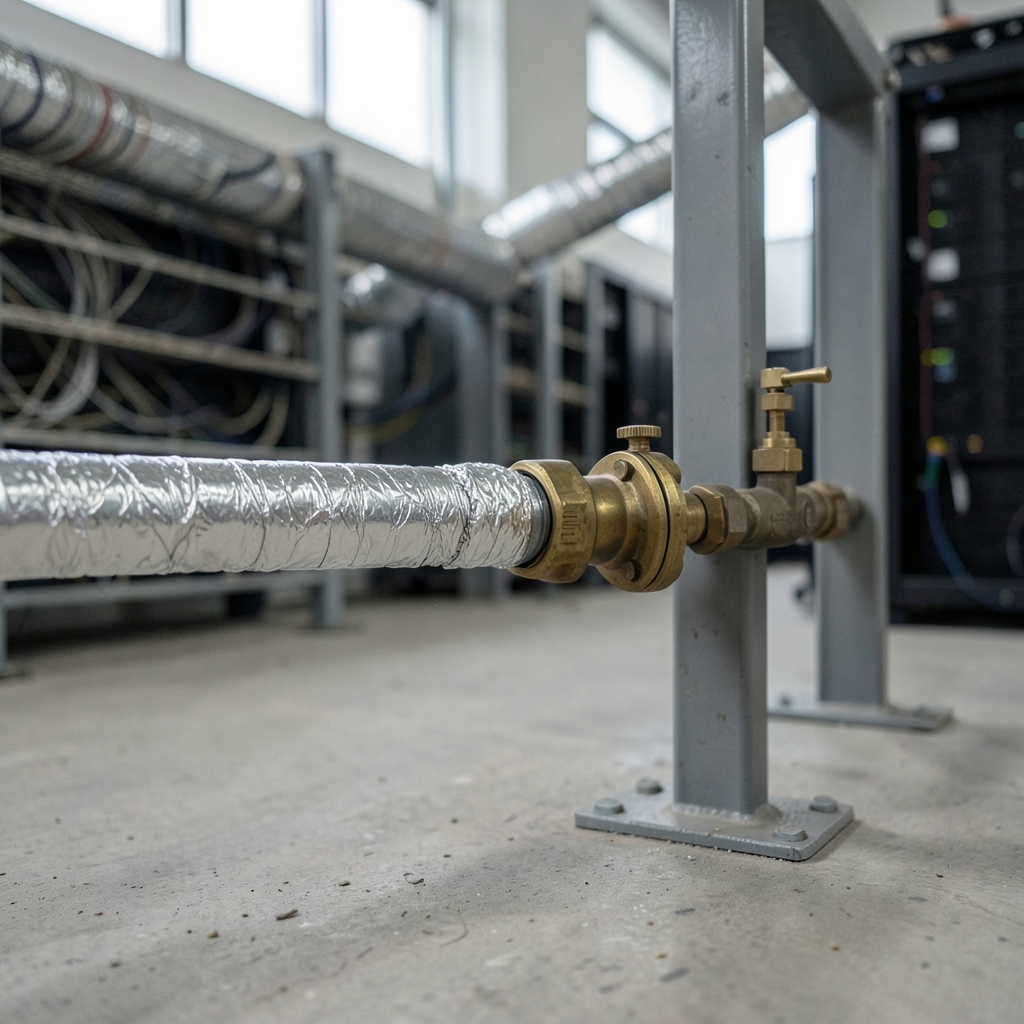
Ask five people what a mining heat recovery system costs and you will get five answers, none of them wrong. That is the nature of the beast. Heat recovery is not a product you pull off a shelf. It is a plumbing and engineering project bolted onto an existing mining operation, and the bill depends on things that have nothing to do with the mining hardware itself.
The core problem is that no authoritative public cost dataset exists for this niche. Published numbers tend to be anecdotal or vendor-derived, and vendors have an obvious interest in the framing. A quote that looks cheap on the equipment line can balloon once you add pumps, insulated pipe runs, controls, metering, permits, and the electrician who has to make it all talk to the building’s existing systems.
There is also a definitional trap. Some quotes cover only the heat exchanger. Others cover the full installation. Comparing them is like comparing the price of a car engine to the price of a car. The only fair basis for comparison is levelized cost of heat (LCOH), which divides total capital plus operating costs by the kilowatt-hours of heat actually delivered over the system’s life. Without that number, you are guessing.
The Realistic Cost Ranges, and What Drives Them
The commonly discussed capex band of roughly US$50,000 to US$500,000+ per installation is wide for a reason: it spans everything from a small workshop heater tied to a handful of rigs to a district-heating connection serving hundreds of homes. That is an order of magnitude, and it is honest about the uncertainty rather than pretending precision exists.
| Cost driver | Effect on total cost | Why it matters |
|---|---|---|
| Cooling type | Largest single factor | Liquid cooling concentrates heat; air cooling dilutes it |
| Heat exchanger capacity | Scales with kW recovered | Oversizing wastes money; undersizing wastes heat |
| Distance to heat load | Can dominate the budget | Long insulated pipe runs are expensive and lose heat |
| Controls and metering | Often underestimated | Needed for billing, safety, and proving savings |
| Permitting and grid connection | Jurisdiction-specific | Can rival equipment costs in some regions |
| Retrofitting vs. new build | Retrofits cost more | Existing buildings rarely have space or access |
Cooling type changes the math most
An air-cooled ASIC hall dumps heat into the room at roughly 30 to 50 °C. That is warm enough to take the chill off a greenhouse but too cool for many industrial processes, and capturing it means moving enormous volumes of air through large, low-density heat exchangers. Big ducts, big fans, big bills.
Immersion and hydro-cooling flip this. The heat leaves as a concentrated liquid stream, so the heat exchanger can be smaller and the plumbing simpler. The engineering principle is straightforward: higher-temperature, denser heat sources cost less to capture per kilowatt. This is why operators planning recovery from day one often choose liquid cooling, even though the mining hardware itself may cost more.
Distance is the silent budget killer
A heat exchanger sitting next to the building it warms is a modest project. The same exchanger half a kilometre away needs insulated pipe, trenching, pumps to overcome friction, and a thermal design that accounts for losses along the run. Practical experience from similar waste-heat projects shows that distribution costs frequently surprise people who budgeted only for the capture side.
Where the Money Actually Goes
Break a typical installation into its parts and the picture gets clearer. The heat exchanger and pumps are the visible core. Then come the pipes, valves, insulation, and expansion tanks. Then controls: temperature sensors, flow meters, safety cutouts, and whatever system proves to a buyer that the delivered heat is real. Then installation labour, which for retrofit work can rival the hardware cost.
Regulatory and grid-connection costs deserve their own line. In some jurisdictions, selling recovered heat to a third party triggers metering requirements, utility interconnection agreements, and permits that take months and real money to clear. These costs vary enormously by country and are almost never captured in an equipment quote. Anyone budgeting purely from a vendor’s spreadsheet is flying with one instrument.
Operations and maintenance are the quiet ongoing cost. Pumps need servicing, filters need changing, and heat exchangers foul over time, especially in dusty mining environments. A recovery system is a small industrial plant, and it needs to be treated like one.
Payback Periods: Useful, but Easy to Oversell
Payback estimates of two to seven years circulate widely, and the range is plausible. It is also highly sensitive to local conditions. The same system can pay back in three years where it displaces expensive electric resistance heating and in eight years where natural gas is cheap.
This sensitivity is exactly why promotional payback claims deserve scrutiny. A payback figure is only as good as the energy price assumptions behind it, and those assumptions often reflect today’s prices rather than the next decade’s. Ask what happens to the payback if energy prices fall by a third. If the answer is uncomfortable, the project carries risk.
There is also a measurement problem. Proving you actually displaced purchased energy requires metering before and after, plus a baseline that accounts for weather and production changes. Skipping that step is one of the most common mistakes in heat recovery projects. Without a baseline, nobody can prove the savings, and unproven savings are hard to defend internally or to a lender.
Practical Tips That Actually Work
Start with the heat load, not the mining hardware. The best projects begin by finding a steady, year-round demand for low-grade heat within a short pipe run: a workshop, a drying room, a greenhouse, a swimming pool, or a district heating network’s return line. Seasonal demand makes payback lumpy.
Measure before you buy. Temperature and flow data from a few weeks of logging will tell you more than any vendor brochure. It also gives you the baseline you will need later.
Design for the lowest useful temperature. Low-grade heat can do more than people expect if the delivery system is sized for it, such as larger radiators or underfloor loops. Trying to push 40 °C water through a system designed for 70 °C is a classic disappointment.
Get the controls right early. Controls are where budgets quietly bleed and where safety lives. A recovery system that cannot be isolated, monitored, and shut down safely is a liability.
Finally, treat the project as an energy business, not a plumbing job. That means tracking delivered kilowatt-hours, maintaining the equipment, and reviewing performance annually. Teams that treat heat recovery as a one-off installation tend to see savings drift away within a couple of years. If you are weighing the wider software stack that supports this kind of operational tracking, the same budget discipline applies as with the best low cost seo tools that cover whole workflow — small, focused spending beats sprawling subscriptions.
Comparing Options Side by Side
Different recovery approaches carry different cost profiles. The table below summarizes how the main routes compare on the factors that move the budget most.
| Approach | Typical heat quality | Relative capex | Best fit |
|---|---|---|---|
| Air-cooled exhaust capture | Low (about 30 to 50 °C) | Higher per kW | Greenhouses, pre-heat, drying |
| Immersion cooling loop | Higher, concentrated | Lower per kW | District heating, industrial processes |
| Hydro-cooled loop | Higher, concentrated | Lower per kW | Larger sites with steady demand |
| Hybrid with heat pump | Upgraded output | Highest | When the heat load needs higher temperatures |
Heat pumps upgrade low-grade heat to useful temperatures, but they add capital cost and consume electricity, which can undercut the savings. They make sense when no low-temperature load exists nearby.
For teams building out the broader operational toolkit around a mining site, the same logic of matching spend to actual need shows up elsewhere, whether that is the free low cost technical seo tools alternatives that actually work for a small team or the best low cost email marketing tools that still deliver for a lean operation. Cost discipline is a habit, not a category.
How to Budget Without Getting Burned
A sensible budgeting process has four steps. First, estimate the recoverable heat in kilowatts from measured data, not nameplate ratings. Second, identify a real heat load within a short distance and confirm it runs year-round. Third, get at least three quotes that explicitly state scope: capture only, capture plus distribution, or full installation including controls and commissioning. Fourth, build a simple LCOH model that includes maintenance and a realistic utilization rate.
The utilization rate is where optimism creeps in. A system that runs at full output for six months and idles for six delivers half the heat its capex implies. Model that honestly.
It also helps to separate the project into phases. Capture first, distribution second, expansion third. Phased builds reduce upfront risk and let you verify performance before committing more capital. Operators who try to do everything at once often discover mid-project that the heat load was smaller than assumed.
Conclusion
Mining heat recovery systems cost somewhere between a modest equipment purchase and a small infrastructure project, and the honest answer is that the number depends almost entirely on your site. The commonly cited range of roughly US$50,000 to US$500,000+ is a starting point for conversations, not a budget line. Payback periods of two to seven years are plausible but fragile, shifting with local energy prices and how much of the year your heat load actually exists.
What separates projects that work from projects that disappoint is rarely the technology. It is the discipline around it: measuring real heat output, finding a steady nearby demand, quoting full scope rather than equipment alone, and tracking delivered kilowatt-hours long after commissioning. Get those right and the economics tend to hold up. Skip them and even a well-engineered system becomes an expensive radiator.
FAQ
How long does a typical installation take to commission?
Most projects run from a few weeks for a simple workshop heater to several months where distribution pipework, permits, and utility interconnection are involved. Retrofit work in tight spaces tends to run longer than new builds. Build contingency into the schedule, because commissioning delays are common and each week of delay pushes the payback out.
Can I sell recovered heat to neighbours or a utility?
It is possible in many jurisdictions, but the commercial and regulatory path is rarely simple. Selling heat usually triggers metering requirements, interconnection agreements, and permits, and those costs can rival the equipment budget. Confirm local rules before designing the system, since the answer shapes everything from metering to contract structure.
Is heat recovery worth it for a small mining operation?
It can be, if a genuine year-round heat demand sits close by. Small operations struggle when the heat load is seasonal or distant, because fixed costs get spread over too few delivered kilowatt-hours. A workshop, drying room, or domestic hot water load within a short pipe run is the sweet spot. Without one, the numbers rarely work.
What maintenance costs should I expect?
Expect ongoing costs for pump servicing, filter changes, and periodic cleaning of heat exchangers, which foul faster in dusty mining environments. Controls may need recalibration. These costs are modest individually but real over a decade. Budget them from day one rather than treating them as an afterthought, and keep a maintenance log so performance drift is visible.
Why do quotes for the same site vary so much?
Scope is usually the reason. One quote may cover only the heat exchanger, another the full installation including pipework, controls, commissioning, and permits. Vendors also make different assumptions about labour, access, and contingency. Insist on itemized, scope-matched quotes before comparing prices, and ask each vendor what is explicitly excluded.
Does liquid cooling always beat air cooling on cost?
Per kilowatt of recovered heat, liquid cooling generally wins because the heat is concentrated and easier to capture. But it is not automatic. If the mining hardware is already air-cooled and a low-temperature load exists nearby, capture can still be cheap. Compare total installed cost per delivered kilowatt-hour rather than assuming one approach always wins.