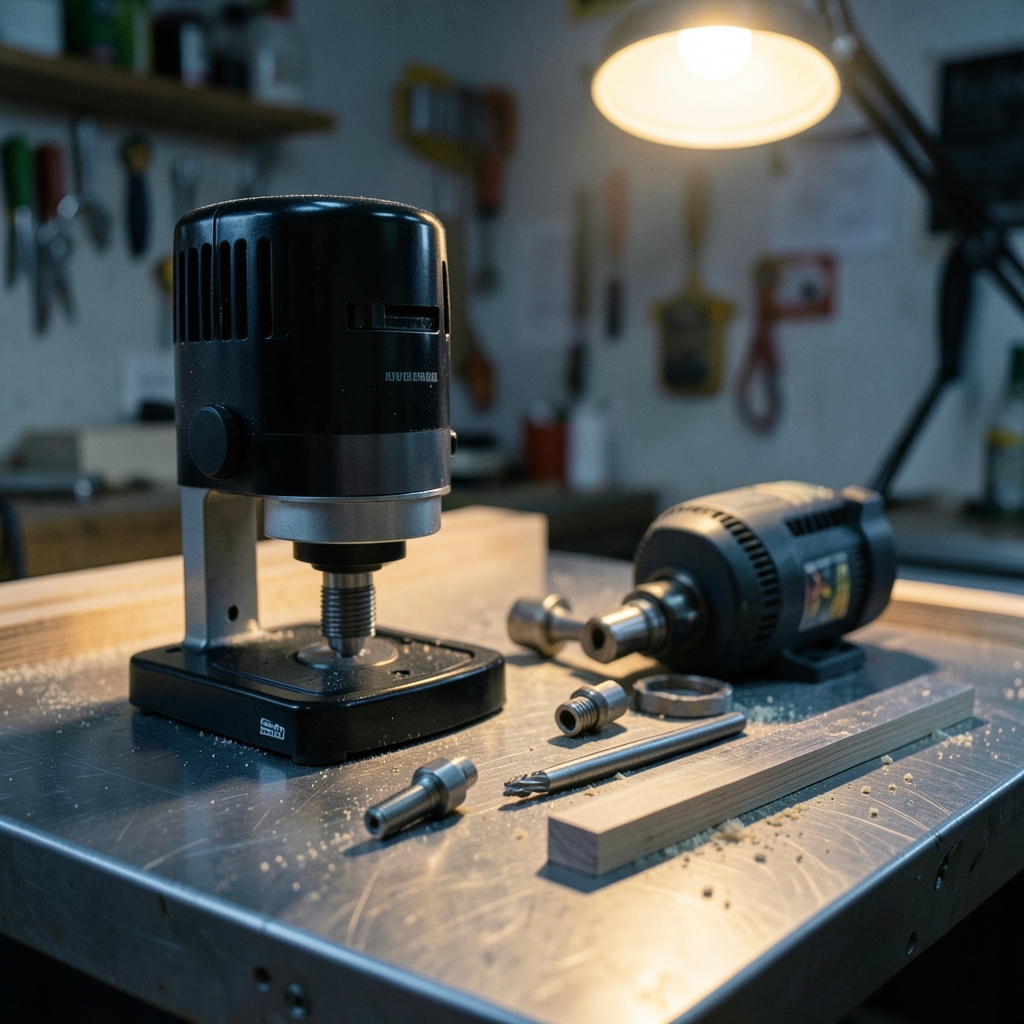
What separates a router that earns its shelf space from one that gathers dust? It usually comes down to a handful of buying decisions made before the box is even opened: fixed base or plunge, 1/4-inch or 1/2-inch collet, enough amps for the work at hand. Get those right and the tool becomes the most versatile machine in a small shop. Get them wrong and every project turns into a workaround.
This guide walks through the choices that actually matter, the specs that mislead buyers, and the practical habits that separate a smooth cut from a ruined board. It is written for someone standing in an aisle or staring at a product page, trying to decide.
Start With the Two Router Types
Almost every router on the market falls into one of two families, and the choice shapes everything else.
A fixed-base router holds the motor at a set depth inside a base. Depth changes happen by releasing the motor lock and sliding the motor up or down, then locking it again. That sounds clumsy, but it makes fixed-base routers lower, lighter, and more stable, which is why they dominate router-table setups and edge-profiling work.
A plunge router sits on spring-loaded posts. The motor starts high, the bit is lowered into the workpiece with two handles, and the depth stop sets the floor. That motion is what you want for stopped grooves, mortises, and any cut that begins and ends in the middle of a board rather than at an edge.
Many buyers land on a combo kit that includes both bases and one motor. It costs more than a single-base tool but less than two routers, and it covers nearly every operation a hobbyist or small-shop woodworker will ever need. If the budget allows only one purchase and the work is varied, a combo kit is usually the smartest single buy.
Power Ratings Are Not What They Seem

Routers are sold by amps and horsepower, and those numbers are the least trustworthy part of the spec sheet. Ratings are not standardized across brands, so a “2 HP” label from one maker and a “2 HP” label from another may describe very different motors. Treat the figures as a rough ranking within a brand, not a precise comparison across brands.
| Class | Typical use | What to expect |
|---|---|---|
| Trim and compact | Edge rounding, laminate, light flush trimming | Light weight, small collets, one-hand control |
| Mid-size | General shop work, dados, roundovers, small panels | The all-rounder for most hobbyists |
| Full-size | Router table work, raised panels, heavy stock removal | Highest power, best with 1/2-inch bits, heaviest |
The practical rule: buy for the heaviest cut you genuinely plan to make, then add a little headroom. A router that bogs down mid-cut is slow and dangerous, because the operator starts pushing harder to compensate.
Collet Size Decides Your Bit Collection
The collet is the chuck that grips the bit shank. Two sizes dominate: 1/4 inch and 1/2 inch, with 8 mm and 12 mm equivalents in metric markets.
A 1/2-inch collet grips more of the shank and resists flex far better under load. Large-diameter bits, panel-raising cutters, and any heavy stock removal belong in a 1/2-inch collet. A 1/4-inch collet is fine for small roundovers, chamfers, and trimming bits, and it is the standard on trim routers.
Here is the mistake that catches beginners: buying a router with only a 1/4-inch collet, then discovering that most of the interesting bits in the catalog are 1/2-inch shank. Check collet availability before you buy, and confirm that adapters or additional collets are actually sold for that model. Buying a router that cannot take a 1/2-inch collet closes a lot of doors.
Variable Speed Is Not a Luxury
Large-diameter bits need to spin slower. Push a big panel-raising cutter at full speed and the rim speed at the cutting edge climbs high enough to burn the wood, dull the bit fast, and make the cut feel uncontrollable. Many routers offer variable speed, often somewhere in the range of roughly 8,000 to 24,000 RPM, though exact ranges vary by model.
If the plan includes any bit larger than about an inch in diameter, variable speed moves from nice-to-have to essential. Small trim routers often run single-speed, which is acceptable because they only take small bits.
Soft-start electronics and constant-speed feedback are two more features worth paying for. Soft start ramps the motor up instead of lurching, and constant-speed circuitry holds RPM steady as the load changes, which keeps cuts cleaner in hard grain.
Fixed Base, Plunge Base, and the Router Table Question
A router table turns the tool into a small shaper. The router mounts underneath, the bit pokes up through a plate, and the workpiece rides on top against a fence. Edge profiling, raised panels, and repeatable joinery all get easier and safer.
Table use changes the buying math. It favors a full-size fixed-base router with plenty of power, and it makes above-table bit adjustment genuinely valuable, because reaching under a table to change depth gets old fast. Some routers include through-the-table adjustment built in; others need a separate lift.
A plunge router can go in a table, but the springs work against you and depth changes are clumsier. If table work is the main plan, buy for the table first.
What Actually Matters in Daily Use
Spec sheets sell routers. These details decide whether you enjoy using one.
Bit changes. Some models lock the spindle with a single button and let you change bits with one wrench. Others require two wrenches and three hands. Try this in a store if you can, or read owner comments carefully.
Depth adjustment precision. A good micro-adjuster lets you move depth in tiny increments and repeat it. Cheap adjustment mechanisms slip or drift, which ruins dado and groove work.
Base plate flatness and centering. A warped base plate rocks on the work. A base that will not center the bit makes guide-bushing work inaccurate.
Dust collection. Routers throw chips everywhere. A dust port or a well-designed chip shield keeps the cut line visible and the shop cleaner. This is one of the most underrated buying factors.
Handle ergonomics and weight. A heavy router is stable on the table and tiring handheld. A light router is pleasant overhead and skittish in a deep cut. Balance matters more than raw weight.
Collet quality. A cheap collet that does not grip evenly lets the bit slip or vibrate. That shows up as chatter marks and, eventually, a ruined bit.
Bits, Feed Direction, and the Mistakes That Bite
The router is only as good as the cutter. Carbide bits hold an edge far longer than high-speed steel, and for a shop that uses the tool regularly, carbide is the sensible default. Buy a few quality bits rather than a big cheap set; the bargain assortment usually contains sizes nobody uses and edges that dull on the first hardwood board.
Feed direction trips up nearly everyone at first. When hand-routing an outside edge, moving the router from left to right along the edge (with the bit rotation) gives a clean climb-free cut on most setups. Going the wrong way produces tearout or, worse, lets the router run away from you. When the workpiece is against a fence in a table, the logic flips. Learn the rule for each setup before the bit touches wood.
Other common mistakes:
- Taking too deep a cut in one pass instead of stepping down
- Routing against a fence that flexes under pressure
- Leaving the bit extended when the tool is set down
- Skipping test cuts on scrap of the same species and thickness
- Forgetting that a dull bit is more dangerous than a sharp one
Safety Gear and Standards Worth Checking
Routers spin fast and cut aggressively. Eye and hearing protection are non-negotiable, and a chip shield or full-face shield beats safety glasses for overhead work. Keep hands clear of the bit path and use push blocks and featherboards on the table.
Regions handle power-tool standards differently. In the United States, UL and ANSI publish standards covering power tools; in Europe, CE marking and EN standards apply. Buyers should confirm that a specific model carries the certification required in their market rather than assuming it does, since standard numbers and editions change over time.
Matching the Router to the Work
The fastest way to choose is to work backward from the projects.
| If the main work is… | Buy this |
|---|---|
| Trim, laminate, light edge work | Compact trim router, 1/4-inch collet |
| General furniture and cabinet joinery | Mid-size fixed-base or combo kit, both collet sizes |
| Raised panels and heavy table work | Full-size fixed-base with variable speed and 1/2-inch collet |
| Stopped grooves and mortises by hand | Plunge router or combo kit |
| A bit of everything, one purchase | Combo kit with a 1/2-inch collet option |
Shop culture matters too. A shop that runs on humor and shared projects tends to get more out of its tools, and the same energy that produces a list of funny router names for the shop network also fuels the funny jokes for work that keep a long build day bearable. Naming the new router is practically a tradition.
Buying Used Versus New
Used routers are one of the better values in woodworking, because the motor either works or it does not, and most failures are obvious. Check the following before handing over cash:
- Spin the motor and listen for bearing rumble or grinding.
- Inspect the collet for scoring, rust, or a worn taper.
- Rock the base plate on a flat surface to check for warp.
- Confirm the depth mechanism moves smoothly and locks firmly.
- Ask whether the original wrenches, fence, and manual are included.
- Verify the model still has collets and parts available.
Missing accessories are the hidden cost. A bargain router without a fence or a spare collet can end up costing more than a new mid-range model.
Conclusion
The right router comes down to three decisions made in the right order: pick the type that matches how the tool will be held, pick the collet size that matches the bits the work requires, then pick the power and features that match the heaviest cut planned. Variable speed, solid depth adjustment, decent dust collection, and a quality collet matter more in daily use than a big amp number on the box.
Buy a little more tool than the current project demands, budget for good carbide bits, and practice feed direction on scrap before touching a finished board. Do that, and the router becomes the tool that quietly does the work of five others.
Frequently Asked Questions
Is a plunge router or a fixed-base router better for a beginner?
A combo kit that includes both bases is the safest choice for a beginner with varied interests, because it covers handheld edge work and stopped cuts. If only one base is possible, a fixed-base router is simpler to learn and better suited to table work, while a plunge router is more forgiving for grooves and mortises.
Do I really need a 1/2-inch collet?
Not for small bits, but yes if the plan includes large-diameter cutters, panel raisers, or heavy stock removal. A 1/2-inch collet grips more shank and resists flex, which makes big cuts safer and cleaner. Buying a router that cannot accept one limits the bit collection permanently.
How many amps does a woodworking router need?
It depends on the work. Compact trim routers run on far less power and suit light edge work, while full-size models built for router tables and heavy cuts sit at the top of the range. Because amp and horsepower ratings are not standardized across brands, compare within a brand and buy headroom for the heaviest cut planned.
Can I use any router in a router table?
Most routers can be mounted in a table, but fixed-base models work best because the depth adjustment stays accessible and there are no springs fighting the setup. Full-size routers with above-table adjustment or a lift are far more pleasant for table work than compact models.
Why does my router burn the wood?
Burning usually comes from too-high RPM with a large bit, a dull cutter, or feeding too slowly. Large-diameter bits need lower speeds, which is why variable speed matters. Sharp carbide bits and a steady, deliberate feed rate solve most burn problems.
What safety certification should I look for on a router?
Certification depends on the market. In the United States, look for UL and ANSI-related marking on power tools; in Europe, CE marking and EN standards apply. Confirm the specific model carries the certification required where it will be used, since standard editions change over time.
How do I keep a shop team engaged during a long build season?
Shared rituals help. A rotating playlist, a running list of work jokes for Mondays, and a board of icebreaker questions for work keep morale up between deadlines. Some teams even run a lighthearted work team names contest, and the same spirit shows up in riddlespuzzle work fun threads that turn a slow afternoon into something people remember.




