Every Christmas, the same quiet miracle happens in houses all over the country: people who live hundreds of miles apart, who talk mostly in birthday texts and group chats, end up in the same room. The grandparents drive down. The cousins fly in. Someone’s new partner sits on the sofa trying to learn everyone’s name. For one day, the family that the rest of the year exists mostly as an idea becomes a real, breathing group of people sharing a roof.
That is the problem Christmas games solve, and it is why I think they matter far more than we usually admit. A game takes a room full of people who happen to share a surname and turns them, for an hour or two, into a family again. It gives them one thing to look at, one thing to talk about, and one small, shared purpose. Nothing else on Christmas Day does that quite so simply, and I have come to believe that the games are not the entertainment between the real moments of the day. They are one of the real moments themselves.
Christmas Is a Reunion, Not Just a Holiday
Most of the year, a family is a network, not a gathering. Brothers and sisters live in different cities. Children grow up and move away. Parents age in houses that slowly empty. We keep in touch, and the group chat hums along with photos and jokes, but there is a difference between knowing your family and actually knowing them — knowing how your nephew laughs now that he is twelve, or what your sister-in-law is really like when she is relaxed, or whether your dad still cheats at cards the way he did when you were small.
Christmas is the one day of the year when that gap closes, and that is exactly why it can feel awkward. You are sitting next to people you love but barely know any more, and love alone does not give you something to say. Small talk runs out fast. Asking about work and the journey here carries a conversation for about ten minutes. After that, people drift into their corners, not because they do not care but because nobody has given them a better option.
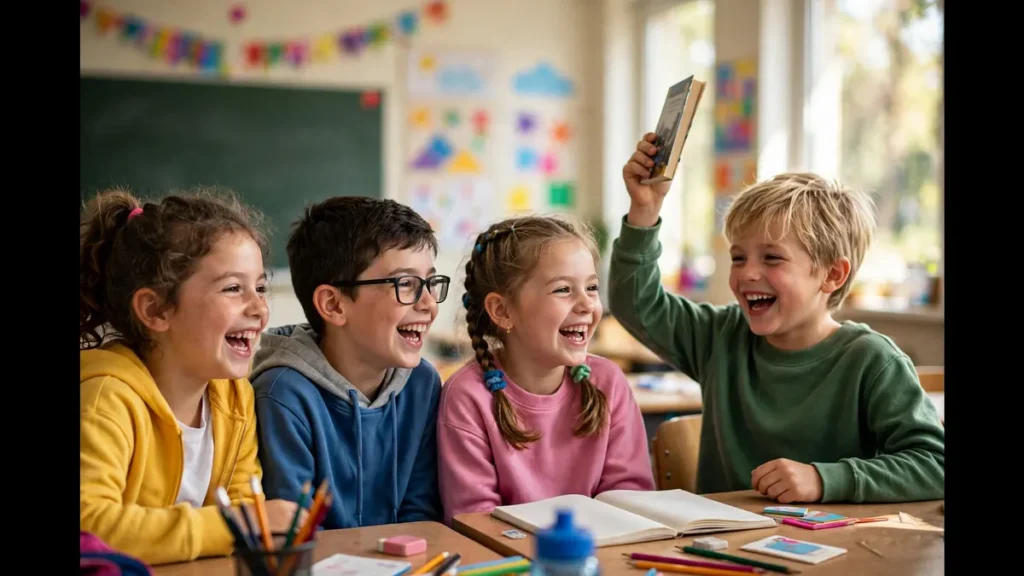
A game is that better option. It hands everyone in the room a shared job that needs no small talk and no catching up first. You do not need to know what your cousin does for a living to play on their team. You do not need to have seen your aunt in three years to laugh with her over a wrong answer. The game supplies the conversation, the laughter, and the reason to look at each other, and it does it without anyone having to announce that the family needs bonding time, a phrase that would send half the room running for the door. Togetherness is not a place. It is an activity, and a game is the easiest activity there is for a group of people who have not spent time together in months.
The Long Hours After Dinner
There is also a practical problem that Christmas games solve, and every host knows it well. Dinner ends, the plates are cleared, and then there is a long stretch of the day with nothing in particular to do. The presents have been opened. The big meal is over. The afternoon stretches out, and the house has to find a way to occupy itself until evening without everyone quietly retreating to their own devices.
A game stops the leak. It gives the afternoon a shape and a centre. When someone suggests a round of something after dinner, they are not really suggesting a game; they are suggesting that the day continue as a shared event instead of breaking into separate ones. The table gets cleared, the pieces come out, and suddenly the room has a purpose again. People who were drifting towards their bedrooms drift back towards the table instead. I have noticed that the families who seem happiest on Christmas Day are rarely the ones with the most impressive decorations or the biggest dinner. They are the ones who have something planned for that empty stretch of the afternoon, and more often than not, that something is a game.
Everyone Gets a Part to Play
One of the quiet strengths of a Christmas game is that it finds a job for everyone, including the people who usually have no job at all on Christmas Day. There is the shy teenager who has spent the day answering questions about school with one-word answers. There is the new partner, meeting half the family for the first time, who has spent the day smiling politely and hoping not to say the wrong thing. There is the relative who lives alone and is a little out of practice at being part of a crowd. There is the child who is too young for the adult conversation and too old for the toddler toys.
The teenager who would not say a word over dinner will happily read out quiz questions in a dramatic voice. The new partner who has been quietly watching all day discovers they are brilliant at guessing games and suddenly has something to be known for besides being somebody’s boyfriend or girlfriend. The quiet relative finds that they do not need to be loud to be useful; they just need to be the one who remembers the scores. If you want the evening to work well, it helps to plan a Christmas party game night with those roles in mind, so that nobody is left standing at the edge of the room wondering where they fit. Games are entertainment, but they are also a kind of hospitality: a way of saying to every person in the room that there is a place for them here, and it has their name on it.
Grandparents and Grandchildren on Equal Footing
There is one relationship that Christmas games transform more than any other, and it is the one between the oldest and the youngest people in the room. At the dinner table, grandparents and grandchildren live in different worlds. The adults talk about the year, the house, the news. The children talk about their presents, their games, their friends. The conversation crosses the generations only in short bursts — a question about school, a story about the old days — and then it drifts back to its own side of the table.
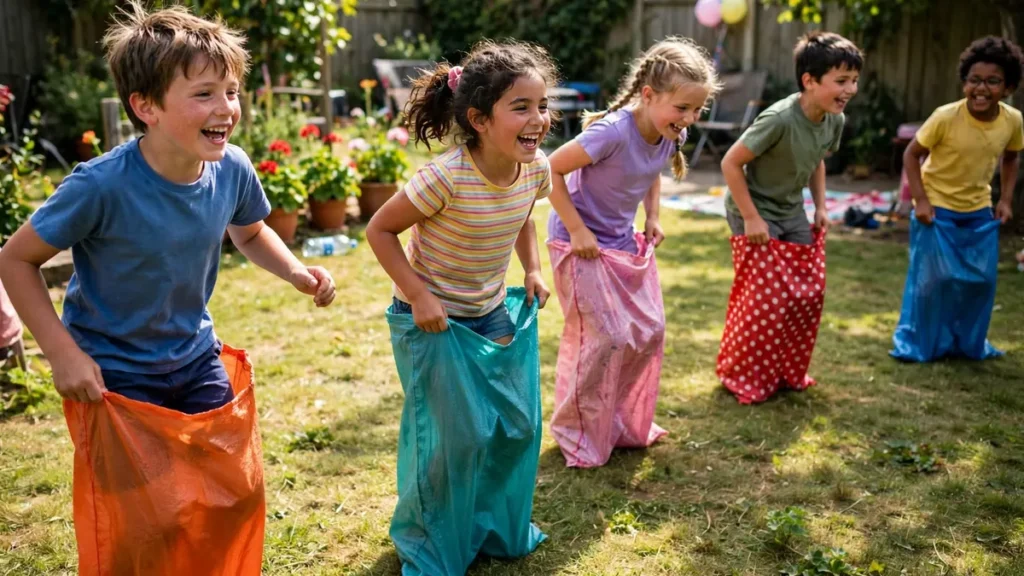
Put a game between them and all of that changes. A game does not care who is seventy and who is seven. It cares about who can spot the pattern first, or who remembers the answer, or whose hand is steadiest. I have watched a nine-year-old beat her grandfather at a game he has played for decades, and the look on his face — half pride, half outrage — is something no amount of polite dinner conversation could ever produce. I have watched a grandmother who barely speaks above a whisper during the day become the most feared player at the table by evening, because it turns out she has a memory for details that nobody else in the family can match.
That is a gift that runs in both directions. The children get to see their grandparents as people, not just as the kindly figures who hand out presents and fall asleep in the chair. They see them compete, laugh, lose gracefully or not at all, and be fully alive in a way that the rest of the day rarely shows. And the grandparents get to meet their grandchildren as equals for an hour, not as small people to be looked after but as opponents worth beating. When you pick games the whole family can genuinely play together, the best family board games for Christmas are the ones that let a child and a grandparent meet on level ground.

The Screens Lose Without a Fight
Every family knows the modern Christmas problem, and it is not really about the screens themselves. The phones are not the enemy; they are just very good at what they do. A phone offers each person in the room a perfectly personalised world, tuned exactly to their interests, available the moment they feel even slightly bored. Against that, a room full of relatives making small talk does not stand much of a chance, and it is no use pretending otherwise.
What a game does, and what a lecture about screen time never manages, is to offer something that is actually better than the phone for the next hour. Nobody reaches for their screen in the middle of a close round, because the game is more interesting than the screen. Nobody checks messages while the whole table is waiting for their answer, because the room is more interesting than the feed. The game does not ban the phones. It outcompetes them, and that is a much more honest victory.
The Game Is Where the Conversation Starts
Some people worry that games get in the way of real conversation at Christmas, that a family should be talking to each other instead of playing. I understand the worry, but in my experience it gets the order of things backwards. The conversation does not happen instead of the game. It happens because of it.
Think about how a real conversation starts between two relatives who have not seen each other in a year. It rarely starts with a deep question. It starts with something small and shared: a joke about a wrong answer, a complaint about a rule, a story triggered by a question on a card. The game gives them that first small thing, and the small thing opens the door to the bigger thing. The quiz answer about a song from the eighties reminds someone of a holiday they took as a teenager. The card game reminds two cousins of the summers they spent at their grandmother’s house.
The Memories Are Made, Not Just Remembered
People often say that Christmas games are about nostalgia, about playing the same old games the way the family always has. There is some truth in that, and the old games do carry their own warmth. But I think the more important truth runs the other way: Christmas games are not just a way of remembering the past. They are a way of making the future.
There is also a quiet handover that happens around the game table, and it is one of the loveliest parts of Christmas. The children who once needed the rules explained become the teenagers who explain them to the younger ones. The teenager who once kept score becomes the adult who organises the whole evening. The game passes from one generation to the next without anyone announcing it, and somewhere in that handover it stops belonging to any one person and starts belonging to the family itself. If you have ever wondered why family game night matters, the answer is in that handover: the game is the thread that runs through the years, and every Christmas adds another stitch.
This Christmas, Let the Game Do the Work
So this is my view, for what it is worth: Christmas games bring families together not because the games are special, but because togetherness needs a job to do, and a game is the simplest job a scattered family can share. It gathers the room, fills the empty hours, finds a part for everyone, puts the generations on equal footing, beats the phones fairly, starts the conversations, and leaves the family with new stories to tell next year. No other part of Christmas Day does all of that in a single hour, and none of it costs anything more than a cleared table and a willingness to look a little foolish.
When someone suggests a game this Christmas and someone else groans, I hope the game wins. Clear the table, find the missing pieces, argue briefly about the rules, and play. An hour later, when everyone is a little happier and a little closer than they were before, you will know why. The family did not just spend Christmas in the same room. For an hour, it was together, and that is the whole point of the day.