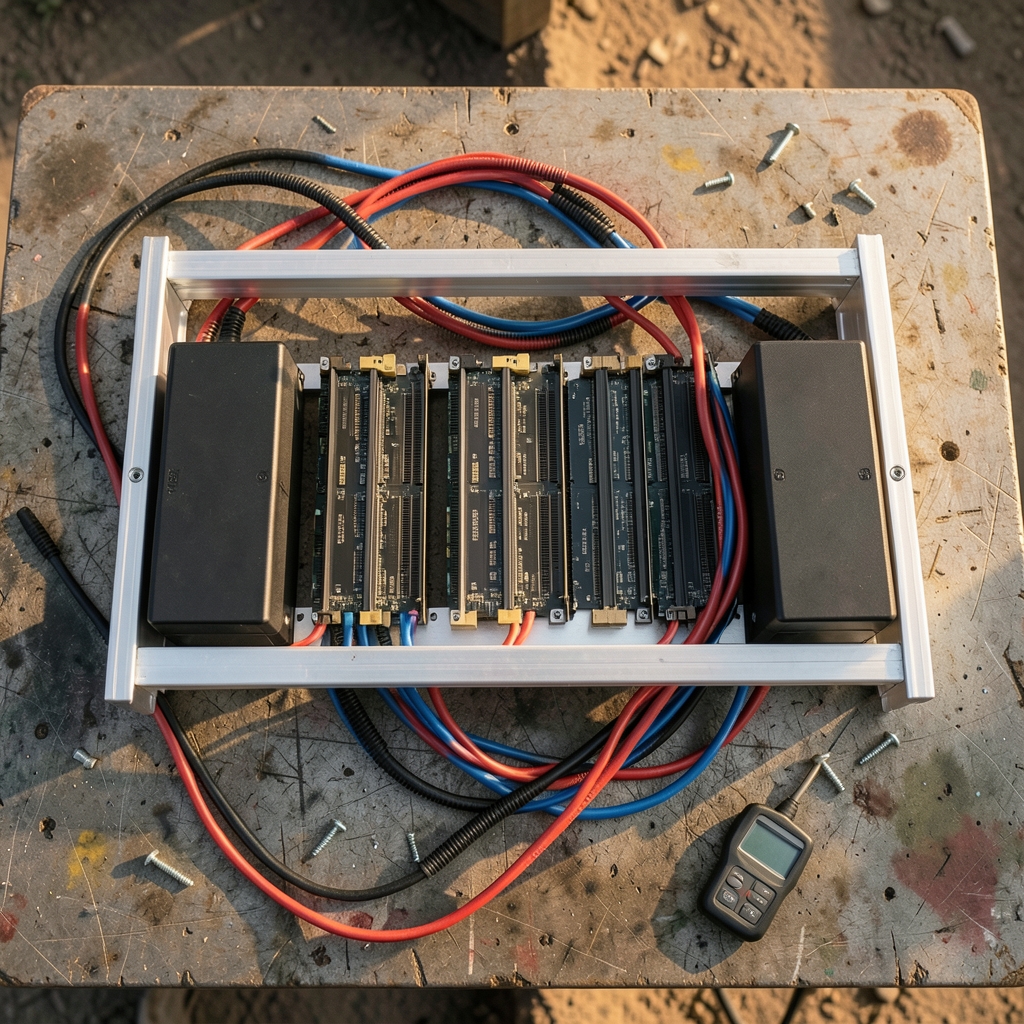
What is the one part of a mining rig that quietly decides whether the whole build runs for years or dies in a puff of ozone? It is not the GPUs everyone brags about. It is the power supply, the unglamorous box that converts wall current into something a dozen hungry graphics cards can survive on. Comparing mining rig power supplies is trickier than picking the highest wattage number on a box, because efficiency, connector safety, noise, and 24/7 duty all pull in different directions. This guide breaks down the real trade-offs so a build decision is based on evidence rather than forum folklore.
Why PSU choice matters more on a mining rig than on a gaming PC
A gaming PC runs its power supply hard for a few hours and idles the rest of the time. A mining rig runs flat out, day and night, often in a garage or spare room where dust and heat pile up. That changes the math completely.
Efficiency is not a vanity metric here. At 90% versus 80% efficiency on a 1,000W continuous draw, the gap is roughly 139W of extra heat and wasted electricity, about 0.1 kW. Over 24 hours that is around 2.4 kWh per day, every day. On a rig that runs for a year, that difference pays for a better unit several times over. The same logic applies to any tool you compare before committing, which is why buyers who weigh features carefully tend to make better long-term picks, much like the approach in this breakdown of AI music tool features to compare before you commit.
The second reason is stability. Ripple, noise, and transient response matter more for GPU stability than headline wattage. A cheap 1,200W unit that sags under sudden load spikes can cause crashes, rejected shares, or driver resets that look like GPU faults but are actually power faults. Reviews that measure ripple and transient behavior are worth more than a spec sheet.
The 80 PLUS tiers, explained without the marketing fog
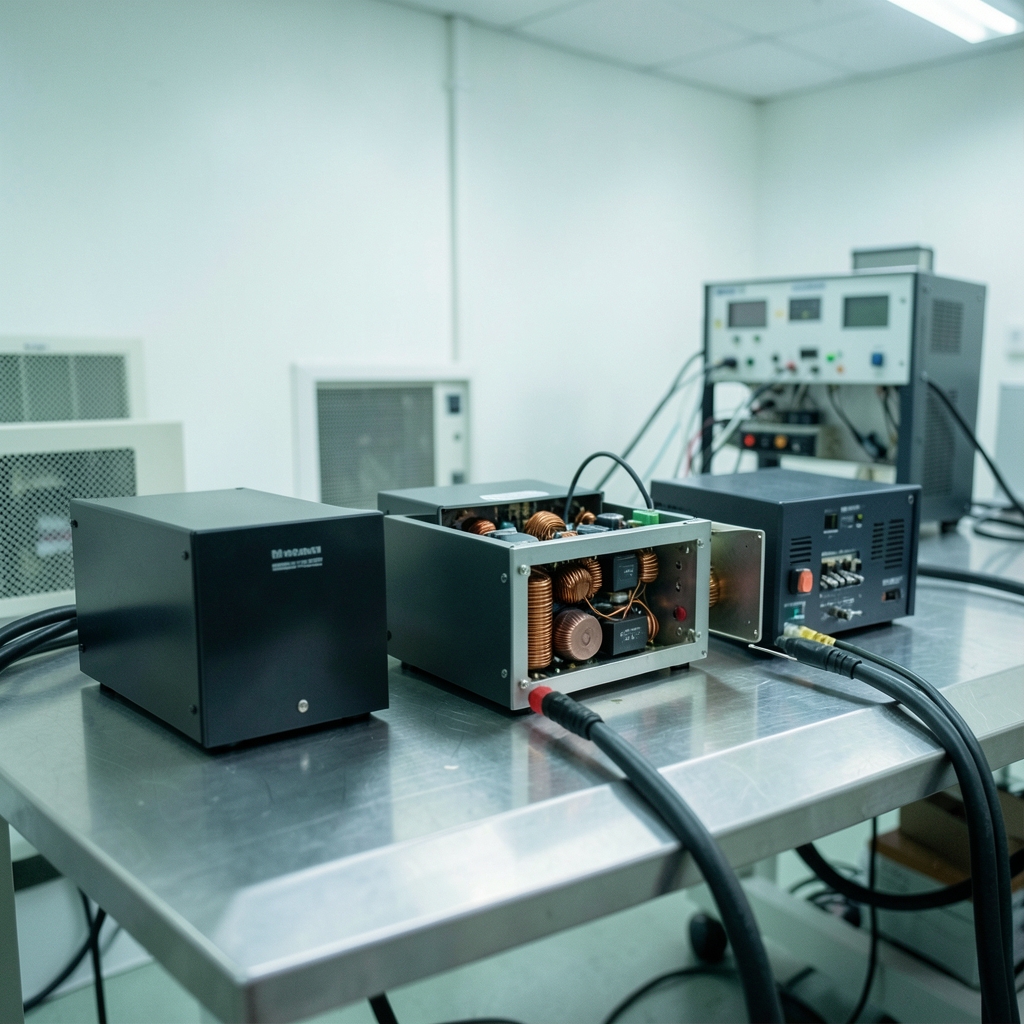
80 PLUS is a voluntary certification that rates power supply efficiency at 20%, 50%, and 100% load. The program has run since 2004, and the Titanium tier arrived in 2011. The tiers, from lowest to highest, are White, Bronze, Silver, Gold, Platinum, and Titanium.
| Tier | Rough efficiency position | Typical mining verdict |
|---|---|---|
| White | Entry level | Avoid for 24/7 rigs |
| Bronze | Modest gains | Budget-only, small rigs |
| Silver | Mid-tier | Rarely the best value |
| Gold | Strong all-round | The practical sweet spot |
| Platinum | Higher efficiency | Worth it at scale |
| Titanium | Top tier | Best for large farms |
One caution: exact Titanium thresholds differ between 115V and 230V input, so confirm the numbers on the certification spec sheet rather than trusting a retailer’s summary. And remember that certification is tested at around 23°C ± 5°C. It says nothing about 24/7 duty, dust, or a hot room in July. Efficiency certification does not equal mining suitability. That is an analysis point, not a guarantee from any standards body.
The practical takeaway: Gold is usually where the value curve flattens. Platinum and Titanium make sense when electricity is expensive or the rig is large enough that a 2% efficiency gain compounds into real money.
ATX 3.0, 12VHPWR, and why connector names matter
The ATX 3.0 specification, published in 2022 alongside PCIe 5.0, introduced the 12VHPWR connector rated for 600W and required power supplies to tolerate short power excursions above their rated wattage. A revised 12V-2×6 connector followed around 2023 to 2024, addressing melting and sense-pin issues that had been reported in the field.
For mining, this matters in two ways. First, if a rig uses modern high-power GPUs, the newer connector standard reduces the risk of the melted-plug failures that made headlines in 2022 and 2023. Second, the excursion tolerance in ATX 3.0 is genuinely useful, because GPU power draw is spiky, not smooth.
Be careful with naming. Secondary sources often conflate ATX 3.0 and 12V-2×6 dates. If a seller advertises “ATX 3.0 ready” without naming the connector revision, ask which one is physically present.
ATX units versus server PSUs with breakout boards
This is the biggest fork in the road when comparing mining rig power supplies. Most large rigs run either a big ATX unit or one or more server power supplies (often HP or Dell units in the 750W to 1,200W range) paired with a breakout board.
| Factor | ATX power supply | Server PSU + breakout board |
|---|---|---|
| Upfront cost | Higher per watt | Very low per watt |
| Noise | Quiet to moderate | Often very loud |
| Standard ATX signaling | Yes | Usually no |
| -12V and standby rails | Present | Often missing |
| Cabling | Native PCIe cables | Breakout board required |
| Best for | Home rigs, small farms | Dedicated rooms, sheds |
Server PSUs are cheap per watt and built for continuous duty, which is why farms love them. But they are loud, they typically need a breakout board, and they may not provide -12V or standard standby rails. That means no simple ATX power-on behavior and more wiring to get wrong. For a rig in a living space, an ATX unit is almost always the better experience. For a rig in a ventilated outbuilding where noise does not matter, server PSUs can be the economical choice.
How much load should a mining PSU actually carry?
Community practice, not a formal standard, is to run mining power supplies at roughly 70% to 80% of rated load. That headroom buys efficiency (most units peak near 50% load), keeps temperatures down, and absorbs the transient spikes that GPUs throw out. Treat this as best practice rather than a rule handed down by any standards body.
A simple planning method works well:
- Add up the rated power of every GPU, then add 20% for spikes and peripherals.
- Divide by 0.8 to find the minimum PSU wattage at 80% load.
- Split the total across two or more PSUs rather than pushing one unit to its ceiling.
- Keep risers and GPUs on the same PSU where possible to avoid cross-supply grounding oddities.
- Leave one spare PCIe cable per PSU for future changes.
That last point saves a lot of grief. Rig builders who plan cable headroom rarely have to rewire a whole frame just to swap one card.
Connectors, cables, and the mistakes that cost real money
Cable and connector safety is where cheap builds fail. High-current 6-pin and 8-pin PCIe cables need proper gauge wire, and daisy-chaining too many cards onto one cable is a classic error. The 12VHPWR melting reports from 2022 and 2023 exist for a reason: high current through a small contact area is unforgiving.
Common mistakes worth avoiding:
- Mixing PSUs on one riser. Power the riser and its GPU from the same unit.
- Using SATA or Molex for GPU power. These connectors are not built for the current a mining GPU pulls.
- Ignoring ambient temperature. A PSU rated for full output at 23°C may derate badly in a 40°C shed.
- Trusting the sticker wattage. Continuous vs peak ratings differ, and no-name units inflate both.
- Skipping the breakout board on server PSUs. Never wire directly to server PSU pins.
The pattern is consistent: failures cluster around connectors and heat, not around the silicon inside the PSU.
Noise, heat, and the room nobody thinks about
A mining rig is a space heater with extra steps. Every watt of inefficiency becomes heat inside the room, and every decibel of fan noise becomes a household negotiation. Platinum and Titanium units run cooler and quieter at the same load, which matters more than the efficiency number suggests.
If the rig lives indoors, prioritize ATX units with fan-stop modes and Gold-or-better efficiency. If it lives in a shed or garage, noise tolerance opens up server PSUs and cheaper tiers, but ventilation becomes the limiting factor. Either way, plan airflow around the PSUs, not the GPUs alone.
A practical comparison framework for buyers
When comparing mining rig power supplies side by side, score each candidate on these criteria rather than fixating on wattage:
| Criterion | What to check | Why it matters |
|---|---|---|
| Efficiency tier | 80 PLUS Gold or better | Lower running cost and heat |
| Continuous rating | Sustained, not peak | Real capacity under 24/7 load |
| Ripple and transient review data | Independent measurements | GPU stability |
| Connector type and count | Native PCIe, 12V-2×6 if needed | Safety and future-proofing |
| Fan behavior | Noise at 50% to 80% load | Livability and dust tolerance |
| Warranty length | 5 to 10 years typical at Gold+ | Signals build confidence |
| Cost per usable watt | Total price divided by 80% of rating | True value comparison |
This framework is the same discipline that makes any feature comparison useful, whether the subject is a power supply or the tools in this guide to CRM features that actually matter when you compare. The headline spec is rarely the deciding factor.
What the numbers say about long-run cost
Run the arithmetic on a 1,000W continuous load at 80% versus 90% efficiency. The waste difference is about 139W, or roughly 0.1 kW. At 24 hours a day, that is about 2.4 kWh per day, or roughly 876 kWh per year. Multiply by the local electricity rate and the gap between a Bronze and a Platinum unit often pays for itself within a year or two on a large rig.
Small rigs see smaller savings, so the math favors higher tiers as scale grows. That is why farms standardize on Gold and above while hobbyists often start with Bronze and regret it later. The same compounding logic shows up in comparisons of pipeline management tools across sales, where the cheapest option rarely wins over time.
Conclusion
Comparing mining rig power supplies comes down to a few honest questions. Does the unit deliver its rated wattage continuously, in a hot room, for years? Is it efficient enough that the electricity bill does not quietly eat the profits? Are the connectors safe for the current involved, and is the wiring plan sane? ATX units win on convenience and safety for home rigs, while server PSUs with breakout boards win on cost per watt for dedicated spaces. Gold efficiency is the practical sweet spot for most builders, with Platinum and Titanium paying off at scale or where power is expensive. Get those basics right, keep load around 70% to 80%, and the power supply stops being the weak link and becomes the reason the rig just keeps running. If you enjoy testing your own reasoning against a challenge, a mini crossword puzzle to solve faster is a fun way to sharpen the same careful, step-by-step thinking.
FAQ
What size power supply does a mining rig need?
Add up the rated power of every GPU, add about 20% for spikes and peripherals, then divide by 0.8 to keep load near 80%. A rig drawing 1,000W total therefore wants roughly 1,250W of rated capacity, often split across two units.
Is 80 PLUS Gold worth it for mining?
For most 24/7 rigs, yes. Gold units typically run cooler and more efficiently than Bronze, and the running-cost gap on a large rig often repays the price difference within a year or two. Small hobby rigs may see slower payback.
Can I use a server power supply for a mining rig?
Yes, and many farms do. Server PSUs are cheap per watt and built for continuous duty, but they are usually loud, need a breakout board, and often lack standard ATX signaling and -12V or standby rails. They suit dedicated, ventilated spaces better than living rooms.
What is the difference between 12VHPWR and 12V-2×6?
12VHPWR arrived with ATX 3.0 and PCIe 5.0 in 2022, rated for 600W. The revised 12V-2×6 connector appeared around 2023 to 2024 and addressed melting and sense-pin problems reported in the field. Always confirm which revision a unit actually uses.
Should I run one big PSU or several smaller ones?
Several smaller units usually win. They spread heat, reduce the cost of a single failure, and make it easier to keep each unit in its efficient 50% to 80% load band. Just keep each GPU and its riser on the same power supply.
Does 80 PLUS certification guarantee a PSU is good for mining?
No. Certification tests efficiency at around 23°C ± 5°C and says nothing about 24/7 duty, dust, high ambient temperatures, or ripple performance. Independent reviews that measure ripple and transient response are a better guide for mining use.


