
Quick Answer: What to check before using mining pool comparison tools?
Before relying on a mining pool comparison tool, check whether the numbers it shows reflect the pool’s payout scheme as well as its headline fee. The tool should disclose its own revenue model, show withdrawal thresholds and transaction costs, and link to the pool’s own terms page so you can confirm details yourself. A comparison site is a starting point for research, not a verdict.
Some tools rank pools by raw fee percentage, while others weight by hashrate share or historical luck. Those are different questions, and a ranking built on one metric can look very different from a ranking built on another. Independent monitoring data and public block records are more trustworthy than self-reported statistics.
Key factors to compare: payout scheme, total fee stack, minimum payout and withdrawal costs, coin-switching spreads, pool hash rate concentration, uptime and payout history, custody and two-factor policies, and the tool’s own affiliate disclosure.
Why Pool Comparisons Deserve More Scrutiny Than Most Product Reviews
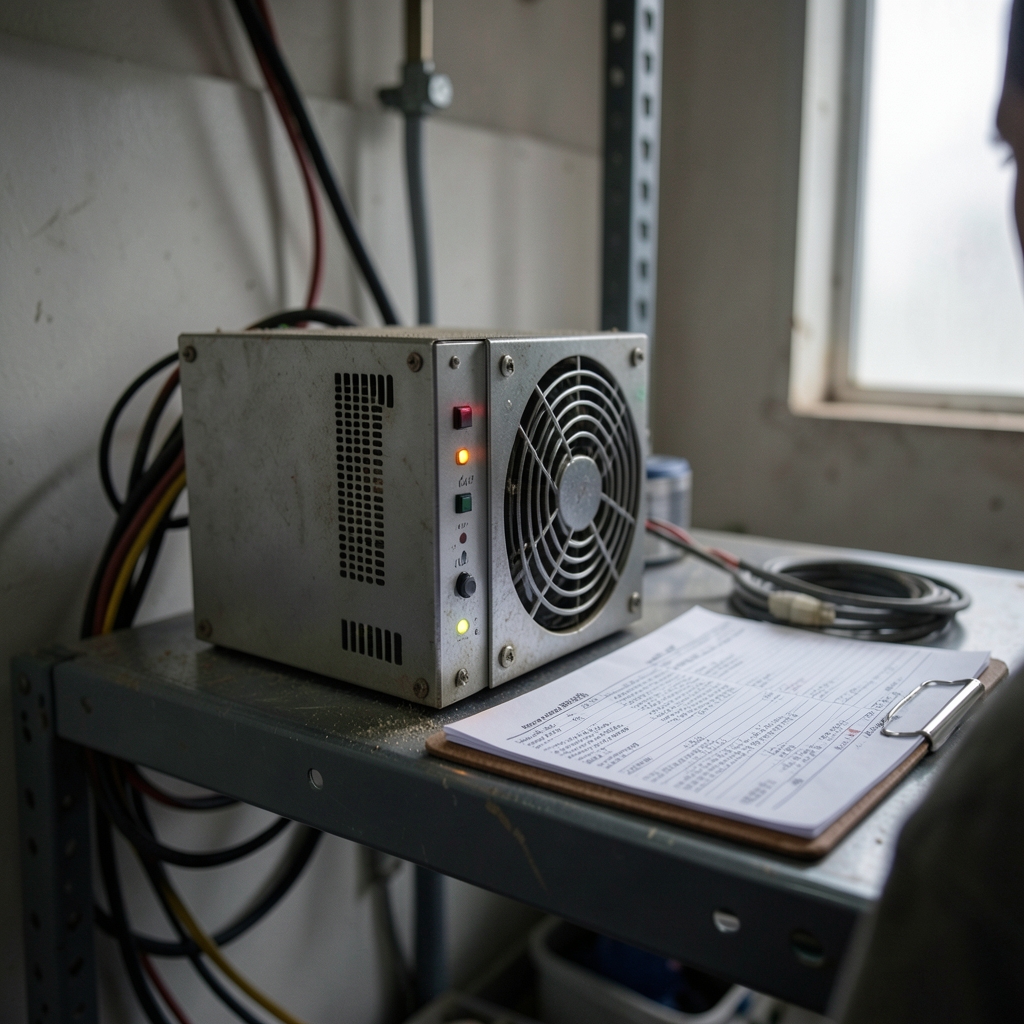
A mining pool is not a product you buy once and forget. It is a coordinator that aggregates hash rate from thousands of miners and splits rewards according to a published scheme. That makes pool choice a recurring financial decision, and it makes comparison tools unusually influential. A single percentage point of fee drag compounds across every block you help find.
Here is the uncomfortable part: many “best mining pool” pages earn money when readers click through and sign up. That does not make them useless, but it does mean rankings deserve the same skepticism you would apply to any affiliate-driven list. The practical move is to treat a comparison tool as a map, then verify the territory on the pool’s own site.
This article walks through what to check, in roughly the order a careful miner would check it. It also covers the mistakes people make most often, which tend to be the same handful of errors repeated across forums and comment sections.
Start With the Payout Scheme, Not the Fee
The headline fee is the number everyone looks at first, and it is the least informative number on the page. Payout schemes shift variance and cost between miner and pool in ways a fee percentage cannot capture.
PPS (pay-per-share) pays a fixed amount per share submitted, regardless of whether the pool finds a block. The miner gets predictable income and the pool absorbs the variance, which is why PPS pools typically charge more.
PPLNS (pay-per-last-N-shares) pays out when the pool finds blocks, distributed across recent shares. Fees are usually lower, but income swings with pool luck.
FPPS (full pay-per-share) bundles the per-share payment with an estimated transaction fee contribution, so the miner receives a share of fees as well as the block subsidy.
A comparison tool that ranks pools by fee alone will put low-fee PPLNS pools at the top and higher-fee PPS pools at the bottom. That ranking tells you nothing about which pool suits your risk tolerance. If you want predictable daily income, a slightly higher PPS fee may be worth it. If you can ride out variance, PPLNS may net you more over time. Check whether the tool names the scheme for each pool and explains how it affects effective yield. If it does not, the ranking is decoration.
Follow the Full Fee Stack
Pool fee is one line item in a longer bill. The rest of the stack includes:
| Cost item | What to check | Why it matters |
|---|---|---|
| Pool fee | Percentage charged per payout | The obvious one, but rarely the largest hidden cost |
| Minimum payout threshold | Lowest balance you can withdraw | A high threshold can lock small miners out for weeks |
| Withdrawal or transaction fee | Fixed or percentage charge on payout | Fixed fees hurt small balances disproportionately |
| Auto-exchange spread | Markup when converting to another coin | Easily erodes gains on coin-switching setups |
| Inactivity or account fees | Charges for dormant accounts | Rare, but worth confirming in the terms |
Add these up for your expected hash rate and you often find that a pool with a lower headline fee costs more in practice. A miner with modest hash rate paying a fixed withdrawal fee every payout can lose more than the difference between a 1% and a 2% pool fee. Run the arithmetic on your own numbers before trusting a ranking.
This is the same trap that shows up across software pricing generally, where the sticker price and the real bill diverge. Anyone who has compared software subscriptions knows the pattern; there is a useful parallel in this breakdown of proposal tools pricing comparison you actually pay, where the visible plan price and the true monthly cost are rarely the same figure.
Question Hashrate, Luck, and Snapshot Rankings
Pool hashrate and “luck” statistics are statistical quantities, and short windows are noisy. A pool that looks unlucky over three days may be perfectly average over three months. Comparison tools that publish single-snapshot rankings are showing you a photograph of a moving object.
Two habits help. First, look for tools that show a time series rather than a single number, and check the date stamp on any figure. Second, prefer pools with public block and payout records over pools that only report their own statistics. Independent monitoring beats self-reporting every time.
Be equally careful with uptime claims. Almost every pool advertises high uptime, and almost none of those claims can be independently verified from the comparison page. If a tool presents uptime as a ranked metric, find out where the data comes from. If the answer is “the pool told us,” treat it as marketing.
Check Pool Concentration Before You Add to It
Pool concentration is a network health issue and a personal one. When a small number of pools control a large share of total network hash rate, the network becomes more centralized and more exposed to coordination risks. Some comparison tools surface pool share; many do not.
The practical check is simple: look at the distribution of hash rate across pools and ask whether joining the largest pool makes the situation worse. Choosing a smaller pool sometimes means slightly less predictable payouts, but it spreads hash rate more evenly. Figures change constantly, so cite a live dashboard with a visible date rather than a number you remember from an article.
Verify Custody, Security, and Who Holds the Keys
Comparison tools almost never cover custody, and it is one of the most important things to check. Ask three questions:
- Do payouts go directly to an address you control, or does the pool hold a balance you must withdraw?
- Does the pool support two-factor authentication on account access and withdrawal?
- What happens to your balance if the pool suspends withdrawals or shuts down?
If a pool holds funds, you are extending credit to the operator. That is a real risk, not a theoretical one, and no fee comparison captures it. The same logic applies to any tool that touches your accounts or credentials; a pricing table will not tell you whether the vendor handles access safely. A similar caution applies to tools that sit between you and your accounts, as covered in this look at social media management tools pricing comparison teams, where seat limits and access controls matter as much as the monthly figure.
Read the Comparison Site’s Own Disclosure
Affiliate revenue is not a scandal, but undisclosed affiliate revenue is a problem. Check whether the comparison site states how it makes money. Look for a disclosure statement, and look at whether the ranking order happens to match the order of sign-up links.
A few practical signals separate useful tools from thin affiliate pages:
- The tool explains its methodology and says where the data comes from.
- It links to each pool’s own terms page rather than paraphrasing them.
- It shows a last-updated date on every figure.
- It includes pools that pay no affiliate commission, or at least explains why some are missing.
- It separates objective data from editorial opinion.
If a page has none of these, its rankings are guesses dressed as data.
Confirm the Terms on the Pool’s Own Site
Pool fees, minimum payouts, and payout schemes are frequently alterable at the operator’s discretion. A comparison tool might be accurate on the day it was written and wrong a month later. The pool’s own terms page is the only authoritative source.
This is the single most common mistake: trusting the comparison page over the primary document. The fix takes two minutes per pool. Open the pool’s terms, find the fee schedule and payout policy, and compare them against what the tool claims. If they disagree, believe the pool, and treat the tool’s other numbers with corresponding suspicion.
Do Not Outsource Tax and Legal Questions
Mining income and pool payouts are treated differently across jurisdictions, and the rules change. Comparison tools are not tax advisors and should not be used as a proxy for legal or tax status. Confirm current local rules with a qualified professional and the relevant tax authority’s published guidance. A ranking page cannot tell you how a payout will be characterized where you live.
Check the Data Behind Any Chart
Charts are persuasive and easy to misread. Before accepting a comparison chart, ask what is being measured. Is it pool fee, effective yield, hash rate share, or blocks found? Are the axes labeled? Is the time window stated? A chart showing “profitability” without stating the assumed hardware, electricity cost, and difficulty level is not a comparison at all.
If you are evaluating several tools at once, apply the same discipline you would to any research stack. The pattern of checking methodology before trusting a ranking repeats across categories; this guide to content audit tools pricing comparison you really pay makes a similar point about looking past the summary view to the underlying data.
A Practical Checklist to Run Before You Switch Pools
Run this sequence before acting on any comparison ranking:
- Identify the payout scheme for each shortlisted pool and decide which scheme fits your variance tolerance.
- Calculate your total cost stack at your actual hash rate, including withdrawal fees and thresholds.
- Check pool concentration on a dated live dashboard.
- Confirm custody arrangements and two-factor support.
- Read the comparison site’s disclosure and methodology notes.
- Verify fees and thresholds on each pool’s own terms page.
- Confirm the local tax treatment of payouts with a qualified source.
- Start small, compare actual payouts over a full payout cycle, then scale up.
Step eight is the one people skip. Real payout history from your own account beats any ranking, and it takes only a few weeks to gather.
Conclusion
Mining pool comparison tools are genuinely useful when they are transparent about their methods and honest about their incentives. They become dangerous when a headline fee percentage is mistaken for a total cost and a snapshot ranking is mistaken for a durable verdict.
The reliable approach is to use comparison tools for discovery, then verify everything that matters at the source: the pool’s payout scheme, its full fee stack, its concentration footprint, its custody arrangements, and its own terms page. Add a dated dashboard for network-level context and a qualified local source for tax questions, and the comparison tool becomes what it should be, a shortcut to a shortlist rather than a substitute for judgment.
Frequently Asked Questions
Are mining pool comparison tools reliable?
They are reliable as a starting point and unreliable as a final answer. Accuracy depends on how often the tool updates its data, whether it names its sources, and whether affiliate relationships shape the ranking. Always confirm fees, payout thresholds, and schemes on the pool’s own terms page before committing.
What is the difference between PPS and PPLNS pools?
PPS pays a fixed amount per share regardless of whether the pool finds a block, so income is predictable and fees are typically higher. PPLNS pays out when blocks are found, distributed across recent shares, so income varies with pool luck but fees are usually lower. The right choice depends on how much variance you can absorb.
Why does pool concentration matter to an individual miner?
High concentration means fewer pools control a large share of network hash rate, which raises centralization and coordination risks for the whole network. Joining an already dominant pool adds to that problem. Checking a dated live dashboard before choosing a pool is a small habit with network-wide effects.
Can a comparison tool tell me my actual mining profit?
Rarely with accuracy. Profit depends on your hardware efficiency, electricity cost, network difficulty, and the pool’s full fee stack, rather than its headline percentage alone. Any profitability figure that does not state its assumptions should be treated as illustrative rather than predictive.
How often do pool fees and payout terms change?
More often than most miners assume. Operators frequently reserve the right to alter fees, minimum payouts, and payout schemes at their discretion. That is why the pool’s own terms page, not a third-party comparison, is the authoritative source, and why it is worth rechecking after any prolonged break from mining.
Do comparison sites have to disclose affiliate relationships?
Disclosure expectations vary by jurisdiction, but the general principle is that readers should be able to tell when a ranking is influenced by compensation. Look for a clear disclosure statement and a stated methodology. A site that hides both is giving you advertising, not analysis.




