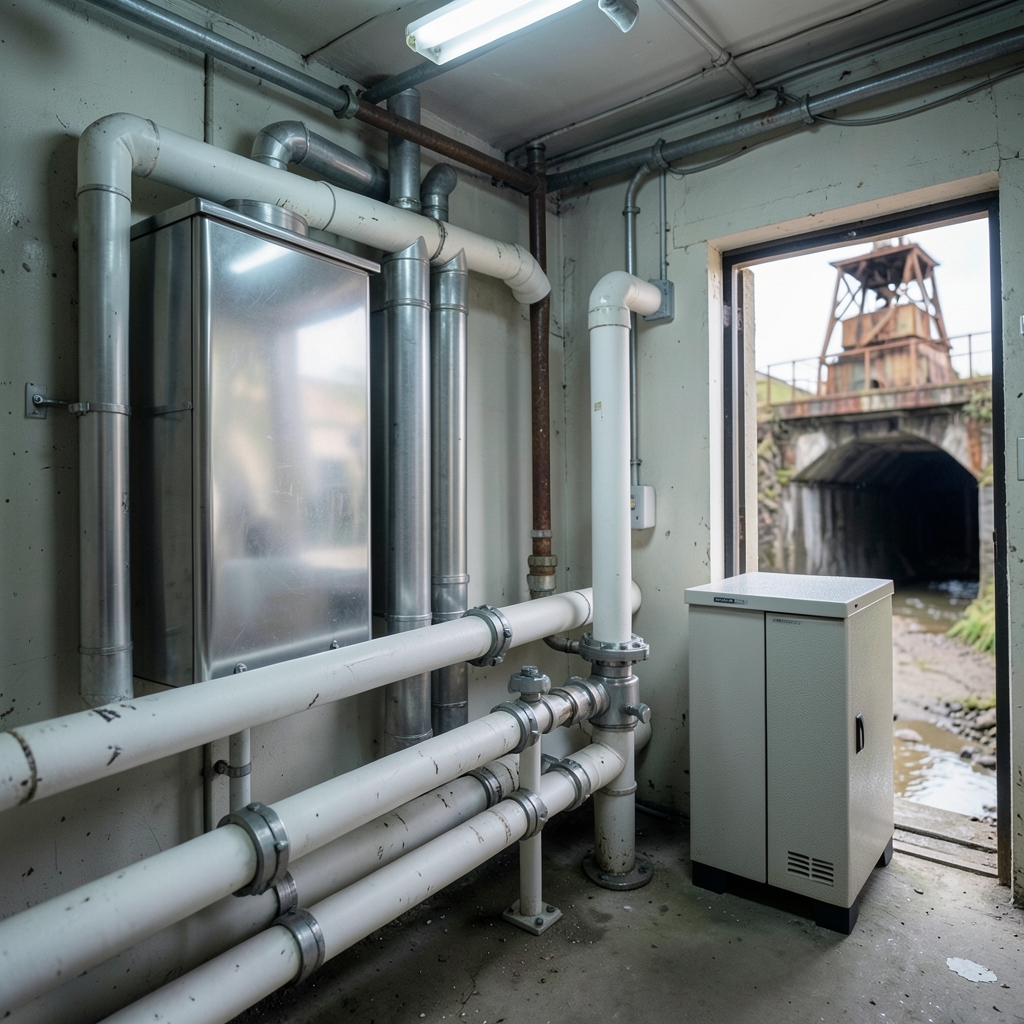
What if the heat under an abandoned coal town could warm the homes above it, decades after the last shift ended? That question has moved from engineering curiosity to real infrastructure. Flooded mine galleries across Europe and North America now act as giant, slow-charging thermal batteries, and several competing technologies claim to tap them. But these systems are not interchangeable, and comparing them honestly means looking at source temperature, pumping depth, heat pump performance, and the messy business of permits.
This comparison walks through the main categories of mine heat recovery, shows where each one wins and fails, and flags the numbers that get quoted far too confidently.
What Mine Heat Recovery Actually Recovers
Mine heat recovery covers two very different resources. The first is mine water: groundwater that has flooded old workings and picked up heat from surrounding rock. It typically sits between 10 °C and 30 °C, which makes it a low-grade source that almost always needs a heat pump to reach the 40–70 °C range useful for district heating. The second is ventilation exhaust air, warm air pushed out of active mines, often at 15–25 °C. The physics overlaps, but the engineering, cost, and risk profiles do not.
A third category, recovering heat from mine gas flares or compressor stations, exists but is niche. Most comparisons worth reading focus on the first two.
The longest-running reference case is the Heerlen project in the Netherlands, which began supplying heat in 2008 using flooded former coal galleries as a thermal store. It remains the example every other scheme gets measured against, partly because it proved the concept works at district scale and partly because it revealed how much planning the pipework demands.
The Four Main System Types, Compared
Water-source heat pumps on flooded workings
This is the mainstream approach. Water is abstracted from flooded galleries, passed through a heat exchanger, cooled slightly, and returned. A heat pump lifts the remaining heat to a usable temperature. Reported coefficients of performance (COP) for mine water at 10–20 °C typically fall in the 3–5 range, meaning three to five units of heat move for every unit of electricity consumed.
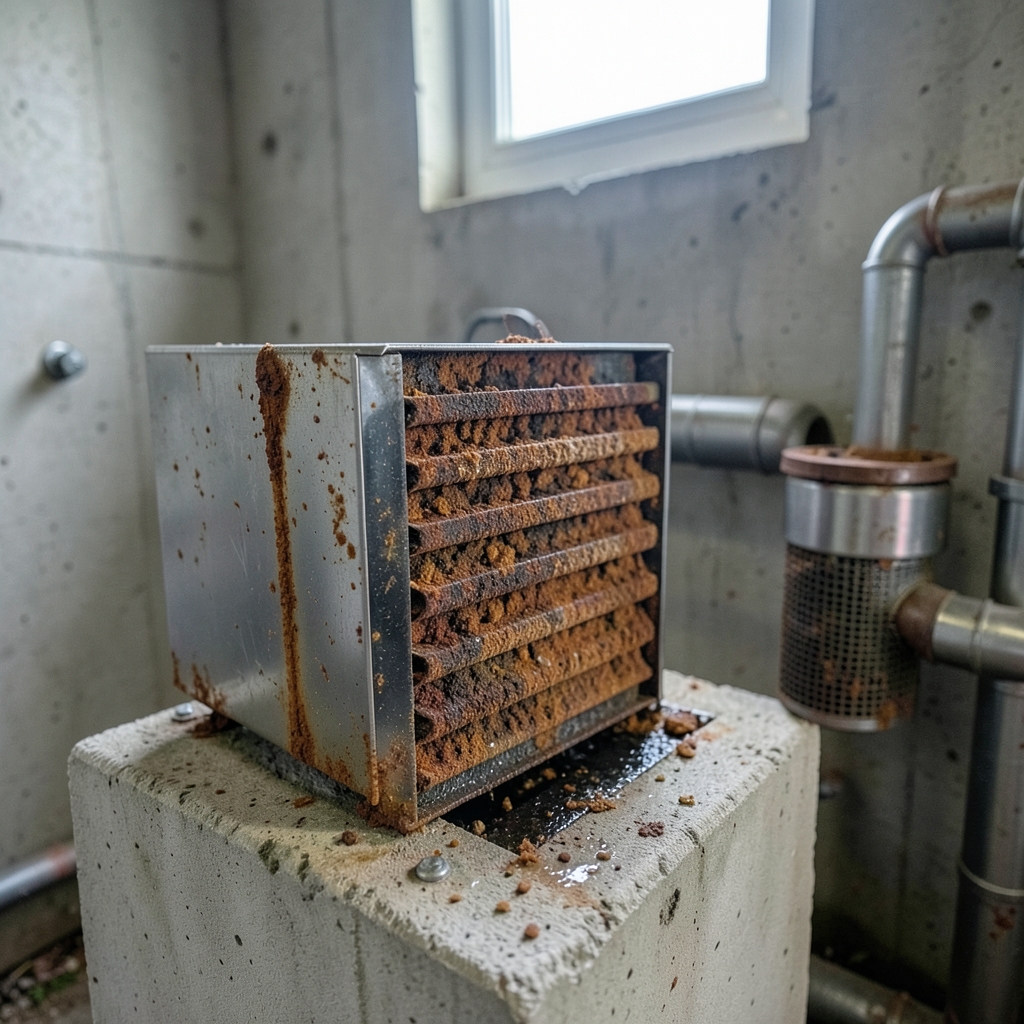
The appeal is steady temperature. Deep mine water barely moves with the seasons, unlike air-source systems that lose efficiency on the coldest days. The catch is water chemistry. Mine water can be acidic, mineral-rich, and full of iron that clogs heat exchangers. Practical operators learn fast that filtration and corrosion-resistant materials are not optional extras.
Open-loop versus closed-loop boreholes
Some schemes drill boreholes into workings and run a closed loop of fluid down and back, never touching the mine water directly. This sidesteps water quality problems and abstraction licensing in many jurisdictions, but heat transfer is weaker. Open-loop systems move more heat per well but invite permitting scrutiny and maintenance headaches.
A useful rule of thumb from practice: if the mine water is chemically benign and the regulator is comfortable, open-loop usually wins on capital cost. If the water is aggressive or the rules are unclear, closed-loop is slower to build but far calmer to operate.
Ventilation air and exhaust-air recovery
Recovering heat from mine ventilation exhaust is harder to make pay. Air has low thermal capacity compared with water, so you need large air volumes, big heat exchangers, and fans that consume some of the recovered energy. Source temperatures of 15–25 °C sound workable, but the economics tighten quickly once ductwork and frost protection are added. This category makes most sense where ventilation is already forced and continuous.
Abandoned-shaft thermal stores and aquifer systems
A newer framing treats the mine itself as a thermal store rather than a heat source. Heat is injected in summer and drawn back in winter, sometimes called aquifer thermal energy storage when groundwater flows are managed carefully. Heerlen’s later phases moved in this direction. It is elegant, but it demands detailed geological modelling, because nobody wants to discover their heat drifting into a neighbouring licence area.
Side-by-Side Comparison Table
| Factor | Mine water heat pump (open-loop) | Closed-loop boreholes | Ventilation air recovery | Thermal store / ATES |
|---|---|---|---|---|
| Typical source temperature | 10–30 °C | 10–25 °C | 15–25 °C | Varies, managed |
| Heat pump usually needed | Yes | Yes | Often yes | Yes |
| Typical COP range | 3–5 | 3–4 | 2.5–4 | 3–5 |
| Main technical risk | Water chemistry, corrosion | Weak heat transfer | Air volume, fan energy | Geological uncertainty |
| Permitting burden | High (abstraction rules) | Moderate | Lower | High |
| Best fit | District heating near flooded workings | Sensitive sites, unclear rules | Active mines with forced ventilation | Campuses, phased schemes |
Treat every number in that table as an order of magnitude. Published COPs and costs for mine water schemes vary by roughly a factor of ten across studies, driven by source temperature, pumping depth, and whether the scheme is new-build or retrofit. Anyone quoting a single “typical” figure without a dated source is overselling.
Where the Costs Really Land
Capital cost per kilowatt of installed capacity is the comparison metric most often requested and least often reliable. The honest answer is that cost depends heavily on distance from source to heat demand. A scheme drawing water from a shaft directly beneath a housing estate looks cheap. The same technology three kilometres from the nearest customer needs distribution mains, and those mains can easily exceed the plant cost.
Operational costs hinge on pumping. Deep abstraction means lifting water against gravity, and that electricity bill can quietly eat the efficiency gains. Shallow workings with high natural water levels are far kinder. This is why two schemes with identical heat pumps can post wildly different running costs.
Practical tip: ask any feasibility study two blunt questions. How deep is the water table, and how far is the nearest heat customer? If the study dodges either, the numbers are decoration.
Regulatory and Practical Hurdles
Mine water heat schemes sit in an unusual regulatory gap. In the UK, for example, they touch the Coal Authority’s permitting regime and the Environment Agency’s abstraction rules, which differ from those governing conventional ground-source heat pumps. Developers who assume the ground-source playbook applies get surprised.
Common mistakes seen in early-stage projects include:
- Skipping a water chemistry sample until after equipment is ordered.
- Assuming the mine’s flooded volume is known when records are partial or lost.
- Underestimating the permitting timeline by months, not weeks.
- Designing for peak winter demand without checking whether the source can sustain the flow.
- Forgetting that returning cooled water can affect neighbouring users or the mine’s thermal balance.
On the last point, thermal interference is real. Pump too much heat out of a shared block of workings and temperatures drift down over years. Good schemes monitor and model this; sloppy ones find out the hard way.
For teams comparing technology options more broadly, the same discipline applies as with software selection: define the job first, then compare features. That logic runs through guides on CRM tools and which features actually matter when you compare, and it holds for heat pumps too.
How to Compare Systems for a Specific Site
A workable comparison process looks like this:
- Map the resource. Confirm flooded extent, water level, temperature, and chemistry from boreholes and historical records.
- Map the demand. Find the nearest consistent heat load, ideally a year-round one such as a leisure centre, hospital, or housing block.
- Estimate the lift. The gap between source temperature and delivery temperature drives COP more than any other variable.
- Model pumping energy. Include it in every efficiency figure, not as a footnote.
- Check the permits early. Talk to regulators before design freezes.
- Stress-test the economics. Run low, mid, and high scenarios rather than one confident number.
This staged approach mirrors how buyers compare other complex technical purchases, from pipeline management tools compared across sales teams to AI coding tools where features must be compared before you commit. The pattern is universal: the impressive headline feature rarely decides the outcome; the boring operational detail does.
What the Evidence Base Gets Right and Wrong
The strongest evidence comes from operational schemes rather than models. Heerlen has run since 2008, and its phased expansion provides the clearest long-term data on mine water district heating. Public-sector schemes have added practical case studies in recent years, including work drawing on flooded workings beneath towns in England.
Resource estimates are shakier. Studies have suggested mine water could supply a meaningful share of national heating demand, but the spread between estimates is wide enough that they should be read as order-of-magnitude signals, not forecasts. The uncertainty comes from unknown flooded volumes, varying rock thermal properties, and the simple fact that heat demand is rarely located directly above old workings.
Peer-reviewed comparisons of mine water heat pump performance exist and are worth reading in full rather than via summaries, because the headline COP often hides the boundary conditions that produced it. If you enjoy testing whether a claim holds up under scrutiny, the mindset is not unlike working through very hard riddles and challenging brain teasers — the answer is usually in the detail you skipped.
Honest Verdict by Use Case
District heating near shallow flooded workings: mine water heat pumps are the strongest option, provided water chemistry is managed and demand is close.
Single buildings or small clusters: closed-loop boreholes often make more sense, because open-loop permitting costs don’t scale down well.
Active mines with continuous forced ventilation: exhaust-air recovery deserves serious study, though fan energy must be counted honestly.
Campuses planning in phases: thermal storage approaches offer flexibility, but only with solid geological modelling behind them.
Sites with aggressive mine water chemistry: budget for filtration and corrosion protection from day one, or choose closed-loop and accept lower efficiency.
Conclusion
Mining heat recovery is not one technology but a family of them, and the comparison that matters is always site-specific. Source temperature, pumping depth, water chemistry, distance to demand, and permitting timelines decide outcomes far more than the brand on the heat pump. The schemes that work tend to be the unglamorous ones: chemistry tested early, regulators consulted before design freeze, pumping energy counted in every efficiency claim, and economics stress-tested across scenarios. The schemes that struggle usually skipped one of those steps. Mine water is a genuinely large, genuinely underused heat resource, but it rewards patience and punishes shortcuts. Compare the categories honestly, question every quoted COP, and the right system for a given site usually becomes obvious.
FAQ
What temperature is mine water, and why does it matter?
Mine water typically sits between 10 °C and 30 °C. That is too cool for direct use in most heating systems, so a heat pump is almost always needed to raise it to 40–70 °C. The warmer the source, the less electricity the heat pump consumes, which is why source temperature is the single most important number in any comparison.
Do mine heat recovery systems always need a heat pump?
For water-source schemes, essentially yes. The temperature lift required for district heating or domestic hot water is too large for direct exchange. Ventilation air recovery sometimes allows partial direct use, but most designs still include a heat pump to reach useful delivery temperatures.
What COP can you realistically expect from mine water heat pumps?
Reported coefficients of performance for mine water at 10–20 °C generally fall between 3 and 5. However, published figures vary widely because of differences in source temperature, pumping depth, and whether the scheme is new-build or retrofit. Treat any single quoted COP without its boundary conditions with suspicion.
Is open-loop or closed-loop better for mine water?
Open-loop systems transfer more heat per well and often cost less to build, but they expose equipment to mine water chemistry and require abstraction permits. Closed-loop boreholes avoid direct contact with the water and simplify regulation, at the cost of weaker heat transfer and more drilling. The right choice usually comes down to water quality and local permitting rules.
Why do cost estimates for mine heat schemes vary so much?
Because the variables are enormous. Distance from the mine to heat customers can require kilometres of distribution mains. Pumping depth affects running costs. Chemistry affects maintenance. And retrofit schemes carry different costs from new-build. Estimates that ignore these factors can be off by an order of magnitude.
Can extracting heat from mine water cool the resource over time?
Yes, if extraction outpaces natural recharge. Pumping large heat volumes from a shared block of workings can gradually lower temperatures, affecting neighbouring users and the scheme’s own long-term performance. Well-run projects monitor temperatures and model thermal interference; poorly planned ones discover the problem years later.




