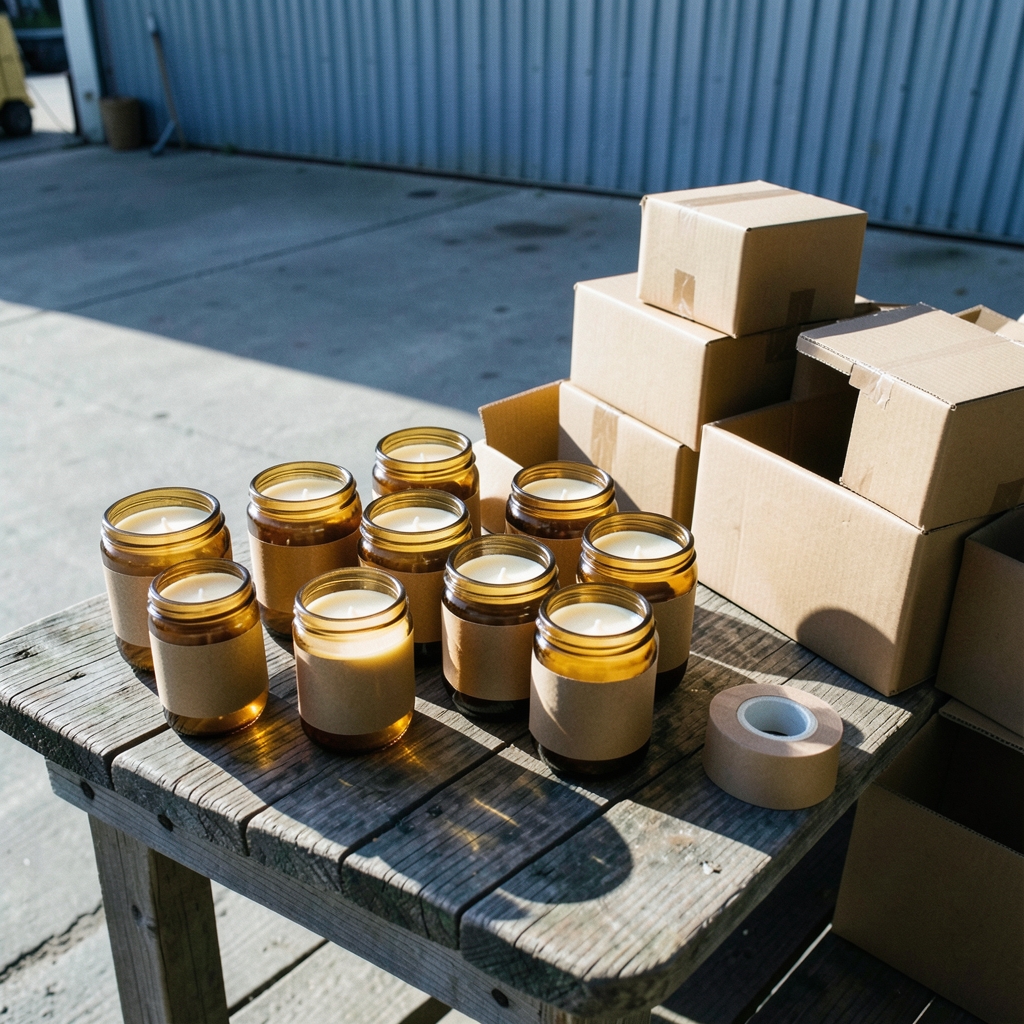
What makes a candle business name stick in someone’s head after they’ve scrolled past a hundred other labels? It’s rarely the cleverest pun or the fanciest word. More often, it’s a name that paints a picture, rolls off the tongue, and doesn’t sound like it belongs to every other candle maker on the same craft-fair table.
Naming a candle company is a strange mix of art and paperwork. You want something warm and evocative, but you also need something you can legally own. Get the balance right and your name does half your marketing for you. Get it wrong and you’re either fighting a trademark dispute or blending into a very crowded shelf.
This guide walks through what actually works, what to avoid, and how to test a name before you print a single label.
Why Candle Names Are Harder Than They Look
The candle market is enormous and growing, with industry estimates putting global sales somewhere in the range of ten to fifteen billion dollars in the mid-2020s. That’s good news if you’re launching. It’s also a warning: millions of names are already taken, and the obvious ones went first.
There’s a second problem. The vocabulary of candles is tiny. Wax, wick, glow, scent, ember, burn, flame, light. Search any business registry and you’ll find thousands of variations on those words. That familiarity makes names easy to remember but also easy to confuse, and confusion is exactly what trademark law exists to prevent.
So the challenge isn’t finding a pretty word. It’s finding a name that’s distinctive enough to protect, simple enough to recall, and flexible enough to grow with you when you add diffusers, room sprays, or a subscription box.
The Trademark Spectrum, Explained Simply

U.S. trademark law sorts names into a spectrum from strongest to weakest. Understanding it saves a lot of heartbreak later.
| Category | What It Means | Example for a Candle Brand | Protectable? |
|---|---|---|---|
| Fanciful | Invented word | Zovela | Strongest, yes |
| Arbitrary | Real word, unrelated meaning | Marble Fox | Strong, yes |
| Suggestive | Hints at a quality | Ember & Oak | Yes, no extra proof needed |
| Descriptive | Describes the product | Soy Lavender Candle Co. | Generally no, without proof |
| Generic | The product itself | Candle | Never |
The sweet spot for most small brands is suggestive. A name like Ember & Oak hints at warmth and woodsmoke without literally saying “wood-scented candle.” It’s memorable because it’s concrete, and it’s protectable because a competitor selling woodsmoke candles can’t claim those two words as their own.
Merely descriptive names are the trap. They feel safe because they explain what you sell, but they’re the hardest to register and the easiest for rivals to imitate. Generic terms like “Scented Candle Co.” can’t function as trademarks at all.
What Makes a Name Actually Memorable
Memory research consistently shows that concrete, imageable words stick better than abstract ones. That’s why “Marble Fox” beats “Aromatic Essence” in a recall test almost every time. You can see a marble fox. You can’t see aromatic essence.
A few patterns that work in practice:
- Concrete nouns over adjectives. “Cedar & Salt” is stronger than “Fresh Cedar.” Nouns give the brain something to hold.
- Two-part names with rhythm. Pairs like “Wick & Willow” or “Hollow Pine” have a natural cadence that’s easy to repeat out loud.
- Alliteration, used sparingly. “Mellow Marsh” is catchy. “Mellow Marsh Moonlight Melts” is a mouthful.
- Short beats long. Two or three syllables is the comfortable zone for a brand people will say in conversation.
There’s a practical test that experienced founders swear by: say the name to someone once, then ask them an hour later what it was. If they can’t recall it, the problem is the name, not the listener.
Common Mistakes That Cost Real Money
Most naming disasters follow a predictable script. Here are the ones worth avoiding.
Skipping the trademark search. This is the single most expensive mistake. A name can feel unique to you and still be registered by someone three states away in the same product class. The official database is free to search, and an hour there can save thousands later.
Falling in love before checking the domain. Founders often pick a name, design a logo, and only then discover the .com is parked and priced at five figures. Check domain and social handle availability on day one, not month three.
Chasing the pun too hard. Candle puns are fun, but the space is crowded. Names leaning on “wicked,” “lit,” or “burn” appear so often that they blur together. A pun can work if it’s genuinely fresh, but it’s a high-risk lane.
Ignoring pronunciation. If a customer hesitates before saying your name, they won’t recommend it to a friend. Test it with people who haven’t seen it written down.
Making it too narrow. A name built entirely around one scent family boxes you in. If you launch with lavender and later want to sell smoky leather candles, “Lavender Fields Co.” becomes a liability.
How to Generate Names That Fit Your Brand
Start with what your candles actually are, not what sounds nice. Answer three questions: Who buys them, what feeling do they get, and what makes your process different?
From there, try these angles:
- Place-based names. Streets, neighborhoods, landscapes. These are concrete and often unclaimed. If you want inspiration for how location names can be playful, browse these funny city names for a sense of how place words carry personality.
- Material and process words. Hive, pour, bloom, ash, wick, clay. Combine one with a second concrete word.
- Personal but not precious. A grandmother’s first name or a childhood street can be memorable without being sentimental.
- Invented words. Blend two real words or bend a spelling. These are the easiest to trademark and the hardest to forget.
- Sensory pairings. Combine a texture with a scent cue: Velvet Smoke, Rough Honey, Cold Linen.
Once you have a list of thirty or forty candidates, cut ruthlessly. Anything you have to explain is out. Anything you’d be embarrassed to say on a podcast is out.
Testing a Name Before You Commit
A name isn’t real until it survives contact with strangers. Run it through four checks.
First, the spell test. Say it aloud to five people and ask them to type it. If three spell it wrong, your domain strategy just got harder.
Second, the registry check. Search the trademark database for your product class, then search your state’s business registry. Both matter, and they’re different systems.
Third, the search results test. Type the name into a search engine. If page one is dominated by an unrelated company with the same name, you’ll spend years fighting for visibility.
Fourth, the shelf test. Sketch a mock label. Does the name look good in the typeface you want? Does it fit on a jar without shrinking to nothing? Some names read beautifully and look cramped in print.
For a lighter look at how naming conventions play out in other categories, this collection of funny pet names for dogs and cats shows how sound and rhythm drive recall, and the same principles transfer directly to product branding.
Name Ideas by Style
Sometimes seeing categories helps more than a list of individual names. Here’s how different styles behave.
Warm and Natural
Names built on wood, fire, and earth feel cozy and age well. Think Birch & Bramble, Hearthstone, or Copper Kettle. These suit brands selling to home-decor buyers and gift shoppers. The risk is that this lane is crowded, so pair a common word with an unexpected one.
Minimal and Modern
Short, clean names with a slight edge work for design-led brands. Slate, Form, and Noma-style invented words signal a premium aesthetic. These names photograph well and scale easily across product lines. (90 + Funny Inappropriate Names That Will Make You Laugh 😂)
Playful and Quirky
Funny names can build a devoted following fast, especially on social media. If you’re drawn to humor, look at how other niches handle it. This list of funny inappropriate names shows the line between cheeky and off-putting, and the best funny candle names stay firmly on the charming side of it. (Best prank names)
Personal and Story-Driven
A founder’s name or a family reference can carry real warmth. The catch is scalability: if you ever sell the business, a personal name travels awkwardly. Many founders keep the personal name as a sub-line rather than the main brand.
Checking Availability the Right Way
The process is more orderly than most people expect, and doing it in the right sequence prevents wasted effort.
- Brainstorm wide. Generate at least thirty names before eliminating any.
- Search the trademark database for each shortlisted name in the relevant class. Record live marks as well as dead ones.
- Check your state’s business registry for existing entities using the name.
- Check domain availability for .com and one backup extension.
- Check social handles on the two platforms you’ll actually use.
- Run a general web search to spot conflicts and confusingly similar brands.
- Consult a trademark attorney before filing, especially if you plan to sell nationally.
The order matters. There’s no point falling in love with a name that fails step two, and no point paying for a logo before step four.
When You Need a Naming Theme for a Collection
Many candle businesses eventually need product-line names in addition to the company name. Seasonal collections, subscription boxes, and gift sets all need their own identity. A strong parent brand helps here: if your company name is distinctive, sub-names can be looser and more playful.
A useful trick is to build collections around a single constraint. One brand names every candle after a type of weather. Another uses only verbs. Constraints make the lineup feel intentional rather than random, and they make future naming decisions faster.
If you’re building a community around your brand, group naming conventions offer a useful parallel. These creative names for friend groups show how a shared theme turns a loose collection into something that feels like a club, which is exactly the emotional effect a well-named candle collection should create.
Conclusion
A memorable candle business name isn’t about being clever. It’s about being concrete, distinctive, and legally yours. The strongest names hint at what you sell without describing it, use imageable words the brain can hold onto, and survive the boring checks that most founders skip.
Start wide, cut hard, and verify everything before you commit. Search the trademark database, check the domain, say the name out loud to strangers, and sketch it on a label. Do that groundwork and your name becomes an asset you can build on for years. Skip it, and you’ll be rebranding in eighteen months with a stack of unusable labels in the closet.
The good news: the process is teachable, and the tools are free. A weekend of careful work now beats a year of second-guessing later.
Frequently Asked Questions
How do I know if a candle business name is already taken?
Check three places: the federal trademark database for your product class, your state’s business entity registry, and a general web search. Each catches different conflicts. A name can be free at the state level and still be a registered trademark nationally, so all three checks matter.
Should I use the word “candle” in my business name?
Usually not. Words that name the product itself are generic and can’t be protected as trademarks. They also make you harder to distinguish from competitors. A suggestive name that hints at scent or mood is both more memorable and more defensible.
What is a suggestive name, and why does it matter?
A suggestive name hints at a quality without describing it directly. It sits in the middle of the trademark spectrum, which means it’s protectable without proving that customers already associate the name with you. That’s a significant advantage for a new brand with no market recognition yet.
Can I use a pun or a funny name for my candle company?
Yes, and humor can build a loyal following quickly. The risks are that pun-heavy names cluster around the same few words and that a joke can date badly. Test the name on people outside your friend group, and make sure it still sounds good when you have to say it in a professional setting.
How many name ideas should I generate before choosing?
Aim for at least thirty. Most people stop at five, which almost guarantees they’re choosing from the obvious, already-taken options. Volume forces you past the clichés and into the more distinctive territory where protectable names live.
Do I need a trademark to start selling candles?
You can start selling without one, but you can’t stop someone else from using a similar name. Filing gives you exclusive rights in your class and the ability to enforce them. At minimum, run a search before you print labels, because rebranding after a dispute costs far more than filing early.




