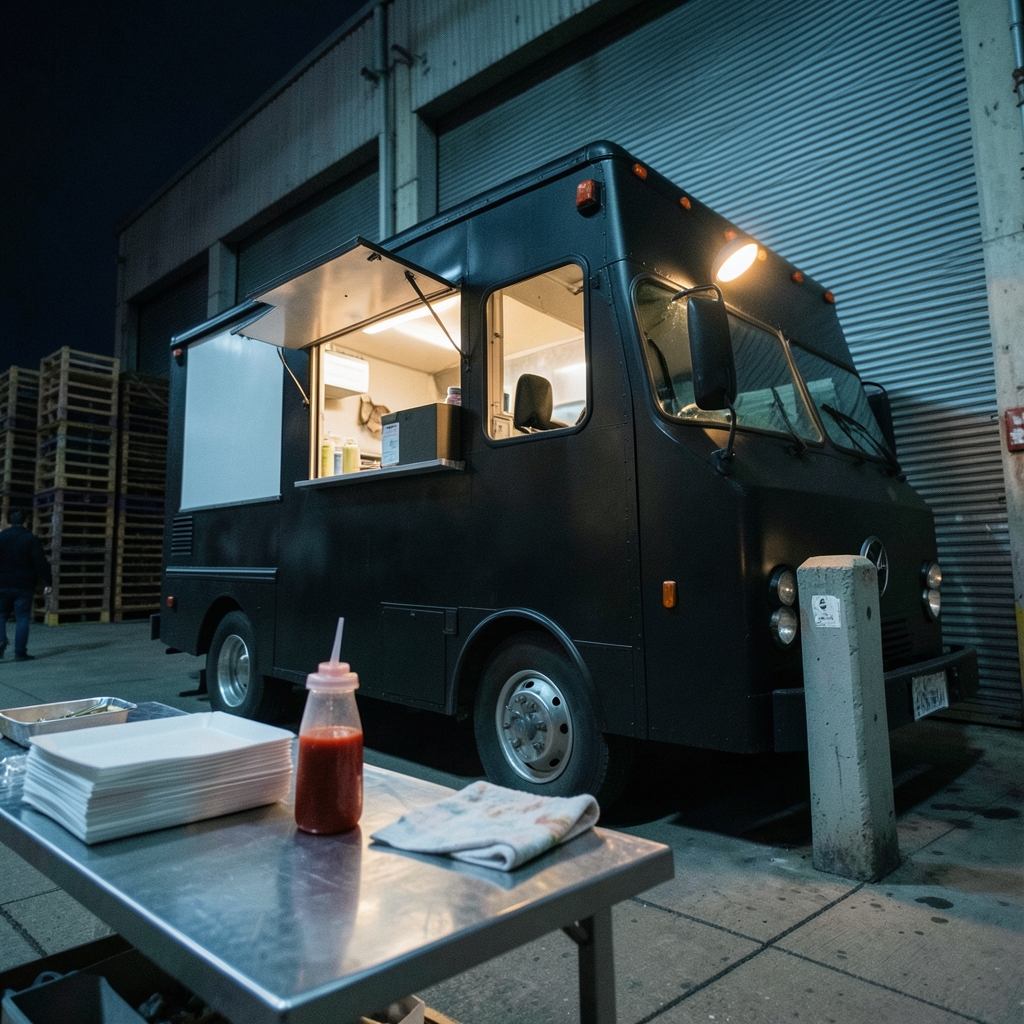
What makes a stranger pull over for a taco they didn’t plan to buy? Often, it’s the name painted on the side of the truck. A great food truck name does real work: it signals the menu, sets a mood, and gives people something easy to say when they recommend you to a friend. A bad one slides right off the brain.
The modern food truck boom is usually traced to 2008 in Los Angeles, when Kogi Korean BBQ started tweeting its locations and drawing huge lines. Kogi’s name itself was a mashup of “Korean” and “taco” — a portmanteau that told customers exactly what kind of food adventure awaited. That moment changed how mobile vendors thought about branding. Before it, the old slang “roach coach” carried a whiff of distrust. After it, trucks could feel premium, playful, and worth chasing across town.
This guide breaks down what makes a food truck name cool rather than cringe, with practical patterns, ready-to-steal ideas, and the legal and practical traps that trip up first-time owners.
What “Cool” Actually Means for a Food Truck Name
Cool is not the same as clever. A name can be a brilliant pun and still fail, because nobody can spell it, say it out loud, or remember it after two beers. The names that stick tend to hit four notes at once:
- Sayable in one breath. If a customer has to repeat it to a friend, it’s too long.
- Menu-signaling. People should get a hint of what you sell. “Smoke & Mirrors BBQ” does more work than “Nirvana Kitchen.”
- Visual. The name has to look good on a truck wrap, a napkin, and an Instagram handle.
- Searchable. If the name is a common phrase, you’ll fight for the top of search results forever.
There’s a reason puns and portmanteaus dominate truck names. Research on brand-name linguistics suggests that memorable, pronounceable names with pleasing sound patterns are easier for the brain to recall. That’s why “Wok This Way” lodges in your head while “Culinary Mobile Solutions” evaporates.
The Naming Patterns That Keep Working
Most great truck names fall into a handful of recognizable patterns. Knowing the pattern helps you generate dozens of options fast, then narrow down.
The Pun and the Play on Words
Wordplay is the classic move. “Wok This Way,” “Cereal Killer,” “Bao Down,” “Frank & Stein” (hot dogs), “Nacho Average Truck.” Puns work because they’re fun to say and easy to share. The risk is that the joke wears thin or gets duplicated. Search your idea before you commit — puns are the most crowded category in mobile food.
The Portmanteau
Blend two words into one. Kogi did it. So do names like “ForkYeah,” “Tacotopia,” or “BrewsWay.” Portmanteaus feel invented, which makes them easier to trademark and easier to own in search. They also scale: a single blended word can become your logo, your hashtag, and your domain.
The Location Hook
Naming after a neighborhood, street, or region builds instant local loyalty. “Southside Sliders,” “Riverbend Ribs,” “The Corner Cart.” This works best when you plan to stay in one area. If you roam between cities, a hyper-local name can box you in.
The Character and the Persona
Give the truck a personality. “The Grateful Bread,” “Uncle Sal’s,” “Mama’s Fire.” Persona names feel warm and human, which matters when your whole business is a face-to-face transaction at a window.
The Bold and the Blunt
Sometimes the coolest name is the most direct. “Best Damn Tacos.” “Big Meat.” “Hot Chicken, No Apologies.” Confidence sells. Just make sure the food backs it up, because a bold name sets a high bar.
Cool Food Truck Name Ideas by Cuisine
The fastest way to find a name is to start with your food and riff. Here are starting points across common truck categories. Treat these as seeds, not final picks — tweak them until they’re unmistakably yours.
| Cuisine | Name ideas to riff on | Why the pattern works |
|---|---|---|
| Tacos and Mexican | Taco Loco, Shell Shock, Salsa Street, Plan B Tacos | Rhyme, alliteration, and a wry twist |
| BBQ and smoked meat | Smoke & Mirrors, Pit Happens, Low & Slow, Burnt Ends & Co. | Texture words and gentle humor |
| Burgers | Patty Wagon, Grill Thrill, The Bun Also Rises | Classic puns that signal the menu |
| Coffee and breakfast | Morning Glory, Java the Hut, Rise & Grind | Ritual language that fits the time of day |
| Pizza | Slice of Life, Rolling Dough, Pie Hard | Film nods and food words combined |
| Vegan and plant-based | Leaf It to Us, The Green Machine, Plant Powered | Fresh, clean language with a wink |
| Desserts | Sweet Ride, Sugar Rush, The Rolling Confection | Motion plus indulgence |
| Global fusion | Seoul Food, Wok & Roll, Curry in a Hurry | Mashups that promise variety |
If you’re still hunting for a handle that feels sharp, browsing lists of cool nicknames for gamers can jog loose some unexpected word combinations — gamer culture is full of punchy, memorable tags, and the same instincts apply to truck branding.
How to Test a Name Before You Paint the Truck
Naming is cheap. Repainting a truck wrap is not. Run every candidate through a simple gauntlet before you commit.
- The phone test. Say the name to five people and ask them to spell it. If three get it wrong, cut it.
- The shout test. Yell it across a parking lot. If it feels awkward, it will feel worse at a busy event.
- The search test. Type it into a search engine and social platforms. If a dozen businesses share it, pick something else.
- The domain and handle test. Check that a matching web address and social handles are free, or close enough.
- The registration test. Confirm the name is available as a business name with your city or county, and check trademark databases before you invest.
- The five-year test. Ask whether the name still fits if you add a second truck, a brick-and-mortar spot, or a catering arm.
A common mistake is falling in love with a name before checking availability. Owners spend weeks designing a logo, then discover the social handle is taken or the name clashes with an existing brand two states over. Check availability first, design second.
The Legal and Practical Side Nobody Warns You About
Food trucks are regulated at the local level in the United States. Permits, commissary requirements, and parking rules are set by city or county health and business departments. That means your truck name also has to clear local business-name registration — and in many places, the name on your permit must match the name on your signage and paperwork.
Trademark is a separate layer. Names that merely describe the food, like “Taco Truck” or “Best Burgers,” are generally harder to protect than suggestive or made-up names. If you want to build a brand you can defend, lean toward invented words, unusual pairings, or names that suggest rather than describe. Pop-culture references are a trap here too: a truck named after a famous movie or song can raise trademark issues if the reference is protected.
Then there’s the practical side. The name has to work on a menu board read from ten feet away, on a truck wrap seen at 30 miles per hour, and in a social post with no context. Short wins. Distinctive wins. Punctuation and numbers usually lose.
If you want more wordplay ammunition, lists of best prank names are surprisingly useful for training your ear toward names with a mischievous edge — the same cheeky energy that makes a truck memorable.
Matching the Name to the Vibe You’re Selling
A name is a promise. The coolest truck names are the ones where the promise and the product line up. A neon-lit truck called “Midnight Ramen” had better serve ramen at midnight. A sweet, pastel truck called “Sugar Cloud” shouldn’t be slinging ghost-pepper wings.
Think about the three feelings customers chase when they walk up to a truck: fun, comfort, and discovery. Fun names lean on puns and bright language. Comfort names lean on family, home, and nostalgia. Discovery names lean on place, technique, and curiosity. Pick the feeling you can deliver consistently, then name for it.
This is where a lot of owners overshoot. They pick a name that sounds cool but promises a personality they can’t sustain across hundreds of service days. The name should feel like a natural extension of how you actually talk to customers.
Where to Find Naming Inspiration
You don’t need a branding agency. You need raw material. Good sources include:
- Your menu. List every ingredient and cooking method. Combine them in odd pairs.
- Your neighborhood. Street names, landmarks, and local slang carry built-in loyalty.
- Music and film titles. Use them as rhythm templates, not as direct copies.
- Old slang and idioms. Phrases like “in a hurry,” “low and slow,” or “off the hook” carry built-in imagery.
- Other naming worlds. Pet names, gamer tags, and internet humor all trade in the same currency: short, punchy, and fun to repeat. A browse through funny pet names for dogs and cats shows how much personality two words can carry — a useful lesson for a truck that needs to feel friendly at a glance.
Write 50 candidates. Cut to 20. Test 10. Live with your top three for a week before deciding. The name that still makes you smile on day seven is usually the right one.
Common Mistakes That Kill a Good Truck Name
Even strong concepts fail for predictable reasons. Watch for these:
- Too clever to spell. If the pun only works when written, it fails at the window.
- Too generic. “Fresh Eats” and “The Food Truck” vanish into the crowd.
- Too long. More than three words is a wrap-design problem and a word-of-mouth problem.
- Too niche. A name tied to one dish limits you if the menu evolves.
- Too close to a competitor. Confusion costs you customers and can invite legal trouble.
- Ignoring pronunciation. If locals say it differently than you do, your brand splits in two.
The fix for most of these is the same: test early, test out loud, and test with strangers rather than friends who are being polite.
Conclusion
A cool food truck name is a small piece of marketing that pays off every single day. It’s the first thing people see, the thing they repeat to friends, and the thing that shows up when they search for lunch. The best names are short, sayable, a little bit funny, and honest about what’s on the menu. Start with your food, generate more options than feels reasonable, and run every finalist through the spelling, shouting, search, and registration tests before you commit. Get the name right, and the truck starts selling itself before the window even opens.
Frequently Asked Questions
What makes a food truck name cool?
A cool food truck name is short, easy to say out loud, and gives a hint about the food. It usually has personality through wordplay, a portmanteau, or a strong local reference. The names that stick are the ones people can spell, remember, and repeat to a friend without effort.
Should I use a pun for my food truck name?
Puns are popular because they’re fun and shareable, but they’re also the most crowded category in mobile food. If you go with a pun, make sure it’s original, easy to spell, and unlikely to be confused with an existing truck. A pun that needs explaining usually fails at the service window.
How do I check if my food truck name is already taken?
Search the name on major search engines and social platforms, check your city or county business-name registry, and look through trademark databases. Also confirm that matching social handles and a web address are available. Doing this before you design signage saves money and headaches.
Can I name my food truck after a movie or song?
It’s risky. Names that reference protected movie, song, or brand titles can raise trademark issues, especially if customers might think you’re officially connected. Using a title as a rhythm or style template is safer than copying it directly. When in doubt, choose an original name.
Does my food truck name need to match my permits?
In many places, yes. Food trucks are regulated locally, and the business name on your permit often needs to match your signage and paperwork. Check with your city or county health and business departments before finalizing a name so your branding and your license stay consistent.
How many name ideas should I generate before choosing?
Aim for at least 50 candidates, then narrow to about 20, test 10 out loud with strangers, and live with your top three for a week. The name that still feels right after several days of saying it, spelling it, and searching it is usually the strongest choice.




