
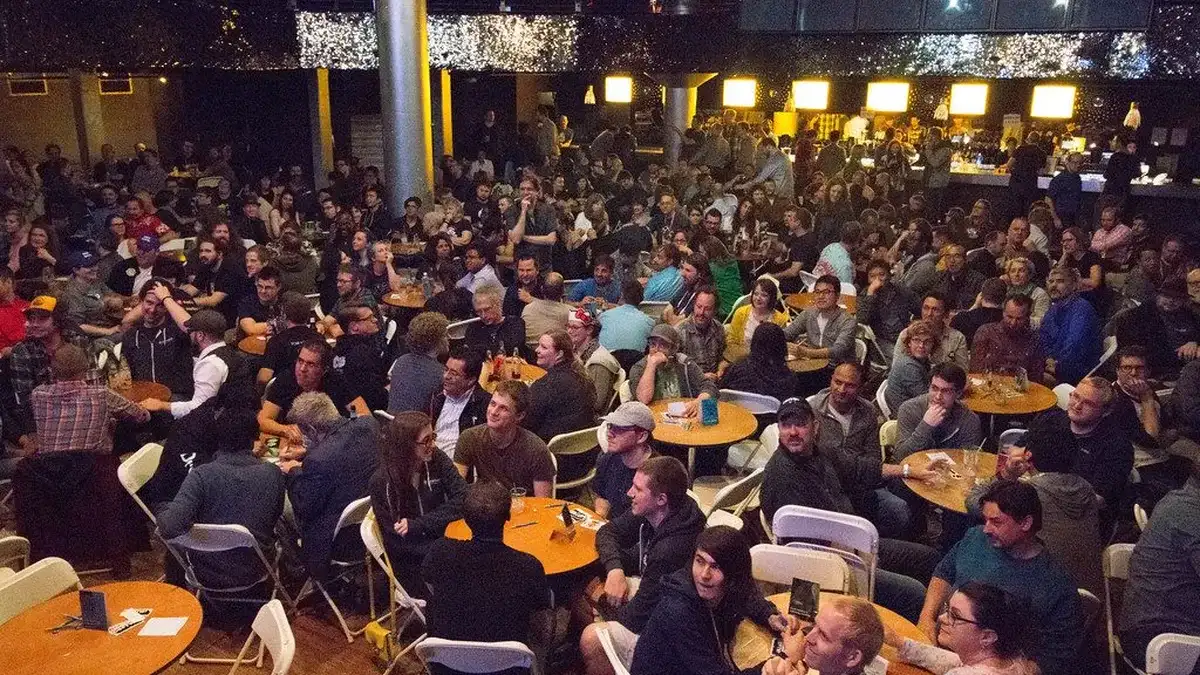
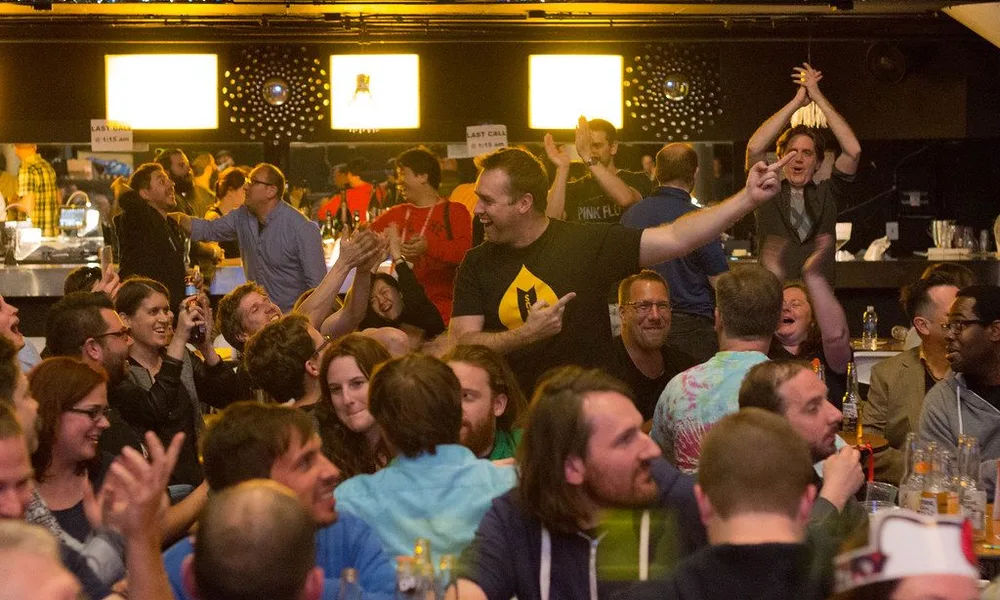
Four hundred and fifty-three players in one room is not a quiz night. It is a small festival with answer sheets. The chatter alone can swallow a question before it reaches the back tables, the queue for the answer desk can stretch across the hall, and a single slow round can drain the energy out of the whole evening. Yet when a night this size works, it is the best kind of trivia there is: dozens of teams leaning in together, groans rolling across the room when a tough answer is revealed, and a cheer that genuinely shakes the walls when the winners are announced.
This guide gives you a complete game for exactly 453 players. It is built around nine rounds, each one celebrating a different skilled trade, from farmers and fishermen to barbers and florists. The trades make the night warm and human, because every player knows someone who does this work, has watched it done, or has tried a little of it themselves. Nobody needs a degree to join in, and every round has a mix of easy openers and harder questions that reward the teams who really think.
Everything below is ready to run. You will find the format, the timing, all nine rounds with sample questions and answers, a scoring plan, a setup checklist, and answers to the questions every organiser asks before a crowd this size. Print the answer sheets, brief your host, and let the room do the rest.
Key takeaways
- 453 players work best as 45 to 75 teams of 6 to 10, with nine rounds of ten questions each.
- Each round celebrates one skilled trade, so every player has a way into the game.
- One host, one scorer, and one answer desk keep a crowd this size moving on time.
- Allow about three hours from the first question to the final scores, including breaks.
- Picture rounds and tie-break questions stop the night from stalling at the top of the table.
How a 453-Player Trivia Night Actually Works
The first decision is the size of the teams. With 453 players, teams of six to ten give you somewhere between 45 and 75 teams, and that range is the sweet spot. Smaller teams mean more teams to score, which slows everything down. Larger teams mean a few loud voices can take over and quieter players stop contributing. Six to ten keeps every table busy and every scorer sane, and it leaves room for a team of friends, a work group, or a family to sit together without splitting up.
The night runs in nine rounds of ten questions, which makes ninety questions in total. A good host reads each question twice, gives teams about thirty seconds to talk and write, and keeps the pace brisk without rushing anyone. Two short breaks, one after round three and one after round six, give people time to stretch, buy a drink, and hand in their sheets. The whole evening, from the welcome to the winners, takes about three hours, and that includes the scoring time at the end.
Sound matters more than anything else at this scale. A host with a clear voice still needs a microphone and speakers that reach the far corners, and a large screen or printed answer sheets for the picture round saves the host from repeating every question three times. If you have played a 451-player trivia night built around famous leaders, you will recognise the same rhythm here: short rounds, steady scoring, and a host who keeps the room laughing between questions.
| Part of the night | What to plan |
|---|---|
| Players | 453, in 45 to 75 teams of 6 to 10 |
| Rounds | 9 rounds, 10 questions each, 90 questions in total |
| Time per question | About 30 seconds of thinking time |
| Breaks | Two breaks of 10 minutes, after rounds 3 and 6 |
| Total running time | About 3 hours, including scoring |
| Scoring | 1 point per correct answer, 90 points maximum |
The 9 Rounds
Each round below celebrates one trade, and each one comes with three sample questions and answers you can use as they are or swap for your own. The samples show the level to aim for: the first question is friendly, the second makes teams think, and the third separates the leaders from the rest. In the real game, write ten questions per round at the same mix, and keep the answers short enough to score quickly.
Round 1: Famous Farmers
Farming is the oldest trade on the list, and it touches every life in the room, because every meal starts in a field. This round asks about crops, animals, and the seasons, and it rewards the players who grew up near farms as much as the ones who simply pay attention at the market.
Sample questions: Which crop is grown in the greatest tonnage in the world? Answer: Sugarcane. What is a young female cow that has not yet had a calf called? Answer: A heifer. Which grain is the staple food for more than half of the people on Earth? Answer: Rice.
Round 2: Famous Fishermen
From small boats at dawn to great trawlers far out at sea, fishing has its own language of knots, tides, and weather. This round suits teams with a sailor, an angler, or anyone who has ever stood on a pier and wondered what is swimming below.
Sample questions: What is a large group of fish swimming together called? Answer: A school. Which is the largest fish in the ocean? Answer: The whale shark. What is the classic knot used to tie a hook to a fishing line? Answer: The improved clinch knot.
Round 3: Famous Miners
Miners work in the dark so the rest of the world can have light, steel, and stone. This round digs into rocks, metals, and the history of the pits, and it has some of the most surprising answers of the night.
Sample questions: Which mineral is the main ore from which aluminium is made? Answer: Bauxite. What gas, once called firedamp, made old coal mines so dangerous? Answer: Methane. Which is the hardest naturally occurring mineral on Earth? Answer: Diamond.
Round 4: Famous Blacksmiths
The blacksmith’s forge is one of the oldest workshops in the world, and its tools have barely changed in a thousand years. This round is about fire, iron, and the patient skill of shaping hot metal, and it tends to bring out the history lovers on every team.
Sample questions: What is the heavy steel block that a blacksmith hammers metal on? Answer: An anvil. What tool does a blacksmith use to grip and hold hot metal? Answer: Tongs. Which metal did blacksmiths traditionally heat in the forge until it glowed? Answer: Iron.
Round 5: Famous Carpenters
Carpenters build the houses, tables, and boats that fill daily life, and their craft is full of clever joints and careful measurements. This round asks about tools, woods, and the joints that hold the world together.
Sample questions: What tool does a carpenter use to check whether a surface is level? Answer: A spirit level. Which joint, with interlocking fan-shaped teeth, joins two pieces of wood at a corner? Answer: A dovetail joint. Which wood is prized for boat building because it resists rot? Answer: Teak.
Round 6: Famous Bakers
Every town has a bakery, and every family has a bread story, which makes this one of the friendliest rounds of the night. The questions cover dough, ovens, and the small science that turns flour and water into something worth queuing for.
Sample questions: What living ingredient makes bread dough rise? Answer: Yeast. Which golden flour, made from durum wheat, is used to make pasta? Answer: Semolina. At what temperature does water boil at sea level? Answer: 100 degrees Celsius, or 212 degrees Fahrenheit.
Round 7: Famous Tailors
Tailors turn flat cloth into clothes that fit a real human body, and their trade is full of precise words and quiet skill. This round suits the players who sew, the ones who love fashion, and anyone who has ever had a suit or a dress made to measure.
Sample questions: What flexible measuring tool does a tailor drape around the neck? Answer: A tape measure. What is the padded body-shaped form that tailors use to fit clothes called? Answer: A dress form, also called a mannequin. Which nearly invisible stitch is used to finish a hem? Answer: A slip stitch, also called a blind hem stitch.
Round 8: Famous Barbers
Barbershops have always been places for talk as well as haircuts, and the trade has a history that stretches back centuries. This round mixes tools of the trade with the stories behind the striped pole outside the shop.
Sample questions: What do the red and white stripes on a traditional barber’s pole recall? Answer: Blood and bandages. What is the leather strap used to sharpen a straight razor called? Answer: A strop. Which electric tool trims hair to an even length using guide combs? Answer: Clippers.
Round 9: Famous Florists
Florists work with colour, scent, and the seasons, and their round is a gentle way to finish a long night. The questions cover flowers, their meanings, and the craft of turning a bunch of stems into something beautiful.
Sample questions: Which flower is the national flower of Japan? Answer: The cherry blossom. What is the soaked foam called that florists use to hold stems in place? Answer: Floral foam. Which flower takes its name from the Greek word for rainbow? Answer: The iris.
Scoring, Tie-Breaks and Keeping It Fair
Score one point for each correct answer, for a maximum of ninety points, and collect the answer sheets at the end of each round rather than at the end of the night. Round-by-round scoring spreads the work out, stops a mountain of paper arriving all at once, and lets you read out a running top ten after round six, which keeps the middle of the table interested. Two scorers can clear a round of 45 to 75 sheets in the ten-minute break if the answer sheets are numbered and the teams write their team name on every page.
Ties at the top are almost certain with 453 players, so prepare three tie-break questions in advance and keep them secret. Ask the tied teams one question at a time, nearest answer wins, and if they are still tied after three questions, use a final sudden-death question where the first correct answer takes the prize. A good tie-break is a number question, such as how many beans are in a jar on the host’s table, because it always produces a clear winner. The 450-player edition, which tours oceans, seas and capitals, uses the same system, and it has settled some very close finishes without a single argument.
Cheating is the one thing that can spoil a night this size, so say the rule out loud before round one: phones away during questions, and any team caught searching for answers loses the round. Most teams will happily comply, and a friendly reminder beats a strict lecture. Seat teams with space between them where the room allows, and ask the host to watch for the glow of a phone screen in the dark corners of the hall.
What to Bring and How to Set Up the Room
The room itself does half the work, so visit it before the night and walk the space the way a player would. Check that every table can see the host and the screen, that the speakers reach the back row without deafening the front, and that the answer desk sits somewhere central where teams can find it without crossing the whole hall. Round tables seat six to ten comfortably, and a little space between tables keeps the noise down and the answer sheets private.
Bring more pens than you think you need, because pens vanish at trivia nights the way socks vanish in the wash. Pack printed answer sheets for all nine rounds plus spares, a backup set of questions on paper in case the screen fails, and a simple score sheet for the scorers. A small prize for each round winner, even something as simple as a box of chocolates, keeps the teams at the bottom of the table playing hard to the very end.
Your 453-Player Checklist
- Book a hall that seats 453 players at round tables, with a stage or raised spot for the host.
- Test the microphone, speakers, and screen from the very back row before anyone arrives.
- Print numbered answer sheets for nine rounds, plus spares, and pack plenty of pens.
- Brief one host, two scorers, and one answer-desk volunteer on the running order.
- Prepare three secret tie-break questions and one sudden-death question for a tied finish.
- Read the phone rule out loud before round one, and announce the prizes before round nine.
Frequently Asked Questions
How long does a trivia night for 453 players take?
Plan for about three hours from the welcome to the winners. Nine rounds of ten questions take around two hours of play, two ten-minute breaks add twenty minutes, and scoring and the final announcement take the rest. Starting on time matters more than anything, because a late start pushes the finish past the point where tired teams start to leave.
How many teams should 453 players form?
Between 45 and 75 teams of six to ten players works best. Teams smaller than six mean too many sheets to score, and teams larger than ten mean quieter players stop getting a say. If a group arrives with eleven or twelve friends, split them into two teams and let them enjoy a friendly rivalry across the table.
Do we need special equipment for a crowd this size?
You need a microphone and speakers, a large screen or projector for picture rounds, and printed answer sheets. A second microphone for the scorer helps when reading out the running scores. Everything else is ordinary: tables, chairs, pens, and a desk for the answer sheets. Test the sound from the back row before the doors open.
How do we stop teams from cheating?
Announce the phone rule before round one, seat teams with space between them, and have the host walk the room during breaks. Most cheating at trivia nights is casual rather than planned, and a clear rule plus a visible host stops nearly all of it. The 449-player game, which celebrates famous actors, writers and inventors, runs the same rule, and it works because the teams themselves want a fair contest.
What happens if teams tie at the top?
Use your three prepared tie-break questions, one at a time, with the nearest answer winning each one. If the teams are still tied, finish with a sudden-death question where the first correct answer wins. Number questions work best for tie-breaks because they always produce a clear winner, and the crowd loves watching a tie-break almost as much as the game itself.
Can children play in a 453-player trivia night?
Yes, children can play, and they often surprise their teams with answers the adults miss. The trade rounds are friendly for younger players, especially farming, baking, and flowers, and a family team with children is one of the happiest sights in the hall. Keep the evening’s start time in mind, since a three-hour night can run late for younger children.
The Bottom Line
A 453-player trivia night works when the format is simple, the host is confident, and the questions give every team a reason to keep playing. Nine rounds about skilled trades, ninety questions, two breaks, and a clear tie-break plan are all you need. Gather your teams, print the sheets, and enjoy the sound of a whole hall thinking at once.


