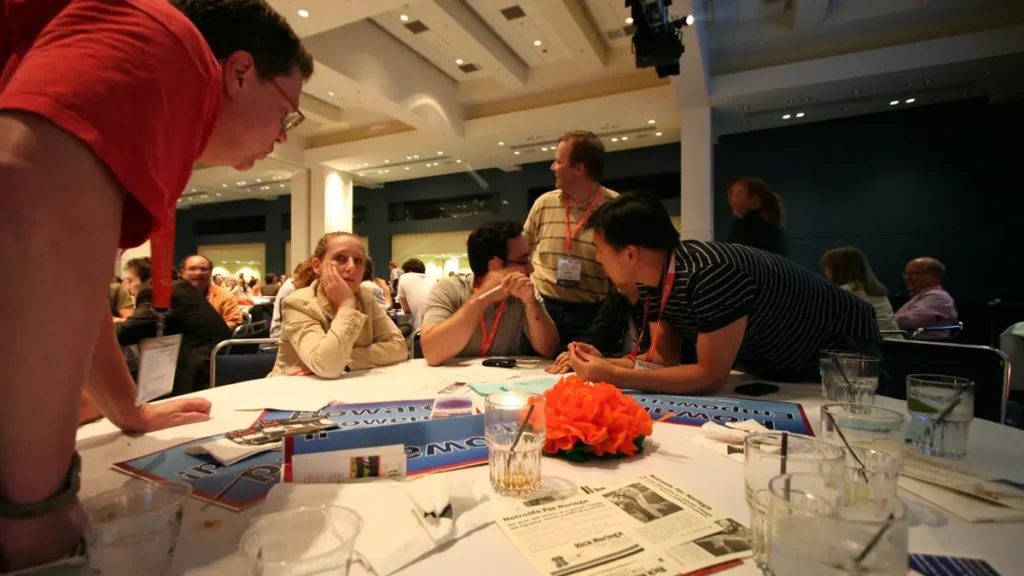
Four hundred and twenty-six players. That is seventy-one tables of six, or fifty-three teams of eight with two chairs to spare, all waiting for the same first question at the same moment. At this scale, the game is no longer about who knows the most. It is about whether four hundred and twenty-six people can hear the question, write down an answer, and hand it in without the whole evening falling apart.
The good news is that a crowd this size is a strength, not a problem, once the format is built for it. A big room brings energy that a small night cannot match. The trick is to design every part of the night, from the team sizes to the scoring slips, so that the size of the crowd does the work instead of getting in the way.
This guide walks through exactly how to do that. It covers the nine rounds that carry a 426-player night, the team structure that keeps the room fair, the scoring system that survives four hundred answer sheets, and the hosting habits that keep a huge hall engaged from the first question to the last. If you are planning a fundraiser, a company social, a school event, or a community night, the plan below will get you there.
Key Takeaways
- Split 426 players into teams of six or eight so every table can talk without shouting and every answer sheet is easy to count.
- Build the night around nine themed rounds, each with a different kind of famous person, so every player gets a round where they shine.
- Score in batches with two markers per table and a single master sheet, because one person cannot mark 426 answer sheets alone.
- Keep every round to ten questions and a strict time limit, or the evening will run an hour longer than you planned.
- Pick a host who can project to the back of the hall and a sound system that reaches every table, because a question nobody hears is a question nobody can answer.
Why 426 Players Changes Everything
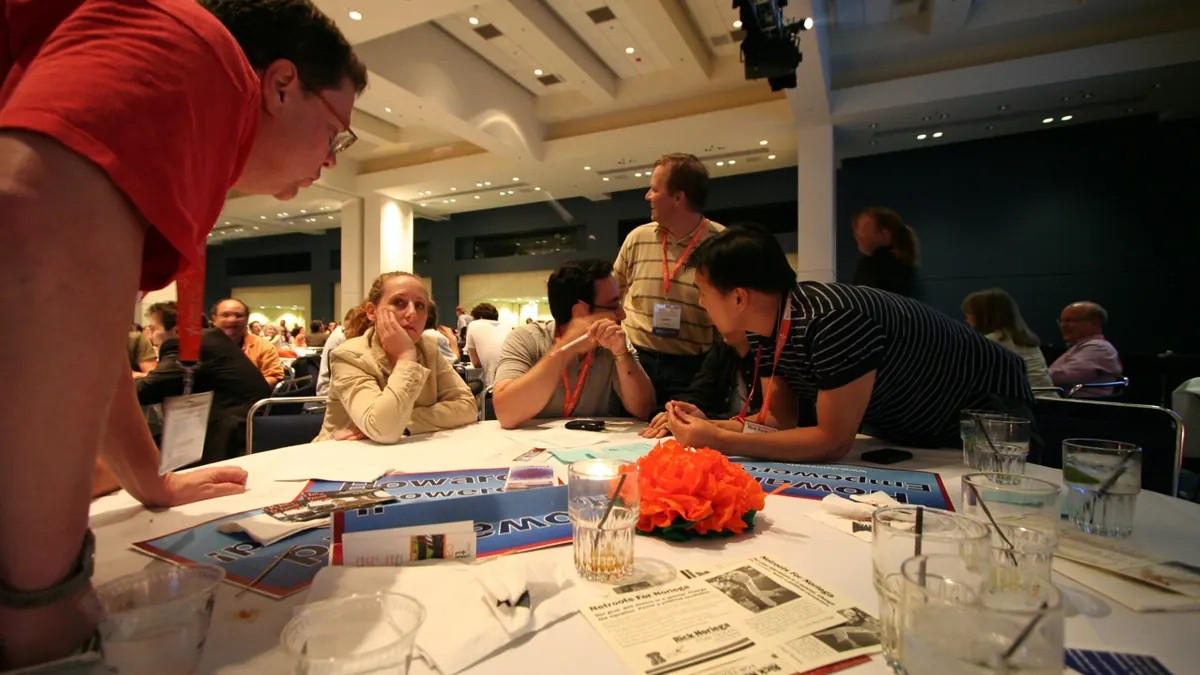
A trivia night for twenty people is a conversation. A trivia night for 426 people is a production. The first thing that changes is sound. In a small room, the host can read a question once and everyone hears it. In a hall of four hundred, the people at the back tables hear a muffled version, or they hear the table next to them before they hear the host. That is why the sound system matters more than the questions.
The second thing that changes is time. Everything takes longer with 426 players. Handing out answer sheets takes ten minutes instead of one. Collecting them takes longer still. Marking them is a job for a team, not a person. A night that would run ninety minutes for a small crowd needs at least two and a half hours at this size, and that is before you add a break.
The third change is fairness. In a small game, the host can see every table and spot anyone looking at a phone. In a hall of seventy tables, that is impossible, and pretending otherwise only frustrates the honest teams. The answer is structure, not suspicion. Players who feel the game is fair are the players who come back next year, and the way a 425-player trivia night stays fair shows how much a clear set of rules matters when the room is this full.
The Nine Rounds That Carry the Night
Nine rounds is the right number for 426 players. Fewer rounds and the night feels thin, with too much riding on a single set of questions. More rounds and the evening drags, with the back tables losing focus before the end. Nine rounds of ten questions gives ninety questions in total, which is enough for the best team to win on knowledge and short enough that the final round still feels exciting. Each round below focuses on a different kind of famous person, so the night rewards a wide range of knowledge instead of favouring one kind of expert.
Famous Engineers
Engineers build the world the rest of us live in, and their stories make a strong opening round. Start with names most players will know, like the designers of famous bridges and the engineers behind the first steam locomotives, then move toward the people who designed spacecraft and modern skyscrapers. Sample questions: Which engineer designed the Forth Bridge in Scotland? Who led the team that built the first working jet engine?
Famous Doctors
Medicine is full of famous figures whose discoveries changed everyday life, and that makes this round friendly to players who know nothing about science. Ask about the doctor who first used antiseptic surgery, the physician who linked dirty water to cholera, or the researcher who developed the first vaccine. Sample questions: Which doctor pioneered antiseptic surgery in the 1860s? Who discovered penicillin by accident in 1928?
Famous Lawyers
Lawyers rarely get a trivia round of their own, which is exactly why this one works. The courtroom has produced some of the most dramatic moments in history, from famous trials to landmark rulings that changed the law for everyone. Ask about the lawyer who defended a famous client, the judge who wrote a ruling everyone quotes, or the advocate who argued a case that made the news around the world. Sample questions: Which American lawyer defended John Scopes in the 1925 trial? Who was the first woman appointed to the United States Supreme Court?
Famous Teachers
Everyone has had a teacher, so everyone has a way into this round. Famous teachers range from ancient philosophers who taught in public squares to modern educators who changed how schools work. This is a gentle round, and it works well in the middle of the night, when the room needs a breather before the harder rounds. Sample questions: Which teacher founded the Academy in Athens? Who wrote the first widely used English dictionary for schools?
Famous Journalists
Journalists are the people who told the world what was happening, and their stories cover wars, elections, scandals, and discoveries. A round on famous journalists can travel across centuries, from the editors of the first newspapers to the reporters who broke the biggest stories of the last fifty years. Sample questions: Which journalist broke the Watergate story with Carl Bernstein? Who was the first woman to win a Pulitzer Prize for reporting?
Famous Activists
Activists changed the world by refusing to accept it as it was, and their lives make a round full of energy and debate. Cover the campaigners for voting rights, the leaders of independence movements, the environmentalists who protected famous landscapes, and the reformers who changed working conditions. Keep the questions factual and the answers clear, and let the discussion happen after the answers are in. Sample questions: Which activist led the Salt March in India in 1930? Who founded the modern conservation movement in the United States?
Famous Entrepreneurs
Entrepreneurs are the people who turned an idea into a company, and their stories are familiar to players who follow business news or simply use the products. Ask about the founders of famous brands, the inventors who became business leaders, and the traders who built companies from nothing. Mix old industrial founders with modern technology founders so that younger and older players both get questions they can answer. Sample questions: Which entrepreneur founded the Ford Motor Company? Who co-founded a famous online auction site in 1995?
Famous Diplomats
Diplomats work behind the scenes, which makes them perfect trivia material, because the answers are satisfying to get right and hard to guess. Ask about the negotiators behind famous treaties, the ambassadors who prevented wars, and the envoys who opened relations between countries that had not spoken for years. Sample questions: Which diplomat negotiated the Camp David Accords in 1978? Who was the first Secretary-General of the United Nations?
Famous Generals
Generals close the night with a round full of drama, because military history is full of bold plans, narrow escapes, and famous last stands. Ask about the commanders of ancient battles, the generals of the great wars of the last century, and the strategists whose names became part of everyday language. This is a good final round because it is fast and punchy, with short questions and answers that are easy to mark. Sample questions: Which general crossed the Alps with elephants in 218 BC? Who commanded the Allied forces on D-Day in 1944?
How to Split 426 Players Into Teams That Work
The team structure decides whether the night feels fair. Teams of six are the sweet spot for a crowd this size. Six people can talk around one table without shouting, everyone gets a say, and the answer sheet has room for six names. Teams of eight also work, and they are useful when whole groups arrive together, but tables of eight get noisy and the quieter players stop contributing. Avoid teams of ten or more, because the table splits into two conversations and the game becomes two teams pretending to be one.
Let players form their own teams before the night, and publish the team list in advance. That single step saves the most chaotic twenty minutes of the evening, when hundreds of people are trying to find their friends in a hall of identical tables. Number the tables clearly, print a simple map at the door, and put a volunteer at the entrance whose only job is pointing people toward their table. The organisers who ran the night for 424 players found that the seating plan mattered more than any single round, and what worked when 424 players shared one room is a useful reminder that the logistics deserve as much planning as the questions.
Mix the tables if you can. A night where every table is a group of work colleagues is a night where one table of engineers sweeps the science rounds and one table of history graduates sweeps the history rounds. Mixed tables make every round competitive, and they make the night more social, which is the real reason most people came.
Scoring, Timing, and Keeping the Room Honest
Scoring is where most large trivia nights fail, and it fails quietly. The host announces the answers, the teams mark their own sheets, and somewhere in a hall of seventy tables, a few scores drift upward. The fix is simple and it costs nothing. Collect the answer sheets at the end of each round, mark them centrally, and post the running totals where everyone can see them. Central marking is slower, but it is the only system that 426 players will trust, and trust is what brings them back.
Use a simple scoring sheet with one row per team and one column per round. Two markers per round is enough if the questions have single-word answers, and four markers will clear a full set of sheets in about ten minutes. Announce the top ten teams after round five and again after round eight, because a leaderboard keeps the middle of the table interested even when they cannot win. The teams at the bottom need a reason to stay engaged too, so add a small prize for the best team name, which gives every table something to play for. The schedule below shows how the timing works across a full evening, and the format that kept 423 players answering on time shows the same idea in action, with strict round timers and a visible clock that the whole room could follow.
| Part of the night | Minutes | What happens |
|---|---|---|
| Doors and seating | 20 | Teams find tables, answer sheets handed out |
| Welcome and rules | 10 | Host explains scoring, phones, and prizes |
| Rounds 1 to 3 | 30 | Thirty questions, sheets collected each round |
| Break | 15 | Scores posted, drinks and food |
| Rounds 4 to 6 | 30 | Thirty questions, leaderboard updated |
| Rounds 7 to 9 | 30 | Thirty questions, final round excitement |
| Marking and results | 15 | Final scores checked, winners announced |
Time the rounds with a visible clock. Ten questions, one minute per question, and a clear warning when thirty seconds remain is enough for most tables to agree on an answer. Do not let a round drift because one table is still debating. The host should be friendly but firm about the timer, because every extra minute in round two is a minute stolen from the final round. Stopping the whole room to argue about one answer is the fastest way to lose the crowd.
The Host’s Playbook for a Huge Room
The host is the difference between a good night and a great one, and the skills that matter at this scale are different from the skills that matter at a pub quiz. The host needs a voice that carries, a pace that never drags, and the confidence to keep seventy tables moving together. Practice with the microphone and the room full if possible, because a voice that sounds fine in an empty hall can vanish once four hundred people are talking.
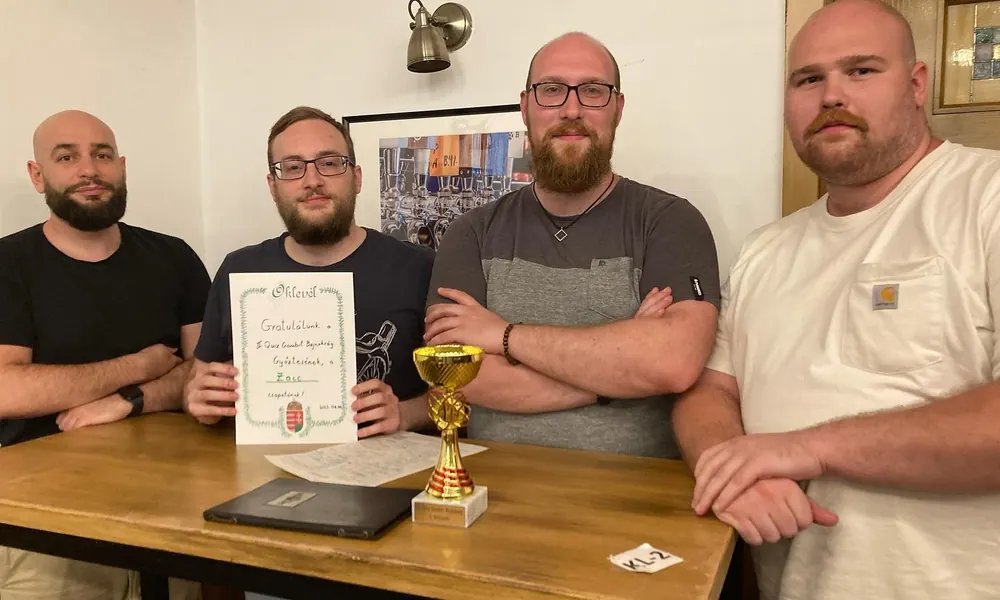
Read every question twice, slowly, and then read it once more if the room asks. Players at the back will miss a name on the first reading, and the second reading is what makes the game fair for them. Announce the round theme before the first question, so the tables can organise who answers what.
Finally, have a second person on stage with the host. One person reads the questions while the other watches the room, collects the disputed questions, and updates the leaderboard. Two people on stage also means the night survives if the host loses their voice or the microphone fails. The best large trivia nights look effortless from the tables, and they look effortless because two or three people backstage are working hard to make it so.
Checklist: Your Night-Of Plan
- Print 71 answer sheets per round, plus spares, and number every team table from 1 to 71.
- Test the microphones and speakers with the room full, and place a second speaker at the back of the hall.
- Brief four markers and two runners before the doors open, and give each of them a printed schedule.
- Prepare a master score sheet with one row per team and one column per round, and post the top ten after rounds five and eight.
- Set a visible timer for every round, and announce the thirty-second warning before collecting the sheets.
- Keep the prizes ready at the front of the room, including a small prize for the best team name.
Frequently Asked Questions
How long does a trivia night for 426 players take?
Plan for about two and a half hours from the first question to the final result. That covers nine rounds of ten questions, a fifteen-minute break, and the marking time between rounds. Add twenty minutes at the start for seating, and the whole evening runs to around three hours.
What is the best team size for 426 players?
Teams of six work best. Six people can talk around one table without shouting, and 426 players divide neatly into 71 teams of six. Teams of eight are a good second choice, especially when whole groups arrive together, but avoid teams of ten or more.
How do you stop cheating in a hall of 426 people?
You cannot watch every table, so build fairness into the structure. Read the rules at the start, ask for phones to stay face down, collect the answer sheets before revealing the answers, and mark centrally. Players who trust the scoring will police themselves.
Do you need a professional sound system?
Yes, for a room this size. A single small speaker will not reach the back tables, and a question nobody hears is a question nobody can answer. Hire a simple public address system with two speakers, one at the front and one at the back, and test it with the room full.
Can a trivia night for 426 players work online?
It can, but the format changes. Use a quiz platform that supports hundreds of players, split the room into virtual breakout teams, and keep the rounds shorter, because attention drops faster on a screen. The in-person version is simpler to run and more fun for the players.
What prizes work best for a crowd this size?
Offer one main prize for the winning team, a smaller prize for second place, and a fun prize for the best team name. Keep the prizes simple, like vouchers or a trophy, and announce them at the start so every table has something to play for.
The Bottom Line
A trivia night for 426 players works when the format is built for the crowd instead of stretched to fit it. Nine themed rounds give every player a moment to shine. Teams of six keep the tables fair and the conversation flowing. Central marking, a visible timer, and a host who can reach the back of the hall keep the evening honest and on schedule. Get those pieces right, and four hundred and twenty-six strangers will leave your hall already asking when the next one is.