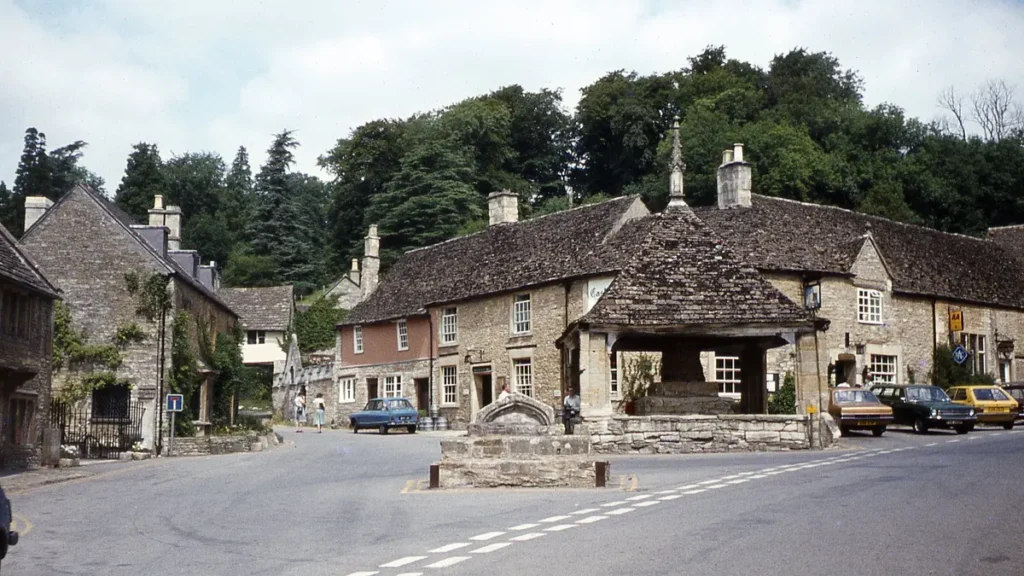
Five hundred and seventy-five players is a big crowd for any puzzle day, and a market cross is a good place to hold one. The cross stands at the middle of the market place, where every team can see it, and its worn stone steps, its upright post, its carved head, and the old stocks beside it give you nine ready-made puzzles without bringing in a van full of kit.
The format is simple. You split the crowd into 115 teams of five, and each team visits nine stations in turn. Every station holds one puzzle built around a part of the cross, and every round lasts twenty minutes. A white sheet raised above the cross tells every team at once that the round has ended. The tally sheets stay with the teams, and a referee at each station writes the tally down as the teams move on.
Nothing here needs power, and nothing needs an expensive hire. Each station runs on a handful of loose pieces, a pencil, and a tally sheet, The nine rounds below follow the shape of the cross itself, from the steps at its foot to the carved head at its top, and the checklist near the end covers everything you need to have ready before the opening round.
Key takeaways
- Split 575 players into 115 teams of five, with nine stations and twenty minutes at each one.
- Build every round around one part of the market cross, from the steps to the carved head.
- Use a white sheet raised above the cross as the signal that ends each round.
- Keep the tally sheets with the teams and let the station referee write each tally down.
- Run the whole day on loose pieces, pencils, and tally sheets, with no power needed.

How 575 Players Fit Into One Day
One hundred and fifteen teams sounds like a lot to move, but the cross does most of the organising for you. Put the nine stations in a ring around the market place, with the cross at the centre, and give each team a number from one to 115. Teams with odd numbers walk clockwise around the ring, and teams with even numbers walk the other way, so the ring never clogs at one point.
Nine rounds of twenty minutes add up to three hours of solving, and you need about an hour around that for the opening welcome, the midday break, and the closing tally. Our puzzle games for 573 players run the same rotation inside an old village police station, and the station layout there works just as well around a market cross.
Each station needs one referee, one tally sheet per team, and the loose pieces for that round, all laid out on a plain wooden table. The referee explains the round in under a minute, hands the pieces to the team, and watches the white sheet above the cross for the end of the round. When the sheet rises, every team stops where it is, the referee writes the tally down, and the teams walk to the next station in the ring.
Five is the right size for a team here. Two people can work the pieces while a third reads the task aloud, a fourth keeps the tally sheet, and the fifth watches the white sheet for the end of the round. Smaller teams leave too much work for one person, and bigger teams leave people standing at the back with nothing to do.
The 9 Market Cross Puzzle Games
Each round below takes one part of the cross and turns it into a puzzle. The rounds run in the order of the cross itself, starting at the steps and ending at the carved head, so teams learn the landmark piece by piece as the day goes on.
1. Market Cross Step Order Race
The steps at the foot of the cross are worn smooth by centuries of feet, and no two of them sit at quite the same height. For this round, the referee lays nine short wooden blocks on the table, each one cut to the height of one step, and mixes them up. The team must put the blocks in order from the lowest to the highest, using only their eyes and their hands, and they may lay the blocks side by side to compare them, but they may not use any tool to test the heights.
The trick is that the middle blocks differ by very little, so a team that rushes will swap two neighbours and lose the tally. The referee gives ten tallies for a perfect order, and takes one tally away for each block that sits in the wrong place, so a team that is nearly right still earns a fair tally.
2. Cross Post Sort Race
The upright post of the cross rises from the socket stone to the carved head, and this round asks teams to sort pieces of pale wood the way a mason would sort post lengths. The referee lays twelve short lengths of pale wood on the table, all cut from the same pale wood, and the team must arrange them in a row from the shortest to the longest. The lengths differ by small amounts, and several of them look identical until they are laid end to end.
Teams do best when they lay the pieces out in a long line and slide them into place one at a time, instead of trying to hold the whole order in their heads. Ten tallies go to a perfect row, and one tally comes off for each length that sits out of order.
3. Cross Head Match Race
The carved head of the cross carries four faces, each one worn in a different way by the years. For this round, the referee gives each team a group of eight sheet rubbings taken from the carvings, and a plain drawing of the four faces with the carvings left blank. The team must work out which rubbing belongs to which face, and write the number of each rubbing beside the right face on the drawing.
Half the rubbings are close copies of each other, with only one small curl or notch to tell them apart, so the team needs to look for the tiny marks instead of the broad shape. Each rubbing placed beside the right face earns a tally, and two tallies are held back for the last two rubbings, which are the hardest to tell apart.
4. Cross Arm Order Race
The arms of the cross stretch out on either side of the head, and this round asks teams to order four arm lengths by their span. The referee gives each team four lengths of pale wood and a looped line, and the team must put the lengths in order from the shortest span to the longest, using the line as the only way to compare them. The line has a loop at each end and three loops along its length, and teams may wrap it around a length or lay it beside one, but they may not scratch the wood in any way.
The line makes the round fair, because no team can win it by guessing from the look of the wood alone. The patient teams test each length against the line twice, once from each end, and write the order down before they move the lengths into place. Ten tallies go to a perfect order, with one tally off for each length out of place.
5. Socket Stone Fit Race
The socket stone is the heavy block at the foot of the cross, with a square hole cut into its top where the post sits. For this round, the referee gives each team a tray of twelve stone wedges in different shapes, and a wooden model of the socket stone with twelve shallow slots cut into it. The team must find the wedge that fits each slot, and press it home so that it sits flat and level with the surface around it.
Several wedges look as if they belong in the same slot, and the wrong one will sit proud of the surface by a finger width or rock from side to side when it is pressed. Each wedge that sits flat and still earns a tally, and the round ends when the white sheet rises, whether the tray is empty or not.

6. Cross Base Weigh Race
The base of the cross is a ring of heavy stones, and this round asks teams to judge weight by hand instead of by eye. The referee lays six base stones on the table, all roughly the same size, and each one cut from a different piece of stone, so their weights differ more than their looks suggest. The team must lift each stone in turn, heft it in both hands, and put the six stones in a row from the lightest to the heaviest.
Guessing from size alone will put at least two stones in the wrong place, because the densest stone is also one of the smallest. The sundial-maker’s workshop in our puzzle games for 571 players uses the same nine-round shape, with each round built around one bench tool. Ten tallies go to a perfect row, with one tally off for each stone out of place.
7. Stocks Hole Count Race
The stocks stand beside the cross, two wooden boards with round holes cut through them, and this round is a test of careful counting. The referee lays three stocks boards on the table, each one with holes of different sizes, and several of the holes are plugged with wooden discs that sit flush with the surface, so they are easy to miss. The team must count every hole on all three boards, plugged and open alike, and write the total on the tally sheet.
The boards hold more holes than most teams expect, and the plugged ones are the whole point of the round. The referee gives ten tallies for the exact total, seven tallies for a total that is out by one, and four tallies for a total that is out by two, so careful counting earns its reward.
8. Pillory Board Match Race
The pillory is two boards that close together around a frame, and this round turns its split boards into a matching puzzle. The referee gives each team twelve short boards, each one split down the middle, so the team holds twenty-four halves. Every half has one edge cut to fit exactly one other half, and the team must join the halves up until all twelve boards are whole again.
The edges look alike at a glance, with the same curves and notches repeated across the pile, so the team needs to test each join by pressing the halves together and checking that the seam sits flat. A join that rocks or leaves a gap is the wrong join, even if the curves look right. Each whole board earns a tally, with two tallies held back until the last two boards are done.
9. Market Charter Check Race
The market charter is the written list of rules that gave the village its right to hold a market, and this round asks teams to spot what has been changed in a copy of it. The referee gives each team a copy of the charter, twenty lines long, and tells them that five of the lines have been altered. A number may have been changed, a name may have been swapped, or a rule may have been reversed, and the team must find all five altered lines and write their line numbers on the tally sheet.
The altered lines are written to read smoothly, so a team that only skims the copy will miss them. Each altered line found earns two tallies, so a team that finds all five takes the full ten for the round.
At a Glance
| Round | What teams do | Time | Tally |
|---|---|---|---|
| Market Cross Step Order Race | Order nine blocks by height | 20 minutes | 10 |
| Cross Post Sort Race | Sort twelve lengths, shortest to longest | 20 minutes | 10 |
| Cross Head Match Race | Match eight rubbings to four faces | 20 minutes | 10 |
| Cross Arm Order Race | Order four lengths with a looped line | 20 minutes | 10 |
| Socket Stone Fit Race | Fit twelve wedges into their slots | 20 minutes | 10 |
| Cross Base Weigh Race | Order six stones, lightest to heaviest | 20 minutes | 10 |
| Stocks Hole Count Race | Count every hole on three boards | 20 minutes | 10 |
| Pillory Board Match Race | Join twenty-four halves into twelve boards | 20 minutes | 10 |
| Market Charter Check Race | Find five altered lines in a charter | 20 minutes | 10 |
575 Player Checklist
- Count 115 teams of five on the morning list, and leave ten spare tally sheets for late arrivals.
- Lay out nine stations in a ring around the cross, with one table and one referee at each station.
- Pack the loose pieces for every round in its own labelled box, and check each box the night before.
- Give every team a pencil and a tally sheet, and keep a second pencil in each station box.
- Hang the white sheet where every station can see it, and agree who raises it at the end of each round.
- Hold the closing tally at the cross itself, with every team gathered in the market place.
Frequently Asked Questions
Can 575 players really finish in one day?
Yes, because the nine rounds of twenty minutes add up to three hours of solving, and the welcome, the midday break, and the closing tally fit around them in about an hour. The sieve-maker’s workshop in our puzzle games for 570 players answers the same timing questions for a workshop setting, and the answer there is the same as here.
What happens if a team arrives late?
A late team joins the ring at the station nearest the cross and picks up the round in progress, with the tally for that round scored on what it manages in the time left. The team then follows the ring as normal, and it can still win the day, because a single low tally in one round rarely decides the whole total.
Do teams need to bring anything?
No. Everything a team needs is on the station table, and the tally sheet and pencil are handed out at the welcome.
What if the morning turns wet?
The rounds still run, because every station table can be moved under a plain awning and the pieces are wood and stone, which dry with a quick wipe. The closing tally moves under the largest awning if the market place itself is too wet to stand in.
How do you stop teams from copying each other?
Each station holds thirteen teams at once, but every team works on its own tray of pieces, and the trays are mixed up between rounds, so the team beside you holds different pieces in a different order.
What does the winning team get?
The winning team takes a small carved wooden cross for each player, cut from the same pale wood as the round pieces, and the team name is written on the tally sheet that is kept with the cross for the year. The real prize is the closing tally at the cross, with all 575 players gathered to hear the totals read aloud.
The Bottom Line
A market cross gives a puzzle day its shape, its nine rounds, and its centre, all in one piece of old stone. Split 575 players into 115 teams of five, ring nine stations around the cross, raise the white sheet to end each round, and let the tally sheets do the rest.


