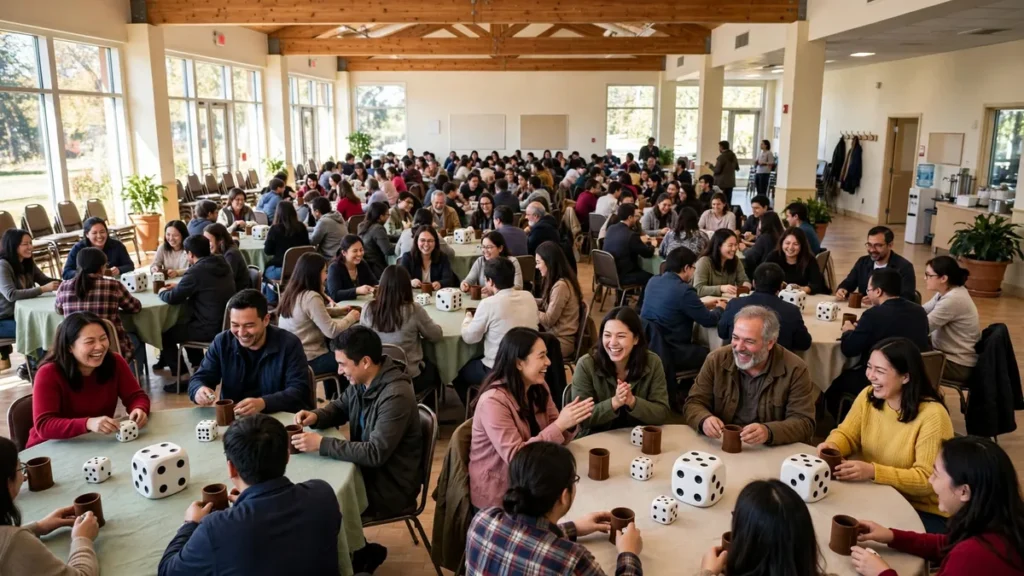
Finding the best party games for 36 players is a different challenge from planning games for a small dinner party. With 36 people in the room, a game that works beautifully for eight can fall apart completely: turns take too long, half the group stands around waiting, and the energy in the room drops within minutes. The best party games for 36 players are built around teams, simultaneous play, and short rounds, so everyone stays involved from the first minute to the last.
A group of 36 is actually a wonderful size for a party. It divides neatly into six teams of six, four teams of nine, or nine teams of four, which means you can run proper tournaments, relay formats, and head-to-head battles that smaller groups simply cannot support. The trick is choosing games that scale, preparing the materials in advance, and keeping the pace brisk. When the format is right, 36 players create a buzz that a small group never can, with cheering, rivalry, and shared jokes that carry the whole evening.
This guide covers the games that genuinely work for 36 players, how to organise them, how long each one takes, and what you need to run them. Every game here has been chosen because it keeps all 36 people playing at once or in quick rotation, needs little or no specialist equipment, and suits mixed groups of adults, families, and colleagues. Whether you are planning a birthday, a reunion, a work celebration, or a community event, you will find a format below that fits your space, your schedule, and your crowd.
Key takeaways
- Divide 36 players into six teams of six for the best balance of involvement, competition, and manageable team sizes.
- Choose games where everyone plays at the same time or in short rotations, so nobody waits more than a minute or two for a turn.
- Run games in rounds of 10 to 20 minutes and keep score visible on a board or screen to maintain energy and rivalry.
- Prepare all materials, answer sheets, and props before guests arrive, and appoint one host plus one scorekeeper.
- Mix quiet games such as trivia and word games with active games such as relays and scavenger hunts to suit different guests.
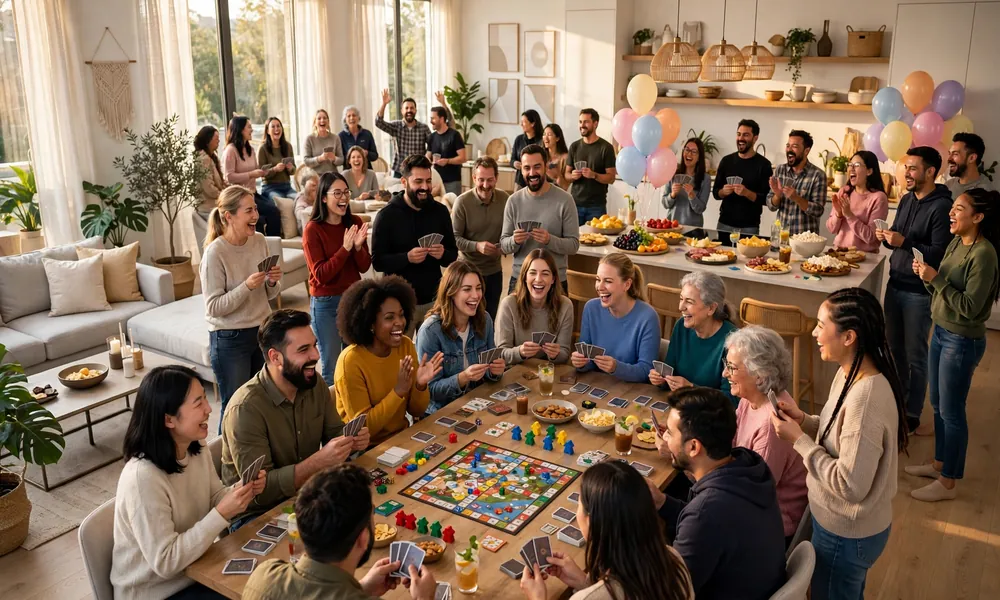
Why 36 Players Need a Different Kind of Party Game
Most classic party games were designed for six to twelve people. When you scale them up to 36 without changing the format, the maths works against you. If each player takes just 30 seconds for a turn, a single round takes 18 minutes, and most guests will have stopped paying attention long before their turn arrives. Games that rely on one person performing while everyone else watches, such as a long charades turn or a single karaoke performance, lose the room quickly at this size.
Team play solves almost every problem that size creates. When 36 players are split into six teams of six, each team becomes a small, lively unit where everyone can contribute. Teammates can discuss answers, cheer each other on, and share the spotlight, which means shy guests feel supported rather than exposed. Teams also make scoring simple and exciting, because every round produces a clear result and a running total that everyone can follow.
How to Organise 36 Players Into Teams
The simplest and most reliable split is six teams of six. Six is small enough that every player gets a voice, yet large enough that a team can cover different strengths, such as trivia knowledge, drawing, acting, and speed. Give each team a name, a colour, or a table number, and hand out matching wristbands, stickers, or coloured cards so players can find their teammates quickly after a break.
However you split the group, mix people up deliberately rather than letting friends cluster together. Pre-assign teams using a simple system, such as coloured dots on name badges or numbers drawn from a hat, and balance each team with a mix of ages, personalities, and strengths where you know the guests. Mixed teams are fairer, more sociable, and much more fun, because they encourage people to talk to guests they might not otherwise meet. If you are looking for ideas that work for a slightly smaller crowd, the format in our guide to party games for 35 players adapts easily to 36 with one extra player added to a team.
Best Party Games for 36 Players
The games below are grouped by style so you can build a balanced evening. Start with a warm-up game that gets everyone talking, follow it with a competitive team game, add an active game after a break, and finish with a big finale that brings the whole room together. Each game includes the ideal team split, the time it takes, and what you need to run it.
Team Trivia Tournament
Trivia is the most reliable game for 36 players, because all six teams play every question at the same time and nobody waits for a turn. Prepare 30 questions across five rounds of six, with each round on a different theme, such as food, music, films, sport, and general knowledge. Read each question aloud, give teams 30 seconds to agree on an answer, and collect answer sheets at the end of each round. Marking takes just a few minutes, and the running scores keep the tension high.
Keep the scoring simple: one point per correct answer, with a bonus point for a perfect round. Display the scores after every round on a whiteboard, a flip chart, or a screen, and announce the leaders with enthusiasm. A small prize for the winning team, such as a box of chocolates or a silly trophy, adds motivation without making the game feel serious. Trivia also works beautifully as a warm-up, because it gets teams talking and cooperating within minutes.
Charades Relay
Charades works for 36 players only if you change the format from one performer at a time to a relay. Split the group into six teams of six and give each team its own set of charades cards. One player from each team performs at the same time, while their teammates guess. After 60 seconds, the next player takes over, and the game continues until every player has performed at least once. Because all six teams perform simultaneously, nobody is left watching for long.
Score one point for each correct guess, with a bonus point if a team guesses within 20 seconds. The relay format creates a wonderful atmosphere, because six performances happen at once and the room fills with laughter, gestures, and shouting. It also suits mixed groups well, because acting is a team effort and teammates support nervous performers. Keep the music playing between rounds and the energy stays high throughout.
Pictionary Relay
Pictionary relay follows the same principle as charades relay, but with drawing instead of acting. Each team gets a small whiteboard, a marker, and a stack of word cards. One player draws while the rest of the team guesses, then the marker passes to the next player. All six teams draw at the same time, which means 36 people are engaged at once and the room buzzes with activity.
For a large group, use big whiteboards or large sheets of paper so teammates at the back of the team can see the drawing clearly. Stand the teams in a semicircle or around separate tables with plenty of space between them, so teams cannot see each other’s boards and copy answers. Pictionary relay is especially good for family parties, because children and adults can play together and drawing skill matters less than speed and imagination.
Human Bingo
Human bingo is the perfect icebreaker for 36 players, because it gets everyone moving, talking, and meeting new people within the first ten minutes. Give each player a bingo card with 25 squares, each containing a description such as has visited three countries, can play a musical instrument, owns a dog, or has baked bread this year. Players must find a different person who matches each square and get them to sign it. The first player to complete a full row, column, or diagonal shouts bingo.
Human bingo works best as an opening game, because it breaks the ice and helps guests learn names and facts about each other. It also gives the host a natural way to introduce the teams later, because players have already spoken to many of the other guests. Offer a small prize for the first bingo and another for the first full house, and keep the game to 15 minutes so it stays brisk and fun.
Minute to Win It Stations
Minute to Win It stations are ideal for 36 players because they turn the party into a circuit of quick, funny challenges. Set up six stations around the room, one per team, with a different 60-second challenge at each. Examples include stacking cups, moving biscuits from forehead to mouth, bouncing ping pong balls into cups, sorting sweets by colour, balancing a book on your head while walking, and threading pasta onto spaghetti held in your mouth.
Choose challenges that need only cheap, everyday props, and test each one before the party to make sure it can be completed in 60 seconds. Keep the instructions short and display them on a card at each station, so teams can start immediately without waiting for the host to explain. Appoint a station judge or ask teams to self-score honestly, and keep a central scoreboard updated as teams rotate. The variety of challenges means every guest will find at least one they are good at.
Scavenger Hunt
A scavenger hunt scales beautifully to 36 players, because teams can search in parallel and the whole group is active at once. Prepare a list of 20 items or tasks for teams to find or complete within a set area, such as a house, a garden, a hall, or a neighbourhood. Items can be physical objects, photographs, or creative tasks, such as take a team photo with a stranger, find something red, or collect a leaf shaped like a heart.
Scavenger hunts suit outdoor parties, community events, and team-building days especially well, because they encourage teamwork, problem-solving, and exploration. Make sure the area is safe, the boundaries are clear, and at least one player per team has a phone. For indoor parties, adapt the list to items that can be found inside the house, such as a book with a blue cover, a photo of the host as a child, or a kitchen utensil that nobody can name.
Comparison Table: Best Party Games for 36 Players
Use this table to compare the games at a glance and choose the right mix for your party. Consider your space, your schedule, and the energy of your guests, and pick two or three games that balance quiet thinking with active fun.
| Game | Best team split | Time needed | Energy level | Equipment needed |
|---|---|---|---|---|
| Team Trivia Tournament | Six teams of six | 30 to 40 minutes | Medium | Question sheets, pens, scoreboard |
| Charades Relay | Six teams of six | 20 to 25 minutes | High | Prompt cards, timer |
| Pictionary Relay | Six teams of six | 20 to 25 minutes | High | Whiteboards, markers, word cards |
| Human Bingo | Individual play | 10 to 15 minutes | Medium | Printed bingo cards, pens |
| Minute to Win It Stations | Six teams of six | 30 to 40 minutes | High | Everyday props, station cards |
| Scavenger Hunt | Four teams of nine | 30 to 45 minutes | High | Item lists, bags, phones |
Planning Checklist for a 36-Player Party
A little preparation makes the difference between a smooth, lively party and a chaotic one. Work through this checklist in the week before your event, and you will be free to enjoy the games yourself instead of scrambling to fix problems on the night.
- Choose three or four games that balance quiet, active, and creative play, and plan them in an order that builds energy toward a finale.
- Divide 36 players into six teams of six in advance, prepare name badges or coloured wristbands, and have a clear seating or standing plan for each team.
- Prepare all materials before guests arrive, including question sheets, prompt cards, bingo cards, station props, pens, timers, and a visible scoreboard.
- Appoint one host to explain the rules and keep the pace, plus one scorekeeper to track points and update the scoreboard after every round.
- Test the space, sound, and lighting in advance, making sure every team can see the host, hear the instructions, and move safely during active games.
- Plan food, drinks, and breaks between games, and keep snacks and water within easy reach so guests can refuel without leaving the party.
Tips for Keeping 36 Players Engaged
The biggest risk with a large group is losing the attention of guests who are not directly involved in a round. The solution is to keep rounds short, keep everyone busy, and keep the scoreboard visible. When players can see their team climbing the rankings, they stay invested even during rounds where they are not the active player. Announce scores often, celebrate small wins, and use music to fill gaps between rounds.
For groups who love board games as well as party games, it is worth exploring board games for 35 players for ideas that can be adapted into team tournaments, and card games for 35 players for quick, low-equipment games that work as fillers between the main events. Both formats pair well with the party games in this guide, and they give you extra options if a planned game does not suit the space or the mood on the night.
Frequently Asked Questions
What is the best way to split 36 players into teams?
Six teams of six is the best split for most party games, because every player gets a voice, teams are easy to manage, and scoring stays simple. Four teams of nine suits discussion-based games such as quizzes and scavenger hunts, while nine teams of four works for fast station rotations. Mix people up deliberately so each team has a balance of strengths and personalities.
How many games should I plan for 36 players?
Three or four games across two hours is the right amount for most parties. Start with a warm-up such as human bingo, follow it with a competitive team game such as trivia or charades relay, add an active game after a break, and finish with a big finale such as karaoke battle. This gives guests variety without exhaustion and leaves time for food, drinks, and conversation.
What if some guests do not want to play?
Give reluctant guests a role that does not require performing, such as scorekeeper, timekeeper, photographer, or judge. Team games are ideal for shy players, because they can contribute ideas, guess answers, or cheer from within the group without being singled out. Never force anyone to perform alone, and make it clear that joining in at their own comfort level is welcome.
How long should each game last?
Most games for 36 players work best in 15 to 30 minute blocks, with trivia and station games taking up to 40 minutes. Shorter rounds keep the pace brisk and prevent the energy from dropping. Use a timer, announce the time remaining, and end each game while the excitement is still high rather than letting it drag on.
Do I need a microphone for 36 players?
A microphone or a portable speaker is very helpful for a group of 36, especially in a large room, a hall, or outdoors. Even a confident host will struggle to be heard over 36 excited players without amplification. If you do not have a microphone, stand in the centre of the room, use a whistle to get attention, and ask teams to quieten down before giving instructions.
What prizes should I give the winning team?
Keep prizes small, fun, and shared, such as a box of chocolates, a silly trophy, or a round of drinks. The prize should celebrate the win without making the competition feel serious or creating disappointment for the other teams. Consider giving a small prize for the funniest moment or the best team spirit as well, so more than one team goes home happy.
The Bottom Line
The best party games for 36 players are team games that keep everyone playing at the same time, in short rounds, with visible scores and plenty of variety. Split the group into six teams of six, mix quiet games with active ones, prepare everything in advance, and keep the pace brisk. With the right format, 36 players is not a problem to manage but an advantage to enjoy, creating a lively, competitive, and memorable party that guests will talk about long after the night ends.