Finding the best card games for 156 players is a very different challenge from picking a game for a family of four, because no card game in the world is designed for 156 people to sit around one table and play at the same time. A group of this size is a whole hall, and the games that work for it are the ones that can be split across many tables, played in teams, run as a tournament or opened up so that an entire room plays together. The best card games for 156 players are therefore not the games with the biggest box, but the games with the simplest rules, the fastest turns and the most flexible format.
That is good news, because you do not need a rare or expensive game to entertain 156 people. You need a clear plan, enough decks and tables, and a handful of games anyone can learn in two minutes. The games in this guide were chosen because they scale: they work in small groups at each table, they keep every player involved, and they can be scored across the whole room so that one winner, or one winning team, emerges at the end of the night.
In this guide, you will find seven card games that genuinely work for 156 players, four proven formats for running them, a comparison table to help you choose, and a practical setup plan covering tables, decks and helpers. Every recommendation states the decks, tables and time each round needs.
Key takeaways
- No single card game seats 156 players at one table, so the best approach is team play, multiple tables, tournaments or whole-room games.
- Choose games with rules anyone can learn in two minutes, because teaching time multiplies across 156 players.
- Plan on one deck per table plus spares, with roughly one table for every four to six players.
- Score across tables so the whole room competes for one result, and keep rounds short.
- Appoint one host and one helper per six tables so questions and scoring never stall the night.

How Card Games Work for 156 Players
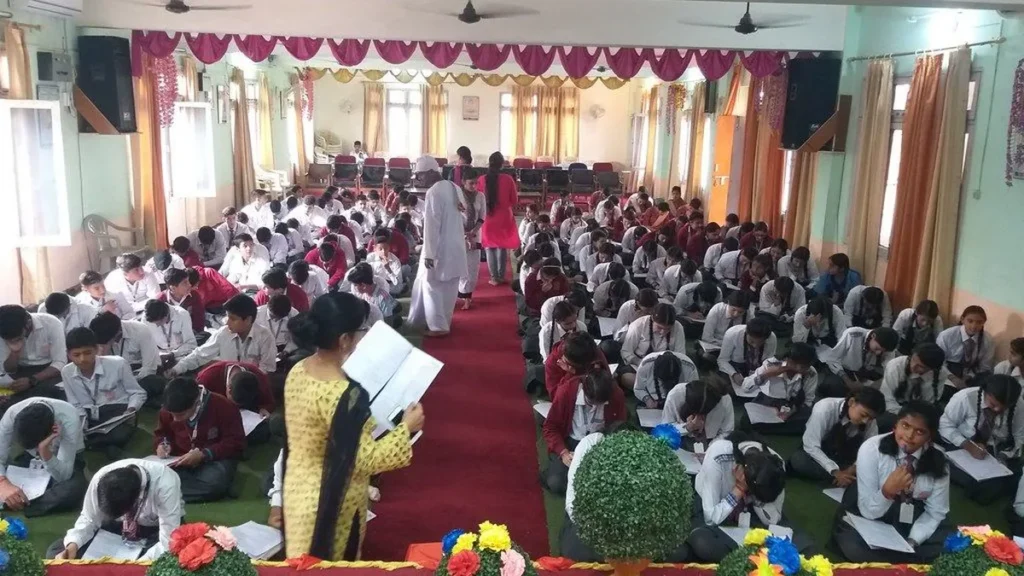
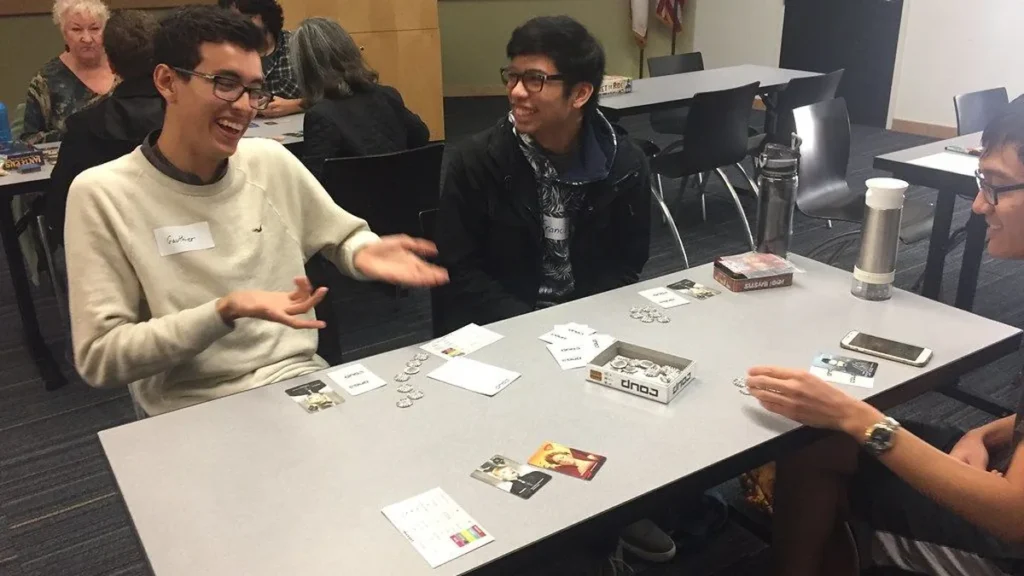
The first thing to accept is the maths. A standard deck has 52 cards, and a comfortable card table seats four to six players. With 156 players, you need roughly 26 to 39 tables, which means the evening is really many small games happening at once, joined by one shared scoreboard. Pick games that play well with four to six people, repeat them across the room, and connect the tables with a tournament.
The second thing to accept is that teaching matters more than the game itself. A game with a ten-minute explanation will cost you over an hour of collective attention when 156 people need to learn it. Pick games most people already half know, such as Rummy, Hearts or Crazy Eights, and print the rules on a card at every table. A one-page rules sheet beats a long speech every time.
The third thing to accept is that energy comes from the room, not from a single table. Short rounds of ten to fifteen minutes keep the pace lively, and a break between rounds lets players move and compare scores. If you want variety beyond cards, the party games that work for a crowd of 154 players pair well with a card night. The strongest evenings mix two or three card games with one whole-room activity.
The 7 Best Card Games for 156 Players
Each game below is rated for how it handles a crowd of 156. The numbers assume four to six players per table and a host who keeps time for the whole room. All seven use ordinary playing cards, so the only equipment you need is decks, tables, score sheets and a timer.
1. Team Rummy Tournament
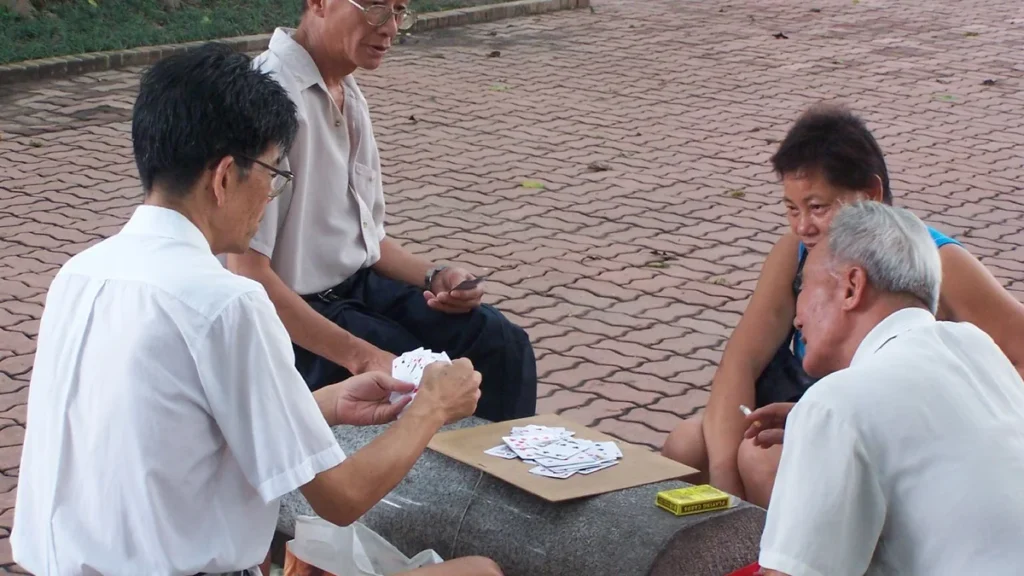
Rummy is the natural first choice for a huge group because almost everyone has played some version of it. Deal seven cards to each player, place the rest face down as the draw pile, and turn one card up to start the discard pile. Players draw and discard in turn, building sets of three or four cards of the same rank, or runs of three or more cards in the same suit. The first player to lay down all their cards scores points from the cards left in their opponents’ hands.
For 156 players, run Rummy as a multi-table tournament. Seat four players at each of 39 tables, play three rounds of about fifteen minutes, and record each table winner on a central scoreboard. You need 39 decks plus at least six spares. Rummy is a good opening game because it settles people in without shouting.
2. Hearts in Teams
Hearts is a trick-taking game that is easy to learn and surprisingly tense, which makes it ideal for a competitive evening. Each player receives thirteen cards, and on every trick each player must follow the suit that was led if they can. The aim is to avoid winning tricks that contain hearts, because each heart is worth one penalty point, and the queen of spades is worth thirteen.
Hearts works for 156 players because it needs exactly four players per table, which divides the room neatly into 39 tables. It also has a natural team version: pair the players across the table as partners and combine their scores. Allow a five-minute practice hand before scoring begins, because the passing rule, where each player passes three cards to a neighbour, is the one rule new players forget.
3. Spades Relay
Spades is a partnership game that brings real teamwork to a card night, and teamwork is exactly what a room of 156 people needs. Players sit in two partnerships of two, bid on how many tricks they think they can win, and then play thirteen tricks, with spades always acting as the trump suit. A partnership that meets its bid scores points, while one that misses it loses points. Play a short version, with the highest score after four hands winning the table.
The relay format is what makes Spades work at this scale. Each table plays a single hand, records the result, and then one partnership rotates to the next table while the other stays put. Over six rotations, every player meets new opponents. You need 39 tables of four players, which fits 156 people exactly, and one deck per table.
4. Whole-Room Card Bingo
Whole-room card bingo is the one game in this guide where all 156 players genuinely play at the same time, with no tables needed at all. Give every player a blank five-by-five grid card and a pen, and ask them to fill the grid with any 24 numbers from 1 to 52, plus a free centre square. The host draws cards from a shuffled deck one at a time and calls each one out, and players mark the matching number. The first player to complete a full row, column or diagonal wins the round.
This game is valuable because it solves the hardest problem of a 156-player event: the moment when everyone is in one room and you need one shared activity. It needs almost no equipment, it takes about ten minutes a round, and it works for every age and ability. Run three rounds with small prizes, and use a microphone so the back of the room can follow every call.
5. Crazy Eights Marathon
Crazy Eights is the simplest game in this guide, and simplicity is a strength when 156 people are playing. Each player is dealt five cards, and the aim is to be the first to get rid of them all by matching the top card of the discard pile by rank or suit. Eights are wild and can be played on any card, with the player choosing the next suit. If a player cannot play, they draw from the pile until they can.
For a crowd of 156, Crazy Eights works best as a marathon: tables of five or six players run continuous short rounds for a fixed hour, and the table leader is the player with the lowest total when time is called. With six players per table, you need only 26 tables, which is the most space-efficient format in this guide, and one deck per table is enough. It is the best choice for groups with children or beginners.
6. War Tournament
War is the fastest game in this guide and the most dramatic, because every round is decided by a single card. Each player at a table receives an equal share of a shuffled deck, and on every turn all players flip their top card at the same time. The highest card wins the trick and takes all the cards played, and when two players tie, they declare war by placing three cards face down and flipping a fourth.
War needs no skill at all, which is precisely why it works for 156 players: nobody can be left behind by a complicated strategy, and every round takes seconds. Run it as a knockout tournament, with table winners advancing to a final table while the rest of the room starts a new game. Four players per table means 39 tables and 39 decks, and a full round takes about ten minutes.
7. Snap and Slapjack Showdown
Snap and Slapjack are the two quickest reaction games in this guide, and they turn a quiet card night into a noisy, laughing room. In Snap, players take turns flipping cards into a central pile, and the first player to shout snap when two matching cards appear in a row wins the pile. In Slapjack, the pile is won by slapping it the moment a jack appears, and a player who slaps the wrong card pays a penalty card.
These games are ideal for 156 players because they need almost no table space, no score sheets and no experience. Tables of six work well, which means 26 tables, and a single deck per table is enough. Run them as a showdown: five-minute heats at each table, with the winner of each heat moving to a championship table for a grand final in front of the whole room. Keep tables clear of drinks.
Comparison Table: The 7 Best Card Games for 156 Players
| Game | Players per Table | Tables Needed | Decks Needed | Round Time | Best For |
|---|---|---|---|---|---|
| Team Rummy Tournament | 4 | 39 | 39 plus spares | 45 minutes | Mixed ages |
| Hearts in Teams | 4 | 39 | 39 | 45 minutes | Pairs |
| Spades Relay | 4 | 39 | 39 | 40 minutes | Team play |
| Whole-Room Card Bingo | All 156 together | 0 | 1 | 10 minutes | Whole room |
| Crazy Eights Marathon | 5 to 6 | 26 to 31 | 26 to 31 | 60 minutes | Beginners |
| War Tournament | 4 | 39 | 39 | 30 minutes | Fast energy |
| Snap and Slapjack Showdown | 6 | 26 | 26 | 25 minutes | Fun finale |
Four Formats That Make 156 Players Work
The game you choose matters less than the format you run it in, because the format is what turns 156 separate players into one event. The four formats below all work, and the best evenings use two of them: one for the main games and one for the whole-room moments.
The multi-table tournament is the most reliable format. Every table plays the same game at the same time, table winners are recorded, and winners advance to final tables. It is fair, easy to explain and easy to score, and it works for Rummy, Hearts, War and Crazy Eights.
The relay format keeps the room moving. After each short hand, one partnership or one player rotates to the next table, so everyone meets new opponents and no table goes stale. It works best for Spades and Hearts. The host must keep rotations strict, with a clear bell or announcement, or the room will drift out of sync.
The team competition format divides the room into large teams, for example by table colour or company department, and adds up every table result into a team total. It is the best format for company events and fundraisers, because even a player who loses their table can still help their team. Use coloured wristbands or table flags so everyone knows their team at a glance.
The whole-room format needs no tables at all and brings everyone together for a single shared game, such as card bingo or a prediction game where the host draws cards and the room guesses the next one. It is the best way to open the evening, because it gathers the room before the tables begin, and the best way to close it, because it ends with one shared winner. The board games built for 154 players also make a strong companion to a card evening when you have spare tables.
Setting Up the Room: Tables, Decks and Helpers
Start with the room layout. For 156 players at four per table, you need 39 tables, and each table needs about two metres of space around it so players can pull out chairs and helpers can walk between them. Arrange the tables in rows with a clear aisle down the middle, and put the host table and scoreboard at the front where everyone can see them.
Count the decks carefully. You need one deck per table, plus at least ten spare decks, because cards get bent, lost or spilled on. Buy identical decks in bulk so that a card borrowed from one table matches the deck it joins, and open every deck before the event to check that all 52 cards are present.
Recruit helpers early. One host runs the microphone, the timer and the scoreboard, and one helper per six tables answers rules questions, collects scores and settles disputes. For 156 players that means a host plus six or seven helpers, and each helper should know the rules of every game on the programme. Brief the helpers the day before.
Scoring Across 156 Players
Scoring is what turns many small games into one competition, so keep it simple enough for a tired helper to manage at midnight. Award table points rather than counting every card: three points for a table win, two for second place, one for third, and zero for last. Add the table points into team totals if you are running a team competition, and display the running totals after every round.
Decide the tie-breakers before the night begins and print them on the score sheet. The simplest tie-breaker is the number of table wins, followed by the number of second places, and if two players are still tied, a single sudden-death hand of War decides it in under a minute.
Checklist: Running Card Games for 156 Players
- Book a hall with space for 26 to 39 tables, plus a host table and a clear aisle.
- Buy one deck per table plus at least ten spares, and check every deck has all 52 cards.
- Print a rules sheet and a score sheet for every table, with tie-breakers included.
- Recruit one host and one helper per six tables, and brief them beforehand.
- Plan short rounds of ten to fifteen minutes, with a whole-room game to open and close.
- Set up a visible scoreboard and announce the standings after every round.
Frequently Asked Questions
Can one card game really seat 156 players?
No, and any guide that claims otherwise is not being honest. No card game seats 156 players at one table. The games in this guide work because they are played at many tables at once, in teams, as tournaments or as whole-room games, with one shared scoreboard joining the tables together. The trivia games for 154 players show how the same multi-table idea works for quiz rounds.
How many decks do I need for 156 players?
Plan on one deck per table plus at least ten spares. With four players per table that means 39 decks plus spares, and with six players per table it means 26 decks plus spares. Buy identical decks so cards can be swapped between tables, and check each deck before the event.
How long does a card night for 156 players take?
Allow three hours, including arrival, rules and breaks. A typical programme is a ten-minute whole-room opener, two games of forty-five minutes each, a short break, and a twenty-five-minute closing game. Short rounds and a strict timer matter more than the exact schedule.
What is the best card game for beginners in a huge group?
Crazy Eights is the best choice for beginners, because the rules fit on one small card and a round takes only a few minutes. War is even simpler, since it needs no decisions at all, but it is pure luck. If your group includes children or people who have never played cards, start with Crazy Eights and add a second game only once everyone is comfortable.
How do I stop the room from getting too noisy?
Noise is part of the fun, but it needs managing. Use a microphone for announcements, ring a bell or sound a buzzer to start and end rounds, and place the loudest games, such as Snap and War, away from the quietest games, such as Rummy and Hearts.
Do I need prizes for 156 players?
No, you need prizes for the winners only. A small prize for each table winner, a slightly larger prize for the overall winner, and a fun prize for the team that finishes last will cover the night. Keep the prizes modest and light-hearted, because the evening is about playing together.
The Bottom Line
The best card games for 156 players are the simplest ones, played at many tables, joined by one scoreboard and run by a confident host. Pick Rummy or Crazy Eights to open, add Hearts or Spades for the competitive middle, and close with a whole-room game or a noisy round of Snap so the night ends on laughter.