What makes a food truck name stick in someone’s head long enough to make them walk three blocks for a sandwich? It is rarely the food alone. The name is the first thing a customer sees, whether it is painted on the side of the truck at a busy intersection or flashing past on a phone screen as someone scrolls through a food-truck tracker app. A clever, memorable name can turn a rolling kitchen into a brand people seek out by name. A dull one can leave a great cook invisible in a lineup of identical white vans.
This guide walks through what makes food truck names feel genuinely unique, how to build one that fits your menu and personality, and the practical traps that trip up owners before they ever sell their first taco. There are no official rankings of “unique” names, and every published list is editorial. What follows is a working method, not a hall of fame. (Funny Black Names: 155 + Hilarious and Unique Ideas for Every Mood)
Why food truck names matter more than most owners think
The modern US food truck wave is generally dated to the late 2000s and early 2010s, with Los Angeles often cited as a catalyst for the gourmet-truck era. That timing matters for naming. This is a business category that grew up alongside social media, where discovery happens through photos, tags, and shares rather than through a fixed storefront sign. A truck’s name has to work in three places at once: shouted across a parking lot, printed on a menu board, and typed into a search bar by someone trying to find where you are parked today.
That triple duty explains why food-truck names lean so heavily on puns, alliteration, and pop-culture references. The name does more than label a truck; it is an attention device in a market where a customer’s decision often happens in a split second. A name that makes someone smile does real commercial work.
There is also a legal layer most new owners underestimate. In the US, a food truck name can potentially be registered as a trademark, and the strength of that protection depends on where the name falls on the distinctiveness scale, from fanciful and arbitrary names (strongest) down to descriptive and generic ones (weakest). A name that simply describes what you sell is easy to love and hard to protect.
What actually makes a food truck name feel unique

“Unique” is a slippery word. There is no registry of unique food-truck names, and two trucks in different cities can share a name without anyone noticing. So treat uniqueness as a practical goal rather than an absolute one. A name is unique enough when it is distinctive in your market, easy to remember, and legally clear in your state and category. (Funny Girl Names: 200+ Hilariously Unique Name Ideas)
In practice, the names that feel freshest tend to combine two unrelated ideas rather than one obvious one. A taco truck called “Taco Truck” is invisible. A taco truck whose name mashes together a food word and an unexpected cultural reference creates a small, satisfying jolt. That jolt is what people remember.
The wordplay approach
Puns built on the dish itself remain the workhorse of the category. Names that riff on “taco,” “burger,” or “waffle” show up constantly in food media for a reason: they are instantly legible. The risk is saturation. If three trucks in your city already lean on the same pun structure, you are competing on execution rather than name. The fix is to push the wordplay one step further than the obvious version, or to pair it with a visual identity that does the heavy lifting.
The personal-story approach
Names drawn from a family recipe, a hometown, a nickname, or a running joke tend to age better than pure puns. They also tend to be more defensible, because they are less likely to collide with someone else’s idea. If you want inspiration for how far a playful naming instinct can stretch, browsing lists of funny cat names or funny girl names shows how much mileage there is in rhythm, alliteration, and absurdity. The same instincts that make a pet name funny make a truck name memorable.
The place-and-culture approach
Referencing a neighborhood, a region, or a cultural tradition can build instant local loyalty. This is where a little care goes a long way. Names that mix languages or borrow from pop culture occasionally raise trademark or cultural-sensitivity issues, so it is worth asking whether the reference reads as affectionate or as a shortcut. A name that honors a tradition tends to wear better than one that merely borrows it for a laugh.
A naming checklist that separates good from great
Before committing to a name, run it through a short, honest test. Most naming mistakes are avoidable with thirty minutes of homework.
- Say it out loud in a noisy crowd. If you have to repeat it, it is too long or too complicated.
- Spell it to a stranger. If they get it wrong twice, your name will be misspelled in every social post and search query.
- Search it locally. Check whether another truck, restaurant, or food brand in your area already uses it.
- Check the trademark database. Trademark status of specific names changes constantly, so verify live before you print anything.
- Register the business name. Most US states require a business name registration at the state or county level, which is separate from federal trademark protection.
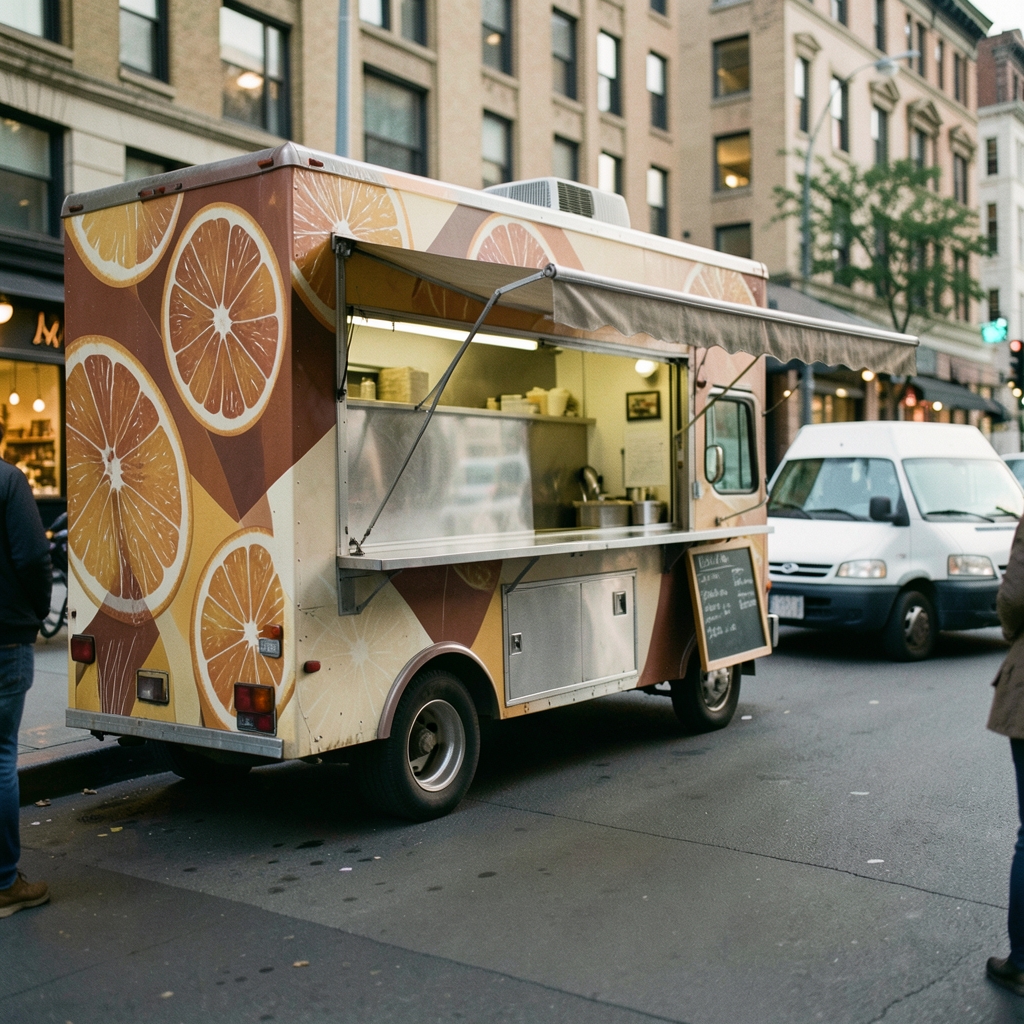
- Test it on the truck. A name that looks clever in a notebook can look cramped and unreadable at forty miles an hour.
The order matters. Too many owners fall in love with a name, order the vinyl lettering, and only then discover a conflict. Do the legal checks first, then the design work.
Common mistakes that make a food truck name forgettable
The most frequent error is being too descriptive. Names that list the cuisine and the format (“Best Street Tacos Truck”) are easy to understand and nearly impossible to protect or remember. A close second is chasing a trend that will date fast. A name tied to a meme or a viral moment can feel stale within a year, and repainting a truck is expensive.
Another quiet killer is overcomplicating the spelling. Invented spellings can look stylish on a logo, but they break word-of-mouth marketing. If a customer cannot tell a friend the name without spelling it out, you have added friction to your best advertising channel.
There is also the collision problem. Because food-truck names are regulated locally and lightly, similar names can coexist in different cities, and trademark disputes over truck names have been reported in trade press. That does not mean you need a national clearance search for a single truck, but it does mean you should not assume a name is free just because you have not seen it in your own city.
If you are still in the brainstorming phase and want to see how far playful naming can go, the ideas behind best prank names and unique friend group names show the same principle at work: the best names are specific, a little absurd, and impossible to confuse with anyone else’s.
How to brainstorm names that fit your menu and your personality
Start with a list of raw ingredients rather than finished names. Write down the food you sell, the words customers use for it, your city or neighborhood, your own quirks, and any phrases you say constantly. Then combine items from different columns. This is how genuinely fresh names emerge, because you are forcing connections that would never occur to someone starting from a blank page.
Try three rounds. In round one, generate twenty names fast without judging any of them. In round two, cut anything that fails the say-it-out-loud test. In round three, check the survivors for local conflicts and trademark issues. Most owners end up with two or three finalists and a gut feeling. Trust the gut, but let the checklist have the final vote.
It also helps to think about the name as the seed of a whole identity. A funny name invites a funny menu board, a playful social presence, and a mascot. A more elegant name invites a cleaner design and a quieter tone. The name should match the experience you actually plan to deliver, not the one you admire in someone else’s photos.
Matching the name to the truck’s real-world constraints
A food truck operates under rules that a restaurant never thinks about. Mobile food units are regulated at the city and county level, with health permits, vending zones, and inspection requirements that vary widely by location. Your local health department publishes the specifics, and those rules can shape everything from where you can park to how you present your brand.
The practical upshot for naming is simple: your name needs to survive repetition. It will appear on permits, invoices, social handles, signage, and receipts. A name that is charming once and exhausting the hundredth time is a bad long-term choice. Short names with clean spelling hold up best under that kind of wear.
Social media amplifies distinctiveness in a way that is hard to overstate. Food-truck discovery is heavily driven by photo-sharing platforms and truck-tracking apps, and a memorable name is a real advantage when a customer is choosing between five options on a screen. But the same dynamic cuts the other way: a name that is hard to spell will be hard to find, and a name that is easy to confuse will send customers to someone else’s page.
Conclusion
A unique food truck name is not about winning a cleverness contest. It is about being findable, memorable, and legally clear enough to build on. The strongest names combine a genuine spark of wordplay or personal story with the boring discipline of checking for conflicts and registering the business properly. Get the order right, test the name out loud, and let the checklist do its job before the paint goes on. Do that, and your name becomes the first thing customers remember and the last thing they forget.
Frequently Asked Questions
How do I know if my food truck name is already taken?
Search locally first, then check the federal trademark database for your category, since trademark status changes and only a live search is reliable. Also check state business-name registrations, because a business name registration and a trademark are two different things and one does not automatically cover the other.
Can I trademark a funny food truck name?
Often yes, but it depends on how distinctive the name is. Fanciful, arbitrary, and suggestive names are easier to protect than descriptive or generic ones, so a pure description of your food is the weakest option legally even if it is the easiest to understand.
Should my food truck name describe the food I sell?
It can, but be careful. Descriptive names are easy for customers to grasp and hard to protect, and they tend to blend into a lineup of similar trucks. A name that hints at the food while adding an unexpected twist usually balances clarity and distinctiveness better.
How long should a food truck name be?
Short enough to say in a noisy crowd and spell without hesitation. One to three words is the practical sweet spot, because the name has to work on a sign, a social handle, a permit form, and a receipt without becoming a burden to repeat.
Do I need to register my food truck name as a business?
In most US states, yes, some form of business-name registration is required at the state or county level, and it is separate from federal trademark protection. Check your state’s requirements early, because the registration process can affect what name you are allowed to use.
What if another truck in a different city has the same name?
It happens, because food-truck names are regulated locally and lightly, so similar names can coexist in different markets. That does not guarantee you are safe, though. Check whether the other truck has trademark protection or a strong social following before you commit to a name that could create confusion.