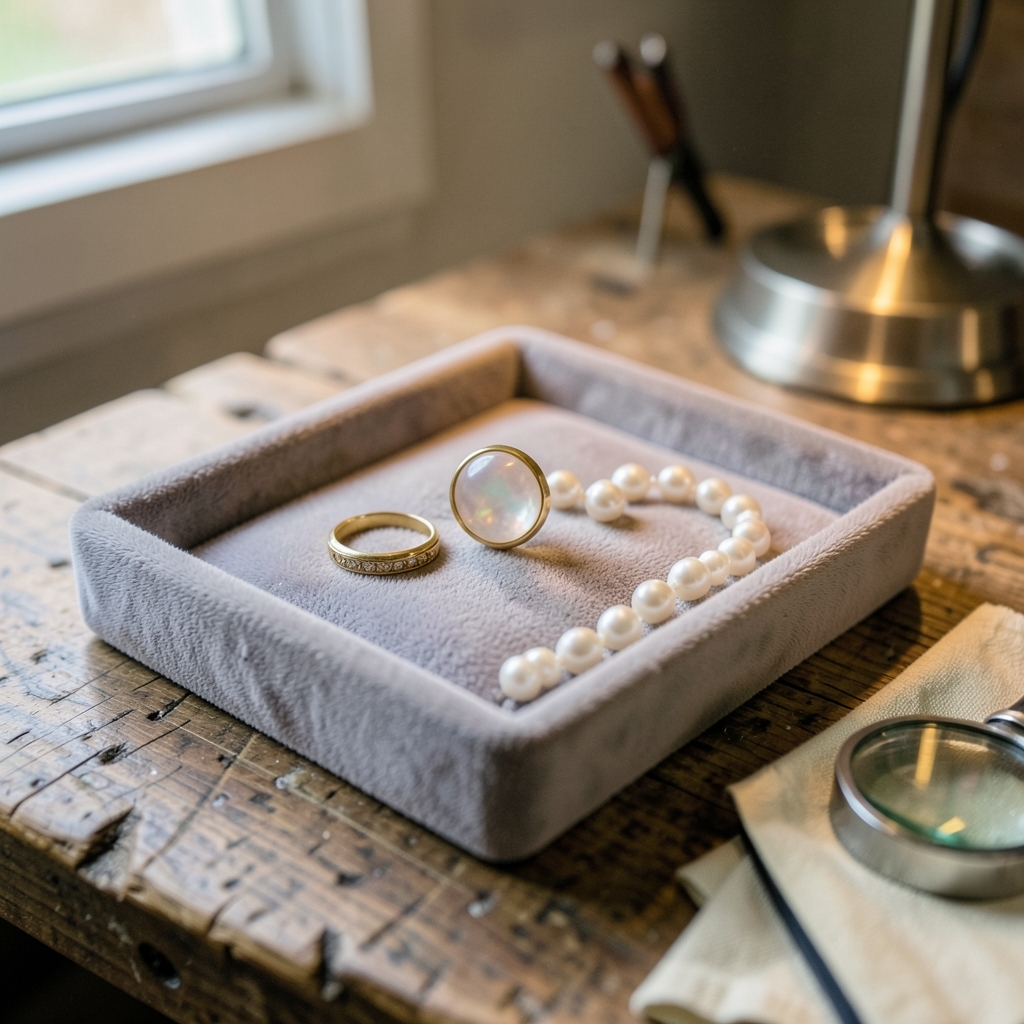
What do you call a jewelry brand that needs to feel elegant, memorable, and legally safe all at once? That question trips up more new jewelers than almost any other early decision. A name is the first thing a customer sees, the hardest thing to change later, and the one piece of branding that can get a business into real legal trouble if it is chosen carelessly. This guide walks through how creative jewelry business names actually get built, what separates a name that sells from one that confuses, and the practical checks that keep a good idea from becoming an expensive mistake.
Why Jewelry Naming Is Harder Than It Looks
Most product categories let you get away with a loose, playful name. Jewelry is different. The category carries weight: it is tied to weddings, inheritance, milestones, and self-reward. A name that reads as silly can undercut a $2,000 ring. A name that reads as stuffy can make a young brand feel dated.
There is also a crowding problem. Search any gemstone word plus “studio” or “atelier” and you will find dozens of near-identical names. The result is that the obvious choices are usually the weakest ones, because they are both forgettable and legally risky.
The best jewelry names solve three problems at once. They are distinctive enough to be protectable, clear enough to be found, and tonally matched to the price point and customer the brand actually serves. Miss any one of those and the name creates friction later.
The Four Building Blocks of a Jewelry Name

Almost every strong jewelry name pulls from one of four vocabulary wells. Knowing which well you are drawing from makes the whole process faster.
Materials and stones. Words like pearl, opal, ember, quartz, and gold carry instant associations. They are warm and concrete, but they are also heavily used, which makes them hard to trademark on their own.
Craft and process. Setting, facet, bezel, cast, and forge signal handmade quality. These words appeal to customers who care about how a piece was made.
Feeling and occasion. Vow, heirloom, kin, keepsake, and vow speak to why people buy jewelry rather than what it is made of.
Invented words. Coined names like a blended or altered word are the easiest to protect legally because no one else owns them. They are also the hardest to remember and spell, which is the trade-off every founder has to weigh.
A useful exercise is to write twenty words in each column, then combine across columns rather than within them. Material plus feeling (“Ember & Vow”) tends to produce fresher results than material plus material (“Gold & Silver”).
What Actually Works in Practice
First-hand experience from naming projects points to a few patterns that hold up again and again.
Say it out loud before you fall in love with it. A name that looks beautiful on a screen can be a tongue-twister on a phone call. If a customer has to repeat it back to confirm the spelling, it is costing you word-of-mouth referrals.
Test the spelling test. Ask five people to hear the name once and type it. If fewer than four get it right, the name will leak traffic to competitors forever.
Check the social handles early. A perfect name with no available handle forces awkward workarounds like underscores and extra words, which look amateur on packaging.
Avoid the pun trap unless the brand is genuinely playful. A funny name can work for a costume-jewelry line or a craft-fair stall. It rarely works for fine jewelry, because the humor wears off faster than the customer relationship.
Do not fall for the first name that clicks. The most common mistake is emotional commitment too early. Founders often lock onto a name in a day, then discover a conflict three weeks later and have to start over. Generate at least thirty candidates and shortlist ten before checking any of them.
If you want a broader pool of inspiration to draw from, browsing lists of creative names for friend groups can loosen up your word associations, because the same playful logic that makes a group nickname stick often produces a jewelry name with personality.
Creative Jewelry Business Name Ideas by Style
The table below groups sample directions by tone. These are starting points, not finished names. Each one should be checked for availability before use.
| Style | Example directions | Best for |
|---|---|---|
| Minimal and modern | Linea Studio, North Facet, Plainform | Direct-to-consumer brands, everyday wear |
| Romantic and classic | Heirloom & Ivy, Vow Atelier, Pearl Meridian | Bridal, fine jewelry, gifting |
| Earthy and organic | Raw Ember, Stone & Fern, Wild Cast | Artisan, recycled-metal, bohemian lines |
| Playful and bold | Glitter Riot, Loud Carat, Spark & Sass | Fashion jewelry, younger buyers |
| Invented and ownable | Velorin, Ostrava, Calyndra | Brands planning to scale and trademark |
| Heritage and craft | Third Generation, Bench & Burnish, Old Cut Co. | Custom work, repair, family businesses |
Notice that the invented column looks different from the rest. That is deliberate. Coined names feel strange at first and familiar after a week. That discomfort is often a sign the name is genuinely ownable.
How to Generate Names Without Staring at a Blank Page
A repeatable process beats waiting for inspiration. Try this sequence.
- Write a one-sentence description of the customer, not the product. “A 32-year-old who buys one meaningful piece a year” is more useful than “handmade silver jewelry.”
- List ten words that customer would use to describe the feeling of wearing your work.
- List ten words from your materials, tools, and process.
- Cross-combine the two lists into thirty pairs.
- Cut anything you cannot say clearly in a noisy room.
- Shortlist ten and run each through the checks in the next section.
- Sit with the top three for a week before deciding.
The week-long pause matters. Names that still feel right after seven days tend to survive the first rebrand conversation, which is when weak names collapse.
The Legal Checks Most New Jewelers Skip
Creative is only half the job. A name also has to be legally usable, and this is where enthusiasm most often outruns diligence.
In the United States, trademark law is governed by the Lanham Act, and names are registered by product class. Jewelry falls in Class 14 of the Nice Classification, the international system administered by WIPO that sorts goods and services for trademark purposes. That means a name already registered for clothing in Class 25 may still be available for jewelry, though related-class conflicts can still create problems.
Trademark protection depends on distinctiveness. Names sit on a spectrum from generic to descriptive to suggestive to arbitrary to fanciful. Generic and descriptive names are hard or impossible to protect without proof that customers have come to associate them with you. Suggestive, arbitrary, and fanciful names are far easier to register. This spectrum comes from the long-standing Abercrombie framework that US courts still apply.
Before committing, search the official trademark database for existing registrations and pending applications. Then check state business-name records, since a trade name or DBA is typically filed at the state or county level rather than federally. Domain names are a separate system entirely: a .com registration gives no trademark rights, and a trademark gives no automatic claim to the matching domain.
Two more practical points. First, a business name and a brand name can differ, and many small jewelers register a legal entity name while trading under a shorter brand. Second, hiring an intellectual-property attorney for a clearance search is cheap compared to rebranding packaging, signage, and a website after a cease-and-desist letter arrives.
Common Naming Mistakes and How to Avoid Them
Choosing a name too close to a famous house. Variations on well-known luxury names invite legal trouble and make the brand look derivative.
Ignoring the international picture. A name that is harmless in English can mean something unfortunate in another language, which matters if you plan to sell online across borders.
Letting the domain dictate the brand. Reversing the order, so the domain serves the name rather than the name serving the domain, produces better long-term branding.
Overloading with symbols. Ampersands and unusual spellings look stylish on a logo and become a data-entry nightmare in invoices, shipping forms, and search.
Skipping the “radio test.” If a name cannot be understood when heard once, it will underperform in every verbal recommendation.
For a sense of how far creative naming can stretch before it breaks, it helps to see where other categories draw the line. Lists of funny cat names show how humor and wordplay create memorability, while collections of creative fake names demonstrate how invented words can still feel natural. Both are useful reminders that a name’s job is to be remembered and repeated, not to impress on first reading.
Matching the Name to the Business Model
The right name depends heavily on how the business sells.
A custom and repair studio benefits from a name that signals trust and craft, since customers are handing over treasured pieces. A direct-to-consumer online brand needs a name that is easy to spell and search, because discovery happens through typing. A wholesale line selling to boutiques needs a name that looks good on a small tag and reads well in a line sheet. A craft-fair and market vendor can afford more personality, because the name is reinforced by a face and a table.
Founders often name for the business they have today and forget the business they want in five years. A name that only works for earrings will feel wrong once the line expands into rings and necklaces. Choose something broad enough to grow into.
Testing a Name Before You Commit
Before ordering packaging or filing anything, run a low-cost validation round.
Ask ten people outside your circle to spell the name after hearing it once. Show the name in a mock logo at small size and ask what kind of jewelry they expect. Search the name alongside “jewelry” and see what appears. Check that the social handles and domain are available in forms you can live with. Then price out the cost of changing it later, which usually runs into thousands once signage, tags, and packaging are printed.
If a name survives all of that and still feels right, it is probably a keeper.
Conclusion
Creative jewelry business names are not found in a flash of inspiration. They are built, tested, and checked. The strongest ones draw from a clear vocabulary well, pass the spelling and radio tests, fit the price point and customer, and clear the trademark and domain hurdles before a single tag is printed. Founders who treat naming as a two-week project with real research behind it end up with brands that are easier to remember, easier to protect, and far easier to grow. Start with thirty candidates, cut ruthlessly, validate with real people, and only then commit.
Frequently Asked Questions
How many name ideas should I generate before choosing a jewelry business name?
Aim for at least thirty candidates and shortlist ten. Generating a wide pool first prevents premature attachment to the first name that sounds good, which is the most common cause of rebranding later. Only run legal and domain checks on the shortlist to save time.
Can I use a gemstone word like “opal” or “pearl” in my jewelry business name?
Yes, but be careful. Single common gemstone words are heavily used and hard to protect as trademarks on their own. Combining a gemstone word with a distinctive or invented element produces a name that is both evocative and more legally defensible.
Do I need a trademark to start selling jewelry under a business name?
No. You can begin trading under a registered business name without a federal trademark. However, without trademark protection you have weaker recourse if a competitor adopts a similar name, and a clearance search before launch is strongly advised.
What is the difference between a business name and a brand name for a jeweler?
A business name is the legal entity or trade name registered with a state or county authority. A brand name is what customers see and remember. Many small jewelers register one legal name and trade under a shorter, more memorable brand name.
How do I check whether a jewelry name is already taken?
Search the official trademark database for your country, check state or county business registries, and look up the matching domain and social handles. A professional clearance search adds confidence, especially if you plan to sell internationally.
Should I pick a funny name for a jewelry business?
It depends on the market. Funny names work well for fashion jewelry, craft stalls, and playful brands aimed at younger buyers. For fine jewelry, bridal, and high-ticket custom work, humor usually undercuts perceived value and ages poorly.




