Most online riddle lists feel like they were written by a robot or pulled straight from a second-grade worksheet. They give you silly, predictable rhymes that take about two seconds to solve, which isn’t much fun if you’re looking for a genuine mental workout.
If you enjoy lateral thinking, logic traps, and puzzles that make you pause and re-read the question three times, you’re in the right place.
This handpicked list of 40 hard riddles for adults avoids the usual fluff. Whether you want to test yourself over a cup of coffee or bring some challenging riddles for adults to your next game night, these will get your brain gears turning. Answers are right below each question so you can check your work as you go.
Hard Riddles Overview & Mechanics
Here is a quick breakdown of how these hard riddles stack up across different puzzle styles. This way, you can easily jump to the types of challenges you enjoy most.
| Riddle Category | Focus Area | Key Skill Needed | Typical Solve Rate |
| Paradoxes & Wordplay | Double meanings & clever phrasing | Lateral thinking | Low |
| Mathematical & Logic | Numbers, counting, & spatial setups | Deduction & analysis | Medium |
| Abstract & Concepts | Time, elements, & intangibles | Unconventional perception | Medium to Low |
| Physical Items | Deceptive everyday descriptions | Observation & detail | High to Medium |
Mind-Bending Wordplay & Paradox Riddles
Wordplay puzzles force you to step past literal definitions and pay close attention to how language can trick you.
Classic Double-Meaning Puzzles
-
Question: I speak without a mouth and hear without ears. I have no body, but I come alive with wind. What am I?
Answer: An echo.
-
Question: A man looks at a portrait and says, “Brothers and sisters I have none, but that man’s father is my father’s son.” Who is in the painting?
Answer: His son.
-
Question: What word in the English language gets shorter when you add two letters to it?
Answer: The word “Short” (adding “er” makes it “Shorter”).
-
Question: I have cities, but no houses. I have mountains, but no trees. I have water, but no fish. What am I?
Answer: A map.
-
Question: What can run, but never walks; has a bed, but never sleeps; has a mouth, but never talks?
Answer: A river.
Deceptive Language Challenges
-
Question: What disappears the very second you say its name?
Answer: Silence.
-
Question: I am taken from a mine and shut up in a wooden case, from which I am never released, yet almost everyone uses me. What am I?
Answer: Pencil lead (graphite).
-
Question: What breaks, never falls, and what falls, never breaks?
Answer: Day breaks, and night falls.
-
Question: What can fill an entire room without taking up any actual physical space?
Answer: Light.
-
Question: What word starts with an “E”, ends with an “E”, but only contains one letter?
Answer: An envelope.
Math & Deductive Logic Riddles
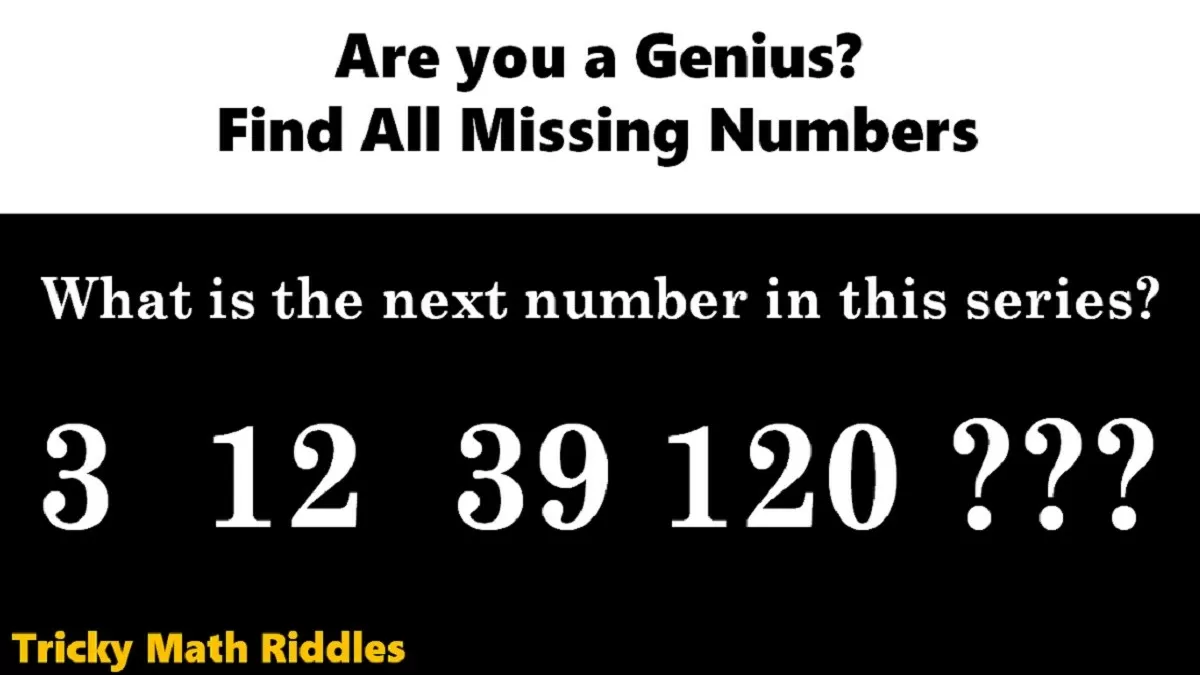
If you prefer structured problem-solving, these tricky riddles for adults require step-by-step logic, pattern recognition, and careful deduction.
Spatial & Numerical Puzzles
-
Question: A father and son get into a car crash. The father dies at the scene, but the boy is rushed to the hospital. In the operating room, the surgeon looks at him and says, “I can’t operate on him, he’s my son!” How is this possible?
Answer: The surgeon is his mother.
-
Question: A man pushes his car to a hotel and immediately realizes he is bankrupt. Why?
Answer: He’s playing Monopoly and landed on a board square with a hotel.
-
Question: You’re sitting in a freezing room with a candle, a wood stove, and a kerosene lamp, but you only have a single match. What do you light first?
Answer: The match.
-
Question: If two’s a company and three’s a crowd, what are four and five?
Answer: Nine (4 + 5 = 9).
-
Question: A man leaves home, takes three left turns, comes back home, and sees two masked men waiting for him. Who are they?
Answer: The catcher and the umpire in a baseball game.
Deductive Thinking Tests
-
Question: What has a head and a tail, but no body in between?
Answer: A coin.
-
Question: If you have me, you want to share me. But if you share me, you no longer have me. What am I?
Answer: A secret.
-
Question: A prisoner has to choose between three death sentences: a room full of burning fires, a room full of assassins with loaded guns, or a room full of lions that haven’t eaten in three years. Which room should he pick?
Answer: The lion room. Lions that haven’t eaten in three years are already dead.
-
Question: What can you hold easily in your right hand, but never in your left hand?
Answer: Your left elbow (or left hand).
-
Question: A man dies of old age on his 25th birthday. How is that possible?
Answer: He was born on February 29th during a leap year.
Abstract & Concept-Based Riddles
Abstract puzzles ask you to think beyond physical objects and consider bigger ideas like time, elements, and natural forces.
Time & Existential Challenges
-
Question: What is always right in front of you, but completely invisible to the eye?
Answer: The future.
-
Question: I am not alive, but I can grow. I don’t have lungs, but I need oxygen. I don’t have a mouth, but water will kill me. What am I?
Answer: Fire.
-
Question: The person who builds it doesn’t want it. The person who buys it doesn’t use it. The person who uses it never knows it. What is it?
Answer: A coffin.
-
Question: What constantly goes up year after year, but can never come down?
Answer: Your age.
-
Question: I turn green fields to snow, turn quiet men into heroes, and make moments last forever even though I pass every second. What am I?
Answer: Time.
Natural Phenomena Puzzles
-
Question: What can travel all around the world while sitting comfortably in one single corner?
Answer: A postage stamp.
-
Question: I have no voice, but I tell endless stories. I have leaves, but I’m not a tree. I have pages, but I’m not a guest list. What am I?
Answer: A book.
-
Question: Forward I am heavy, but backward I am not. What am I?
Answer: The word “Ton” (spelled backward, it’s “Not”).
-
Question: What has keys with no locks, space with no room, and allows you to enter without going anywhere?
Answer: A computer keyboard.
-
Question: What belongs entirely to you, yet everyone else uses it way more than you do?
Answer: Your name.
Physical Object & Everyday Deception Riddles
These difficult riddles for adults take everyday items around the house and describe them in ways that completely trip up your intuition.
Misdirection with Physical Items
-
Question: What has a long neck, but no head at all?
Answer: A bottle.
-
Question: What has a single eye, but can’t see a thing?
Answer: A sewing needle.
-
Question: What has dozens of teeth, but can’t bite anything?
Answer: A comb.
-
Question: What has two hands and a face, but no arms or legs?
Answer: A clock.
-
Question: What gets wetter and wetter the more it dries things off?
Answer: A towel.
Everyday Deception Questions
-
Question: What has a spine, but not a single bone inside it?
Answer: A book.
-
Question: What has four sturdy legs, but can’t walk an inch?
Answer: A table.
-
Question: What can you easily catch, but never throw?
Answer: A cold.
-
Question: What gets bigger the more stuff you take away from it?
Answer: A hole.
-
Question: What has a heart, but no actual heartbeat?
Answer: An artichoke (or a deck of cards).
How to Work Through Tough Riddles
When you hit a puzzle that feels impossible, a simple shift in mindset usually helps:
-
Question the literal words: Riddles thrive on double meanings. If a prompt mentions a “bed,” ask yourself if it means a place to sleep, a garden bed, or a riverbed.
-
Identify what’s missing: Look at what the riddle specifically doesn’t say. The solution usually hides in the gap between what you assumed and what was actually stated.
-
Try spelling tricks: If the description sounds abstract, check if the riddle is playing with word lengths, backward spellings, or homophones.
Simple Ideas for Hosting a Game Night
If you’re bringing these to a party or gathering, keeping the format relaxed works best:
-
Break into small teams: Groups of 2 to 4 people spark great discussions without anyone getting left out.
-
Use a simple point system: Give 1 point for a correct guess, but offer a bonus point if a team can explain why their answer works before you reveal it.
-
Set a timer: Give teams about 90 seconds per riddle. It keeps the energy moving so nobody gets bogged down on a single question.
Working through tough brain teasers is a great way to unwind, sharpen your focus, and have a good laugh over how sneaky simple words can be. Pick a few of your favorites from this list and see how your friends handle them.
If you love puzzles, word games, and mind games, head over to riddlepuzzle for more brain challenges to keep your mind active.
Frequently Asked Questions
Can logic puzzles be used as riddles?
Absolutedly, Any puzzle that uses clever framing to hide a straightforward logical answer functions as a riddle.
What makes a riddle tricky for adults compared to kids?
Adult riddles generally rely on conceptual leaps, subtle linguistic traps, and lateral logic rather than simple rhymes or basic puns.
How long should I spend on a hard riddle before looking at the answer?
Give yourself at least 2 to 3 minutes. Wrestling with a tough question gives your brain time to test different angles, which makes finding the answer much more satisfying.