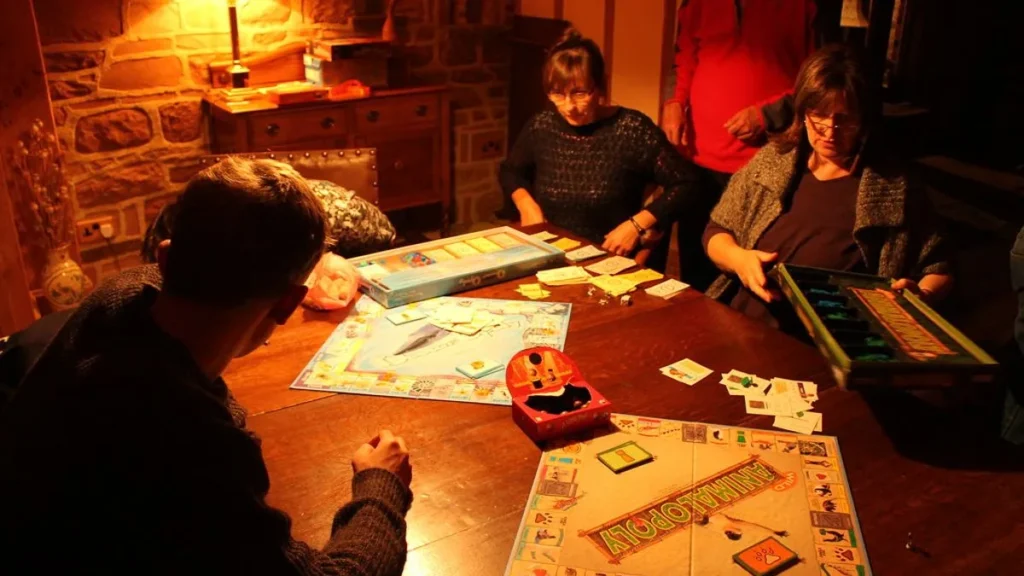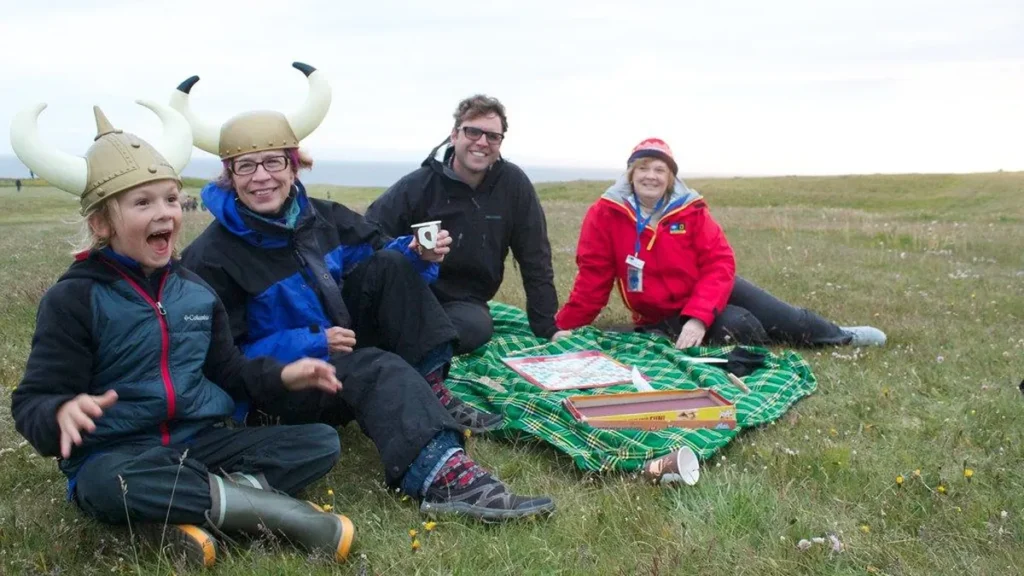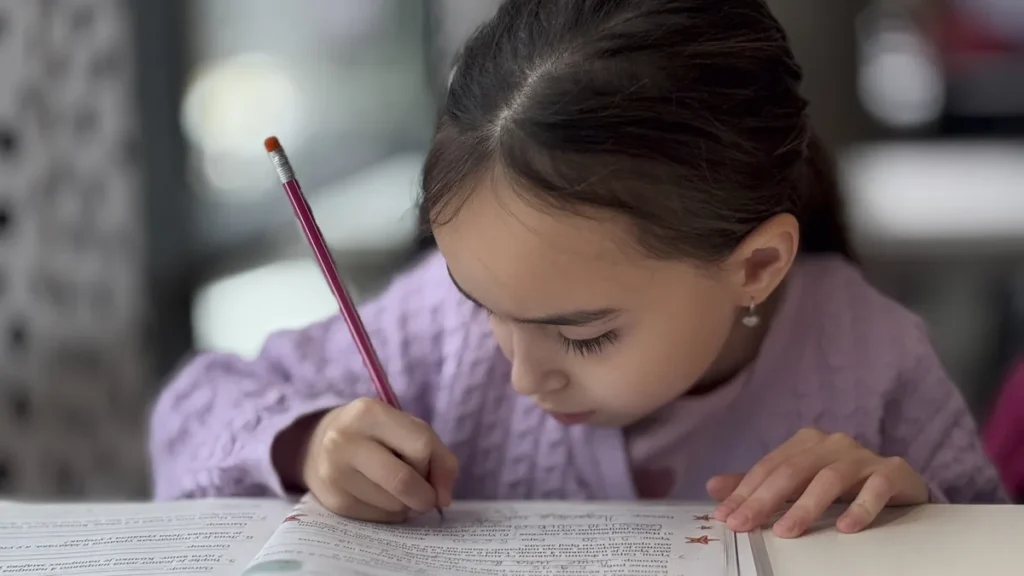
Picture a Sunday morning at the kitchen table. Your child has just invented a clue — “the animal that says moo and lives in a field” — and is waiting to see if you can guess it. That little moment is the whole reason to build a crossword for a kid. You are not setting a test — you are handing them a game they helped invent, one they can finish, fold up, and show grandma.
Nothing here needs software or fancy supplies — a sheet of graph paper, a pencil, a short list of words from your child’s own day, and clues written like jokes will get you there. Start with the finished puzzle below, then work backwards.
Steal this farmyard puzzle
Below is a finished seven-by-seven farmyard puzzle: seven short answers, all things a child knows, longest ones laid down first, crossings sharing letters. Give it a go yourself first — five minutes is about right.
| P | I | G | ||||
| O | ||||||
| A | N | T | ||||
| T | E | G | G | |||
| S | U | N | ||||
| T | O | Y | ||||
Across: 1. This animal loves rolling in mud (3). 3. A tiny insect that marches in a line (3). 5. A hen lays one of these (3). 6. It shines in the daytime sky (3). 7. Something fun to play with (3). Down: 2. It has horns and munches grass (4). 4. A bird builds one from twigs (4).
The answers are PIG, ANT, EGG, SUN, TOY across, and GOAT, NEST down. Look at how the answers lean on each other: GOAT holds PIG and ANT together, while NEST runs down through ANT, EGG, SUN, and TOY like a spine. No square sits alone, and no answer tops four letters. Copy this grid for your first try, then swap in your child’s own words.
Gather words from your child’s day
Walk through the house with your child and name things out loud. What sits on the breakfast table? EGG, MILK, JAM, BOWL, TOAST. What lives in the garden? ANT, BEE, WORM, LEAF, ROSE. A word your child can point at is a word they can spell.
Give the list a theme so it hangs together. Any single idea will do, because the theme does the choosing for you. Ask your child what has them buzzing this week and build around the answer. A child who is mad about dinosaurs will chase REX and ROAR far harder than they will chase words copied out of a book.
Try the fridge test on every candidate word. If you can picture it stuck to the fridge door, it passes. If it only exists in a dictionary, it fails. Short beats long, and familiar beats impressive.
Drop any word that could be mistaken for another one on the list. BEAR and PEAR side by side will trip up a tired solver, and so will CAT and CAP — one of each lookalike pair has to go. The same applies to a short word hiding inside a longer one: ANT tucked inside PANTS means one of them leaves the list.
Jot the survivors on scrap paper, longest first — they become the skeleton, and everything else hangs off them. If two words share no letters at all, swap one out: a crossword needs its answers to meet and cross.
Clues that feel like jokes, not exams
A clue for a child should read like the start of a joke, not the start of a test. The plainest kind is one clear fact: “This farm animal says moo (3)” for COW, or “It shines in the daytime sky (3)” for SUN. One fact is enough, and the letter count in brackets tells the solver how long the answer runs.
Sound clues turn the puzzle into a listening game. Write a short rhyme and let the rhythm carry the answer: “I hop and croak, I’m small and green, I live beside the pond, unseen” points at FROG without ever saying the word. Children love a rhyme they can chant.
Picture clues are the kindest of all for the youngest solvers. Sketch a hen, a fish, or a car next to the clue number and let the drawing do the work. A four-year-old who cannot yet read a clue can still crack a picture clue, and a wobbly drawing beats a neat one — it looks like something they could draw too.
Missing-word clues borrow from songs and stories your child already knows by heart. “Old MacDonald had a ___ (4)” gives FARM, and “Twinkle, twinkle, little ___ (4)” gives STAR. The shape of the clue is already familiar, so the solver can spend their energy on the spelling.
For older children, opposites add a gentle stretch: “The opposite of hot (4)” for COLD, or “A fruit that keeps the doctor away (5)” for APPLE. Save riddles and wordplay for solvers of ten and up, and keep them kind: a clue should leave a child feeling clever, not fooled. If a hidden-word hunt sounds like a gentler first step, word searches made for children tuck the answers into a letter grid instead of crossing them.
Build the square on graph paper
Graph paper is the right tool because the squares are already drawn. Pick a pencil, not a pen — the first version will change. Draw your outline lightly, then write the longest answer across the centre. Everything else grows out from that one word, like branches from a trunk.
Take the next longest answer and lay it across the first, sharing a letter they both contain. Keep going, one answer at a time, each new word crossing at least one word already down. A square in two words at once — an across and a down — gives the solver two ways into the same letter.
When the answers are placed, shade the empty squares black. Think of the black squares as walls: they shape the rooms, but too many leave nowhere to walk. Do not let any answer shrink to one letter or two, because two-letter answers feel like a trick, and do not strand a letter alone in a corner with no word through it. If a corner refuses to behave, rub out a wall or swap an answer.
Write the letters big and tall, so small hands can read them. Once the grid settles, go over the letters in pen and rub away the pencil lines — the result looks shop-bought, which is the reaction you want.
How big should it be?
Reading level matters more than birthdays. A seven-year-old who reads chapter books can handle a bigger square than a nine-year-old still sounding words out, so treat the table as a starting point.
| Age | Square | Answers | Letters |
|---|---|---|---|
| Under six | Five by five | Four answers | Three letters |
| Seven or eight | Seven by seven | Six answers | Three or four letters |
| Nine or ten | Nine by nine | Nine answers | Four or five letters |
| Eleven and up | Eleven by eleven | Twelve answers | Up to seven letters |
Very young children do best with a grown-up beside them and a picture beside every clue. From nine upwards, try one riddle clue among the plain ones and see how it lands. A solve past twenty minutes has stopped being fun, and one under three was too easy. Aim for the middle.
Numbers that do not scare anyone
Numbering looks fiddly, but it follows one plain rule. Start at the top left and sweep across each row, then drop to the next row and do it again. Any square that begins a word going across, a word going down, or both at once gets the next number. The first square you meet is 1, and the numbers climb as you travel through the grid.
Pair every clue with its number and a bracketed length, like this: “1 Across: This animal loves rolling in mud (3)”. Keep the Across clues in one list and the Down clues in another, on the same page as the grid, so small eyes never have to hunt for a second sheet.
Before you print, check three things: every number has a matching clue, every letter count is right, and no answer shows up twice. Say each clue out loud as you check it — if a sentence trips over your own tongue, say it again in plainer words.
The kitchen-table test
Work the puzzle through on your own before you hand it over, filling every square from a blank grid. Then invite your child to the table and swap roles: they read the clues aloud, and you write the answers they call out. You will spot the wobbly clues the moment they stumble over one.

Then hand over the pencil and let them solve it alone, with one lifeline: a single letter anywhere in the grid, once per puzzle. A lifeline spent wisely teaches more than a rescue, because the child chooses where they need help. Spent in the first minute, the puzzle is too hard; never needed, and the next one can be a square bigger.
Watch the clock without showing it. A finish between five and fifteen minutes means the difficulty is right. Longer, and the next grid should be smaller with plainer clues. Shorter, and you can add two answers or try a riddle clue. For more ways to turn one good solve into a habit, our piece on teaching children to enjoy puzzles follows the same sit-beside-them approach.
Make it look shop-bought
Print on plain white paper with black letters, one puzzle to a page, the grid filling most of the sheet. Colour backgrounds drink printer ink and blur the letters, so leave the colour to your solver’s crayons.
Print the answer key on the back, upside down, so a peek takes real effort. Run a single copy first and fill it in with a pen: that one trial catches a missing letter, a word squeezed off the edge, and a grid too small to write in. Once it passes, print a small stack — three or four puzzles on one theme, stapled at the corner, make a booklet a child will carry for a week.
Traps worth skipping
- Drawing the square before choosing the words — a square drawn first squeezes the answers into shapes they do not want.
- Choosing words to impress grown-ups. If a word needs explaining before the clue even starts, it does not belong in a children’s puzzle.
- Writing a clue that fits two answers, or leans on a fact your child has never met — a clue like that teaches a child puzzles are unfair.
- Chopping the grid up with too many black squares. Keep the square mostly open, so the answers meet each other and lend each other letters.
- Skipping the test drive. A puzzle nobody but its maker has solved is a draft, not a finished puzzle.
Beyond the first grid
Once the first puzzle is solved, the uses multiply. It fills a wet afternoon, a long drive, or the wait before dinner with no screen in sight. A birthday version built around what the birthday child loves most keeps the table busy while dinner is served. A classroom version built from the week’s spelling words turns revision into a race.
Word games build patience, careful looking, and the habit of checking an answer against its crossings before moving on. When your child outgrows these small grids, the grown-up crossword guide shows how the same steps stretch to bigger squares and sharper clues. For now, keep it small, keep it theirs, and keep the pencil handy.
Good questions, quick answers
What age can start with crosswords? Four- and five-year-olds can enjoy a tiny grid with a grown-up beside them and a picture clue. Most children start solving alone at six or seven, once short words come easily.
How many answers should a children’s crossword hold? Fewer than you think. Four answers suit a five-year-old, six suit a seven-year-old, and about a dozen suit an eleven-year-old.
Do I need special software? No. Graph paper and a pencil will carry you through a small puzzle, and a paper grid lets your child watch the puzzle being built, which is half the fun.
Can I use my child’s name in the puzzle? Yes, and you should. Names, pets, favourite foods, and family jokes make a puzzle feel made for exactly one person, because it was. A puzzle with a child’s own name in it is a keepsake.
Pick a theme your child already talks about, jot down six short words, and sketch your first square in pencil. Across the table, a young solver is about to find out that words can cross, clues can rhyme, and an empty square is only a question waiting for an answer.