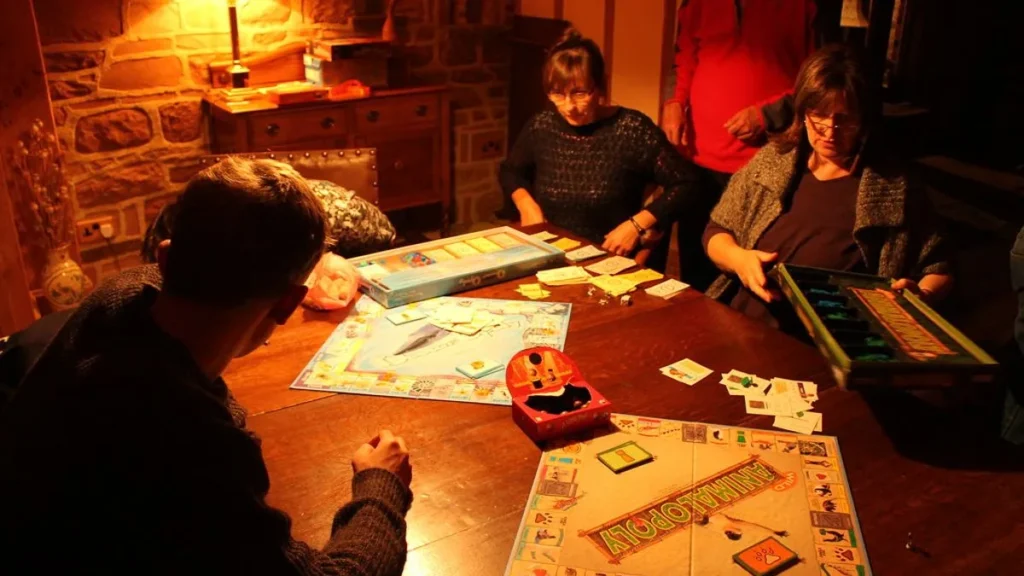
Somebody at a table leans back, clears their throat, and begins a short verse about a person from a place you have never visited. By the third line you are already smiling, and by the fifth you are laughing, even though nothing much has happened. No mystery has been solved, no door has been knocked on, and nobody has asked you a question. That quick, bouncing little poem is a limerick, and most people can recognise one long before they can explain why it works. This article does the explaining: what the form is, where its name may have come from, why its shape feels so familiar, and how to tell it apart from the other short jokes and poems that live beside it.
A Limerick in One Sentence
A limerick is a short comic verse in five lines that sets up one small character, gives that character one small problem, and then closes with a surprise that echoes the opening rhyme. It is a joke wearing the clothes of a poem. The humour comes first, and the verse exists to carry it to its ending as quickly as possible. Unlike a riddle, it asks the listener nothing. Unlike a longer comic poem, it never wanders into a second scene or a second character. One person, one place, one mishap, one twist: that is the whole event. If a verse needs a sixth line to finish its joke, it is not a limerick, however funny the sixth line may be. If it has five lines but no twist at the end, it is a description in verse, not a limerick. The twist is not decoration. It is the reason the other four lines exist, and a listener can feel its absence at once, the way a joke without a punchline feels unfinished before anyone says so.
The Five-Line Shape You Can Spot in Seconds
Every limerick follows the same rhyme pattern, written as AABBA. The first, second, and fifth lines share one rhyme sound, while the third and fourth lines share a different one. The long lines come first, then the short ones, then the long closing line returns to the opening sound. Say the pattern aloud as long, long, short, short, long, and you have the skeleton of every limerick ever written. The closing line does not introduce a fresh rhyme. It comes home to the sound the poem started with, and that homecoming is part of the laugh: the ear has been waiting for the return, and the joke arrives on the same sound it was promised.
The lines also follow a rough length rule. The long lines usually run to seven, eight, nine, or ten syllables, while the short middle lines usually run to five, six, or seven. Those numbers are guides rather than laws, and a limerick with eight syllables in a long line and six in a short one will sound perfectly natural. What matters is the contrast: the middle of the poem should feel quicker and lighter than its opening and its close. Underneath the syllables sits a galloping beat, two light beats followed by a strong one, repeated through the line. You can hear it if you tap the table while you read: da-da-DUM, da-da-DUM, da-da-DUM. The short lines carry two of those groups instead of three, which is why they hurry the poem toward its ending.
Where the Name Comes From
The word limerick is also the name of a city and county in the west of Ireland, and most accounts connect the poem to that place, although nobody can prove the connection with a single document. The leading theory involves a drinking song and a chorus. In the eighteenth century, groups singing comic verses in pubs and at gatherings would end each verse with a repeated line inviting everyone to come up to Limerick, and the verses sung to that chorus gradually became known by the name of the place in the refrain. It is a plausible story, because the form lived in exactly those rooms: noisy, sociable places where a short verse could be sung, shouted, and passed from one singer to the next. By the middle of the nineteenth century the name had settled.

Edward Lear and the Book That Made Limericks Famous
The writer who carried the form into print was Edward Lear, an English artist and writer who published A Book of Nonsense in 1846. The book contained more than a hundred short comic verses, most of them in the five-line shape we now call the limerick, each paired with one of Lear’s own drawings. Lear did not invent the form, and he would probably have been surprised to be remembered as its father, but his book carried it from pubs and playgrounds into homes, and into the hands of children who had never heard a pub chorus in their lives.
What Makes a Limerick Funny
A limerick is funny for three reasons that work together, and none of them needs a clever word or a complicated idea. The first is speed. Five lines give the listener no time to get bored, and the short middle lines hurry the poem toward its ending like a drumroll. The second is the return rhyme. The ear hears the opening sound, forgets it during the middle lines, and then hears it again at the end, and that return feels satisfying even before the joke lands. The third is the twist itself: the ending must be unexpected and yet, once heard, feel like the only ending that could have followed from the setup.
Limerick or Not? Telling It Apart from Its Neighbours
The limerick has several close neighbours, and telling them apart is mostly a matter of asking what the listener is expected to do. A riddle asks the listener to solve something: it hides an answer and invites guessing, and the pleasure comes when the hidden answer clicks into place. A limerick hides nothing. It tells you everything, in order, and the pleasure comes from the surprise at the end. If you are being asked a question, you are probably hearing a riddle. If you are being told a tiny story, you are probably hearing a limerick. Our guide to what a riddle is looks at that guessing game in detail, and the contrast is a useful one to keep in mind.
A pun works differently again. A pun turns on one word that can be read in two ways, so a single phrase points toward two ideas at once and the listener enjoys catching both. A limerick may contain a pun, and many of the best ones do, but the pun is not the whole poem. The poem is five lines long, and the wordplay is only one moment inside it. A pun can also live in a single line, a shop sign, or a headline, while a limerick always needs its full five-line shape. If the joke would still work as one sentence, it is probably a pun. If it needs five lines and a closing rhyme, it is probably a limerick. You can read more about that double-meaning trick in our guide to what a pun is.
A knock-knock joke is closer in spirit, because it is also a short comic performance with a setup and a punchline, and it also depends on the listener playing along. The difference is in the machinery. A knock-knock joke is a little play for two voices, built around a name that echoes the opening words of a sentence, and it needs the listener to say the name back before the punchline can work. A limerick needs only one voice, and it needs rhyme and rhythm rather than a repeated question. A haiku is a different neighbour altogether: three lines, five syllables, then seven, then five, usually quiet and serious, with no rhyme and no punchline. A sonnet is longer still, fourteen lines, usually written about love or time or death rather than a comic mishap. The limerick is the short, noisy, laughing cousin in a family of careful, quieter forms.
Where Limericks Turn Up Today
Limericks have never really gone away, and they turn up in more places than most people notice. They appear on birthday cards and retirement cards, where five lines are exactly the right length for a message that is personal without being long. They appear in newspapers and magazines, where competitions invite readers to write one on a set subject, often a place name or a current event. They appear in classrooms, where teachers use them to show children how rhyme and rhythm work, because a child can hear the pattern in a limerick long before they can name it. They appear in pubs and at parties, where they are still recited aloud, just as they were two hundred years ago.
Three Short Original Limericks to Listen For
It helps to hear the shape in action, so here are three short original verses. Read them aloud, tap the table on the strong beats, and listen for the return rhyme in the last line.
There once was a librarian from Bath
Who shelved every book on a path.
She tripped on a tome,
Then she rolled herself home,
And she filed the whole trip under Bath.
A cyclist from Truro would race
With a basket of plums on his face.
He pedalled so fast
That the plums never last,
And he finished the ride in disgrace.
A cook from the town of St Ives
Kept a cookbook with twelve hundred lives.
She stirred and she stirred,
Till the pudding concurred,
And she served it to twelve hundred wives.
Notice what each one does. The first line gives you a person and a place. The middle lines give you one small problem: a tripping librarian, a speeding cyclist, a stirring cook. The last line returns to the opening rhyme and lands the twist. None of them needs a sixth line, and none of them asks you a question. They are small, complete jokes, finished the moment the last line is spoken.
Common Mistakes About Limericks
Two ideas about limericks are widely believed and mostly wrong. The first is that every limerick must begin with the words There once was. Many do, and it is a useful opening, but it is a habit, not a law. A limerick can begin with a name, a place, or a plain statement, as long as the five lines, the rhyme, and the twist are all present. The second is that every limerick is rude. Some famous ones are, and the rude ones are often the ones people remember, but the form has carried gentle, silly, and perfectly polite jokes for two centuries. A rude limerick is a choice, not a requirement.
How to Know One When You Hear One
If you want a quick test, ask yourself four questions as the verse is being read. Does it have five lines? Do the first, second, and fifth lines rhyme, while the third and fourth rhyme with each other? Does it introduce one person, in one place, with one small problem? And does the last line surprise you while rhyming with the first? If the answer to all four is yes, you are listening to a limerick. The most reliable test, though, is the simplest one: read it aloud. A limerick is written for the voice, not for the page, and it should bounce when spoken. If you stumble on a line, the rhythm is probably off. If you reach the last line and feel no lift, the twist is probably missing. If you finish and want to hear it again, the poem has done its job.
For readers who want to try the form themselves, the next step is a practical one. Our guide on how to write a limerick takes the shape described here and turns it into a working method, with practice exercises and common mistakes to avoid. Start with the definition, keep the shape in your ear, and the writing will follow.
Why the Limerick Has Lasted
The limerick has lasted because it asks very little of its listener and gives a great deal back. It asks for about thirty seconds of attention, and in return it offers a character, a place, a small disaster, and a surprise, all wrapped in a rhythm that is easy to remember and easy to repeat. It needs no special knowledge, no long introduction, and no second hearing to be understood. It works in a pub, in a classroom, on a card, and on a screen, and it works for children and adults at the same time. It has also lasted because it is generous: anyone can write one, and the form forgives a near-rhyme as long as the joke lands. That is why new limericks keep appearing, more than two centuries after the first ones were sung to a chorus about Limerick.