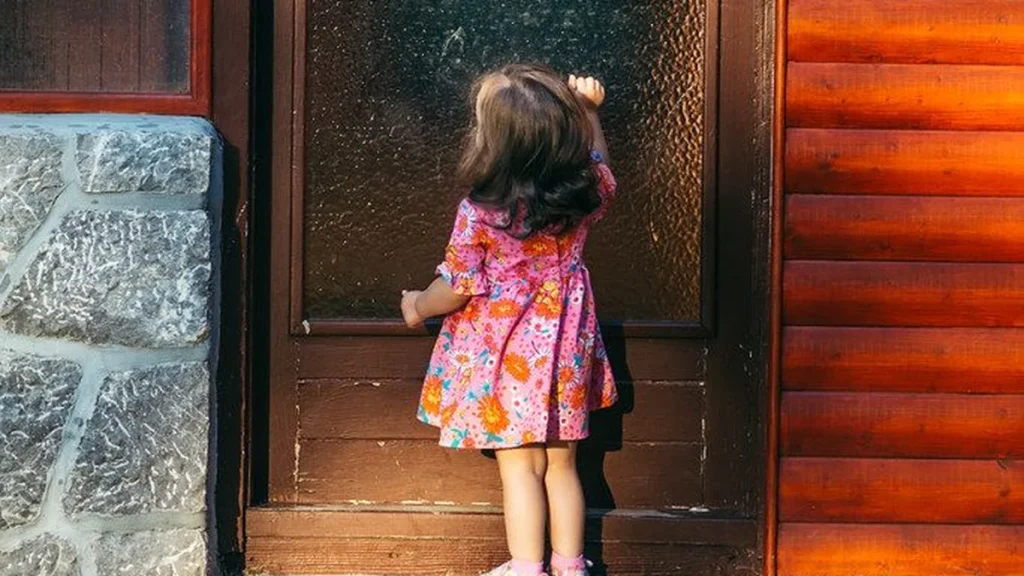
Knock, knock. Who is there? If you have ever been a child, or spent five minutes with one, you already know what comes next. Somebody asks who is there, somebody answers with a name that sounds like the start of a sentence, and then the punchline arrives, usually followed by giggles, groans, or both at once. Knock-knock jokes are among the oldest and simplest jokes in the world. They need no props, no stage, and no talent, only a door, real or imaginary, and two people willing to play along.
But what exactly are knock-knock jokes, and why has this tiny five-line format survived for nearly a century? This guide explains what the joke is, how it is built, where it came from, and how to invent your own.
What Is a Knock-Knock Joke?
A knock-knock joke is a short, call-and-response joke built around a pretend visitor at a door. One person plays the knocker, the other plays the person inside. The teller knocks, the listener asks who is there, the teller gives a name, the listener repeats it back as a question, and the teller delivers a punchline that turns the name into the start of a sentence.
Here is the classic shape, using one of the best-known examples:
Knock, knock.
Who is there?
Lettuce.
Lettuce who?
Lettuce in, it is cold out here.
That is the entire joke. The humour comes from the twist at the end, when “lettuce” suddenly becomes “let us”. The listener expected a name and got a sentence instead. The surprise is small, but for a child hearing it for the first time, it feels like a magic trick.
It is not a riddle, because nobody has to solve anything, and it is not a story, because there is no plot. It is a tiny piece of theatre: two people, five lines, one door, and a punchline that depends on the listener playing their part exactly right.
The Five Parts of Every Knock-Knock Joke
Almost every knock-knock joke is built from the same five parts. Once you can see them, you can build one yourself.
1. The Knock
The joke begins with the words “knock, knock”, sometimes with a rap on a table or an imaginary door. The knock is a signal: a joke is starting, and the listener has a job to do. Without it, the joke is just a sentence. With it, the joke becomes a performance.
2. “Who Is There?”
The listener must ask who is there. This is not optional. If the listener says something else, or jumps ahead to the punchline, the joke collapses. Children are famously strict about this step, and they are right to be: the question sets up the expectation of a visitor, and that expectation is what the punchline breaks.
3. The Name
The teller answers with a name, or something that sounds like one. Sometimes it is a real name, like Annie or Justin. More often it is a word pretending to be a name: Lettuce, Orange, Tank, Dishes. The name is chosen because it can be stretched into the first words of a sentence. That is the secret engine of the whole joke.
4. The Repeat
The listener repeats the name back with “who” on the end: “Lettuce who?” This forces the listener to say the key word out loud, which makes the punchline land harder, and gives the teller a beat of suspense before the reveal. Good joke tellers wait for it. They do not rush.
5. The Punchline
Finally, the teller delivers the punchline, and the name turns into a sentence. “Lettuce in, it is cold out here.” “Orange you glad I did not say banana?” “Tank you for opening the door.” The best punchlines are short, surprising, and easy to picture. If you have to explain a knock-knock joke, it has already failed.
A Short History of Knock-Knock Jokes
Knock-knock jokes feel timeless, but the form as we know it took shape in the United States in the 1930s. Before that, there were door-knocking games and wordplay routines, and Shakespeare even wrote a famous knocking scene in Macbeth. But the five-line joke with a punning name is a much newer invention.
The 1930s were the golden age of radio, and radio loved jokes that worked without pictures. A knock-knock joke is all sound and voices, and the listener can picture the door without seeing it. Radio comedians picked the format up, audiences started trading jokes, and the joke spread from the airwaves into schoolyards. By the end of the decade, children had claimed it as their own.
Behind the joke there was also a parlour game. In the early 1930s, a party game sometimes called “Knock Knock” asked players to imagine someone at the door and guess who it was. The joke grew out of that game: the rules stayed, but the point changed from guessing to laughing. Since then, the format has barely changed. It has survived television, the internet, and the smartphone without an update, because it depends only on a door, a name, and a pun, and all three have been around for a very long time.
The Main Types of Knock-Knock Jokes
Not all knock-knock jokes work the same way. Most of them belong to a few families.
Name Puns
The most common type uses a name that is really a word in disguise. Lettuce becomes “let us”. Orange becomes “orange you glad”. Tank becomes “thank you”. The name is the joke, and the punchline simply reveals what it was hiding. These are the easiest to invent: you only need one word that sounds like the start of a sentence.
Sound-Alike Puns
Some jokes use a name that sounds like a word but is spelled differently. “Annie” becomes “any”, as in “Annie thing you can do, I can do better.” “Justin” becomes “just in”, as in “Justin time for dinner.” These jokes are a gentle introduction to homophones, words that sound the same but mean different things.
Running Gags and Chains
A few knock-knock jokes only work as part of a chain. In the famous banana-orange routine, the teller says “banana” over and over, and the listener keeps asking “banana who?” until, finally, the teller says “orange”, and the punchline lands. The joke is in the repetition, the patience, and the surprise of the switch.
Why Children Love Them So Much
Children can hear the same knock-knock joke fifty times and laugh just as hard on the fiftieth hearing as on the first. That is no mystery once you see what the joke gives a child.
First, the joke is predictable, and children love predictable things. A young child lives in a world full of surprises they did not ask for. A knock-knock joke is a surprise they can see coming, and that feels safe. They know the knock, the question, and the punchline are all coming, and the pleasure is in watching it happen right on schedule.
Second, the joke lets the child be in charge. In most conversations, adults ask the questions and children answer them. In a knock-knock joke, the child is the knocker, the adult must follow the script, and the child delivers the punchline. That small reversal of power is thrilling, and it is why children correct an adult who skips a step. They are defending their turn to be in control.
Third, the joke is social. It cannot be told alone: it needs two people cooperating. That makes it a perfect first joke for a child, teaching turn-taking, listening, and timing, all disguised as silliness. For a fuller look at the psychology behind it, our guide to why kids love knock-knock jokes explores the reasons in much more depth.
How to Make Up Your Own Knock-Knock Joke
Inventing a knock-knock joke is easier than most people think. You do not need to be naturally funny, just a method. Here is one with five steps, matching the five parts of the joke itself.
Step 1: Pick a Starting Word
Start with a word that sounds like the beginning of a sentence: lettuce, orange, tank, dishes, candle, noodle. Say it out loud and listen to what it could become. “Lettuce” becomes “let us”. “Tank” becomes “thank”. “Candle” becomes “can do”. If the word does not turn into anything, pick another one.
Step 2: Finish the Sentence
Finish the sentence your word started with something short and easy to picture. “Lettuce in, it is cold out here.” “Tank you for opening the door.” “Candle you help me find my keys? It is dark in here.” The best endings are about everyday things: doors, weather, food, school, pets.
Step 3: Check the Name
Check that the name really sounds like the start of the punchline. If it does not, the joke will feel forced. A good test is to say the punchline first, then the name, and see whether they match. If “let us in” sounds like “lettuce in”, you have a joke. If it sounds like a stretch, try a different word.
Step 4: Practise the Pause
Delivery matters. Knock twice, wait for the question, give the name slowly, and wait for the repeat before the punchline. The pause before the punchline is where the laughter is made. Rush it, and the surprise disappears.
Step 5: Test It on a Friendly Audience
Tell your new joke to someone kind, a friend, a parent, or a younger sibling, and watch their face. If they laugh, or even groan and smile, the joke works. If they look confused, ask which part did not make sense, and fix that part. Most jokes are not born funny. They are edited funny, one small change at a time. For techniques that apply to all kinds of children’s jokes, see our guide on how to write funny jokes for kids.
A Few Original Examples to Try
Here is a small set of original knock-knock jokes, written for this guide as examples of the method above in action. Notice how each one starts with an ordinary word and turns it into a sentence.
Knock, knock. Who is there? Dishes. Dishes who? Dishes the last clean plate, so I am eating dinner off a frisbee.
Knock, knock. Who is there? Candle. Candle who? Candle you pass the torch? I cannot see a thing.
Knock, knock. Who is there? Noodle. Noodle who? Noodle you like to come over for dinner? I made too much pasta.
None of these jokes is complicated, and that is the point. A knock-knock joke does not need to be clever. It needs to be clear, quick, and a little bit surprising, and all three of these pass that test.
When Knock-Knock Jokes Fall Flat
Even the best format fails sometimes. The most common reason is a punchline that needs explaining. If the listener has to ask what the joke means, the moment is gone. Keep punchlines short, and use words your listener already knows.
The second reason is repetition. Knock-knock jokes are short, so they wear out fast. Telling the same joke to the same person three times in one evening turns laughter into a sigh. Keep a few jokes in reserve, and retire a joke for a while once everyone has heard it.
The third reason is timing. A knock-knock joke told in the middle of a serious conversation will land badly, not because the joke is bad, but because the moment is wrong. Jokes work best in relaxed moments: car journeys, waiting rooms, dinner tables, and bedtime. Read the room first, knock second. Finally, remember that the format grows with the teller. Grown-ups tell knock-knock jokes too, and the jokes change as the audience does. Our collection of knock-knock jokes for adults shows the same five lines handling office life, bills, dating, and all the other things adults worry about.
Frequently Asked Questions
Who invented knock-knock jokes?
Nobody knows for certain. The format grew out of a 1930s parlour game and was popularised by radio comedians in the United States. It spread because it was easy to remember and easy to pass on.
Are knock-knock jokes only for children?
No. Children love them most, and they are often a child’s first joke, but adults tell them too. The structure is the same; only the subjects change.
The Bottom Line
Knock-knock jokes are small, simple, and almost a century old, and they are still going strong. They ask almost nothing of the teller and the listener, and they give back a shared moment, a small surprise, and a laugh that belongs to both people at the door. Learn the shape, pick a word, finish the sentence, pause before the punchline, and you can make one up anywhere, any time, with no preparation at all. So go and knock. Somebody is waiting on the other side of the door.