Five hundred and seventeen players in one room, one hundred and three teams, nine rounds, and one host with a microphone: that is what the best trivia games for 517 players look like in practice. It sounds chaotic, and the first ten minutes usually are, but the format below has been tested at this scale and it holds together. The secret is not clever questions. It is a simple shape, repeated nine times, with clear scoring and a room plan that lets every team hear the host.
This guide gives you that shape. You get nine rounds built around well-known names in sport, music, and science, each with ten questions and a hosting tip, plus a room plan, a scoring plan, and a checklist for the night itself. If you have never hosted at this scale, the 515-player edition shows the same format with a slightly smaller crowd, and it is a useful dry run for this one.
The nine rounds move from weightlifters and figure skaters to xylophonists, balalaika players, and tango dancers, then on to rappers, before finishing with cardiologists, virologists, and anthropologists. Every team finds a round that suits it. Read the guide once, print the checklist, and hand the answer sheets out early. The rest is just reading questions slowly and keeping the scoreboard honest.
Key takeaways
- Split 517 players into 103 teams, 101 of five and two of six, and seat them in zones.
- Play nine rounds of ten questions, ninety points in total, with a written tie-break ready.
- Keep each round to twelve minutes, with a break after round five.
- Printed answer sheets and a visible scoreboard stop queues, confusion, and disputes.
- Score one point per correct answer, and mark each round as soon as it ends.
How a 517-Player Trivia Night Works
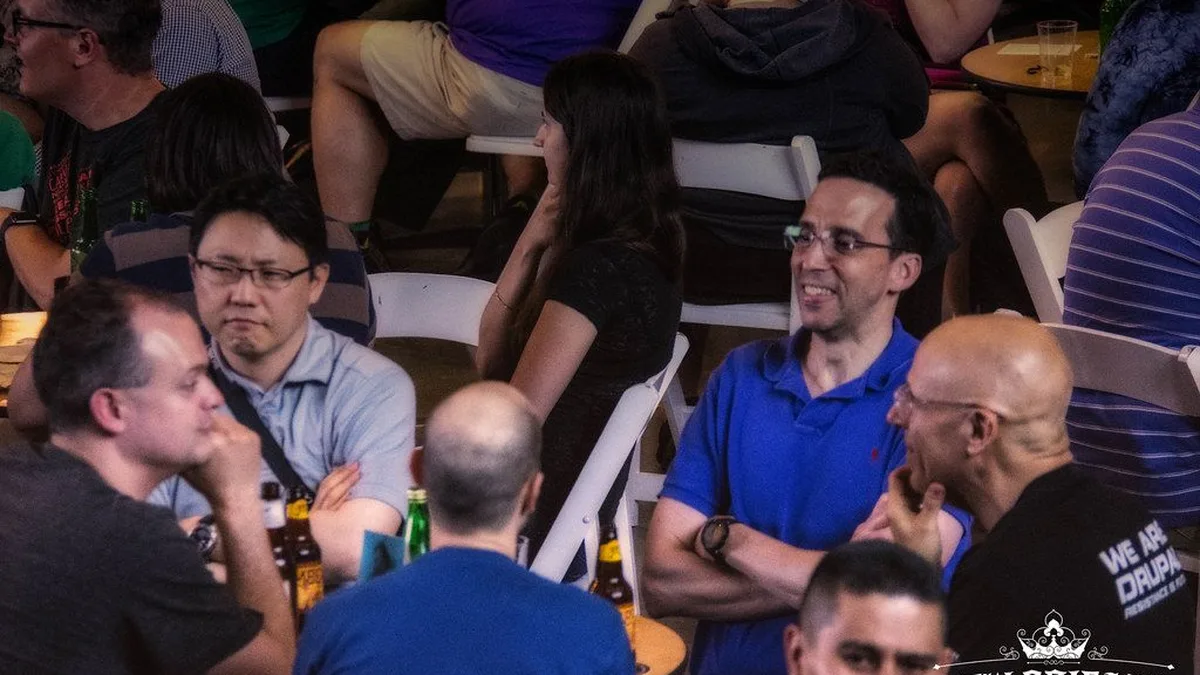
Start by splitting the crowd into teams. With 517 players that gives you 103 teams, 101 of five and two of six, which is a tidy number for the scoring desk. Seat the teams in zones of about ten teams each, with a helper for each zone, and put the scoreboard where every team can see it. The 514-player edition uses the same shape with a slightly smaller crowd, and the same zone plan works there too.
Each round has ten questions, so the night has ninety points on offer, plus a written tie-break held back for the end. Read each question twice, give teams a minute to answer, and collect the sheets at the end of each round. Marking round by round keeps the scores fresh and stops the end of the night turning into a long wait.
The Nine Rounds
The nine rounds below are the heart of the night. Each one is built around famous names in sport, music, and science, with ten questions in each and a tip for the host. Read the rounds in order: the first two warm the room up with sport, the next four test ears and musical knowledge, and the last three reward teams that know their science.
| Round | Category | Ten Questions About |
|---|---|---|
| 1 | Famous Weightlifters | Lifts, world records, and famous lifters |
| 2 | Famous Figure Skaters | Skating titles, perfect scores, and famous skaters |
| 3 | Famous Xylophonists | Wooden bars, mallets, and famous soloists |
| 4 | Famous Balalaika Players | Three strings, triangular bodies, and famous players |
| 5 | Famous Tango Dancers | Tango steps, famous pairs, and leading dancers |
| 6 | Famous Rappers | Rhymes, albums, and famous voices |
| 7 | Famous Cardiologists | Hearts, circulation, and famous specialists |
| 8 | Famous Virologists | Viruses, vaccines, and famous researchers |
| 9 | Famous Anthropologists | Cultures, customs, and famous researchers |
Round 1: Famous Weightlifters
Weightlifting is a strong opening round because the numbers are huge and easy to picture, yet the names behind them separate the casual watchers from the careful ones. Vasily Alekseyev, a Soviet lifter, set eighty world records in the 1970s and won Olympic gold at Munich in 1972 and again at Montreal in 1976. Naim Süleymanoğlu, known as the Pocket Hercules, stood just 147 centimetres tall and won three Olympic gold medals for Turkey, while Lasha Talakhadze of Georgia holds the current world records in the heaviest class and won gold at Tokyo in 2020.
Pyrros Dimas of Greece won Olympic gold at Barcelona in 1992, Atlanta in 1996, and Sydney in 2000, and Halil Mutlu of Turkey won gold in the 56 kilogram class at Sydney in 2000. Ask which lifter was known as the Pocket Hercules, and for which country he won his three Olympic gold medals. A question about records works well: ask which Soviet lifter set eighty world records, and which Georgian holds the current world records in the heaviest class. Ask which Greek lifter won Olympic gold at Barcelona, Atlanta, and Sydney, and which Turkish lifter won gold in the 56 kilogram class at Sydney in 2000.
Round 2: Famous Figure Skaters
Figure skating brings grace and nerve into the room, and its famous names are remembered for routines that whole crowds can still picture. Sonja Henie of Norway won three Olympic gold medals in the 1920s and 1930s, then went on to a long career in shows. Katarina Witt won back-to-back Olympic gold medals for East Germany in 1984 and 1988, while Yuzuru Hanyu of Japan won gold at Sochi in 2014 and again at Pyeongchang in 2018. Michelle Kwan of the United States won five world titles, and Jayne Torvill and Christopher Dean, a British pair, earned perfect marks for their Boléro routine at Sarajevo in 1984.
Ask who won three Olympic gold medals in the 1920s and 1930s, and for which country she skated. A question about back-to-back golds works well: ask which Japanese skater won gold at Sochi in 2014 and again at Pyeongchang in 2018, and which East German won gold in 1984 and 1988. Ask which American won five world titles without an Olympic gold, and which British pair earned perfect marks for Boléro at Sarajevo in 1984.
Round 3: Famous Xylophonists
The xylophone is the brightest sound in the percussion section, wooden bars struck with hard mallets, and its soloists are remembered for speed and sparkle. George Hamilton Green was the most famous xylophone soloist of the ragtime years, recording dozens of fast, cheerful solos in the 1910s and 1920s. Ian Finkel, a later American soloist, carried the same style onto concert stages and television, while Evelyn Glennie, a Scottish soloist, has played the xylophone as part of a wide solo career that has taken her to concert stages around the world.
Ask who was the most famous xylophone soloist of the ragtime years, and in which decades he recorded his fast solos. A question about the instrument works well: ask what the bars of a xylophone are made of, and what the player strikes them with. Ask which Scottish soloist has played the xylophone on concert stages around the world, and which American soloist carried the ragtime style onto television.
Round 4: Famous Balalaika Players
The balalaika is the sound of Russian traditional music, a triangular wooden instrument with three strings and a bright, plucked voice. Vasily Andreyev popularised the balalaika in the 1880s, built the first balalaika orchestra, and wrote tunes that gave the instrument a concert voice. Boris Troyanovsky was the most admired balalaika soloist of the early twentieth century, while Alexei Arkhipovsky, a modern virtuoso, plays the balalaika with a speed and range that surprises first-time listeners.
Ask who popularised the balalaika in the 1880s, and what ensemble he built around it. A question about the instrument works well: ask how many strings a balalaika has, and what shape its body is. Ask which balalaika soloist was the most admired of the early twentieth century, and which modern virtuoso is known for the speed and range of his playing.
Round 5: Famous Tango Dancers
Tango is the dance of Buenos Aires, close, sharp, and full of pauses, and its famous dancers are remembered for partnerships that lasted decades. Juan Carlos Copes and María Nieves danced together for more than forty years and carried tango to stages around the world. Carlos Gardel was tango’s most famous voice, recording hundreds of tangos before his death in 1935, while Astor Piazzolla wrote tango music for the bandoneón, the small squeezebox instrument that gives tango its sighing sound.
Ask which pair danced together for more than forty years, and where tango began. A question about the sound works well: ask what instrument gives tango its sighing sound, and who was tango’s most famous voice. Ask which tango figure gave the bandoneón its modern voice, and which pair carried tango to stages around the world.
Round 6: Famous Rappers
Rap is the sound of the verse, rhymes over a beat, and its famous names are remembered for lines that whole crowds can recite. Tupac Shakur, known as 2Pac, released a run of albums in the 1990s that made him one of the most quoted voices in rap, while The Notorious B.I.G., known as Biggie, released just two albums in his lifetime and is still ranked among the greatest. Jay-Z built a long career from his first album in 1996 to his later work as a label boss, and Eminem, from Detroit, became one of the best-selling rap voices of all time.
Ask who was known as 2Pac, and in which decade he released his run of albums. A question about nicknames works well: ask who was known as Biggie, and how many albums he released in his lifetime. Ask which rapper built a long career from a first album in 1996, and which rapper from Detroit became one of the best-selling rap voices of all time.
Round 7: Famous Cardiologists
Cardiology is a round about the heart, and its famous names are linked to discoveries that changed how the heart is understood and treated. William Harvey described how blood moves around the body in 1628, a work that overturned centuries of belief. René Laennec devised the stethoscope in 1816, rolling a sheet of paper into a tube so he could hear a patient’s heart more clearly. Andreas Gruentzig carried out the first balloon angioplasty in 1977, opening a narrowed artery with a tiny balloon, while Christiaan Barnard led the team that carried out the first heart transplant in 1967.
Ask who described how blood moves around the body in 1628, and what he overturned. A question about listening works well: ask who devised the stethoscope, and in which year. Ask who carried out the first balloon angioplasty, and what the tiny balloon was used to open. Ask who led the team that carried out the first heart transplant, and in which year it took place.
Round 8: Famous Virologists
Virology is a round about the smallest foes, and its famous names are linked to vaccines that have saved millions of lives. Edward Jenner developed the smallpox vaccine in 1796, using material from cowpox to protect against a far deadlier disease. Jonas Salk developed the polio vaccine in 1955, and Albert Sabin followed with an oral polio vaccine, taken by mouth instead of by needle. Françoise Barré-Sinoussi shared the 2008 Nobel Prize for the discovery of HIV, while Katalin Karikó spent decades on messenger RNA work that underpins the modern mRNA vaccines.
Ask who developed the smallpox vaccine in 1796, and what material he used. A question about polio works well: ask who developed the polio vaccine in 1955, and who followed with an oral version. Ask who shared the 2008 Nobel Prize for the discovery of HIV, and whose messenger RNA work underpins the modern mRNA vaccines.
Round 9: Famous Anthropologists
Anthropology is a fitting closing round because it takes the room from the hall to every corner of human life. Franz Boas is called the founder of modern anthropology, arguing that cultures must be understood on their own terms. Margaret Mead wrote Coming of Age in Samoa in 1928, a book about growing up that reached millions of readers. Mary Leakey found the Laetoli footprints in Tanzania in 1978, prints left by early humans more than three million years ago, while Jane Goodall spent decades living among chimpanzees and recording how they use tools and care for their young.
Ask who is called the founder of modern anthropology, and what he argued. A question about books works well: ask who wrote Coming of Age in Samoa, and in which year. Ask who found the Laetoli footprints, and where, and who spent decades living among chimpanzees.
Your Checklist for the Night
Run through this list the day before, and the night will run itself. The 513-player edition uses the same checklist, and the same order works there too.
- One hundred and three teams, 101 of five and two of six, seated in zones with a helper for each zone.
- Ninety questions printed, with answer sheets, pens, and a spare set for the host.
- A visible scoreboard, updated after every round, with the tie-break sealed in an envelope.
- A microphone and speakers that reach the back of the room, tested before the doors open.
- A break after round five, with drinks and snacks ready to hand out.
- Phones face down on the tables, and a clear rule that looking up answers ends the round for that team.
Frequently Asked Questions
How long does a trivia night for 517 players take?
About two hours, counting the break after round five. Nine rounds at twelve minutes each give you one hundred and eight minutes, and the scoring takes the rest.
How many teams should 517 players form?
One hundred and three teams: 101 of five and two of six. Teams of five keep the talk lively and the marking quick, and every team has nearly the same number of players, so nobody feels short-changed.
Do we need special equipment for a crowd this size?
A microphone and a speaker that reach the back of the room, a large scoreboard, and printed answer sheets are enough. A spare microphone and a spare set of sheets are worth packing, in case one fails.
How do we stop teams from cheating?
Seat teams in zones with space between tables, ask for phones to stay face down, and swap answer sheets with the next table for marking. Teams mark each other’s sheets, which keeps everyone honest.
What happens if teams tie at the top?
Use the written tie-break you held back: one hard question, written down in silence, with the closest answer winning. If two teams are still level, read a second tie-break question.
Can children play in a 517-player trivia night?
Yes, with a team of their own or mixed in with adults. The rounds on sport and music suit younger players, and the checklist works just as well for a family team.
The Bottom Line
Five hundred and seventeen people, one hundred and three teams, and nine rounds: that is a big night, but it is not a hard one. The rounds do the heavy work, the checklist does the organising, and the scoring stays simple enough that one host can run it.
Print the checklist, hand out the sheets early, and read the questions slowly. The room will do the rest.