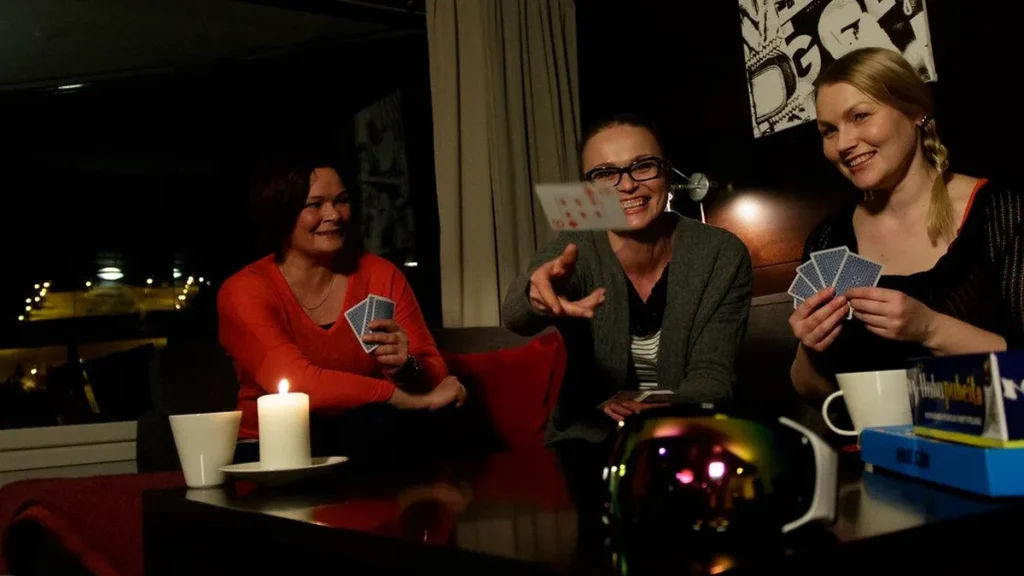
Board games for 516 players work when the hall is split into pods instead of one giant table. Five hundred and sixteen people cannot share a single board, but seventy-two pods of seven or eight can each play a full title at the same time, and the whole hall still feels like one event. This guide shows how to plan the pods, pick nine titles that fit pods of four to six at a table, and keep every pod moving on one shared timer.
The trick is to treat 516 as a crowd of small groups, not as one audience. Each pod needs its own copy of a title, its own host, and a clear start time, and the host team needs a simple way to call every pod to the next round at once. When the pods are the same size, the rounds end at roughly the same moment, nobody waits long, and the hall stays loud in a good way.
Nine titles follow below, with player counts, play times, and the kind of group each one suits best. Every title below seats at least four at a table, most seat five or six, and all nine can run at the same time in different pods. Pick three or four for the first session, add the rest as the evening goes on, and keep a spare copy of the two easiest titles for pods that finish early.
Key takeaways
- Split 516 players into 72 pods: 60 pods of seven and 12 pods of eight.
- Match each title to a pod that fits its player count, and split a pod across two tables for the four-player titles.
- Give every pod its own copy, its own host, and the same start time.
- Run rounds of 30 to 45 minutes, with a five-minute break between rounds.
- Keep scoring simple: one point per pod win, tallied on a single sheet.

The 9 best board games for 516 players
These nine titles were picked because each one explains in under fifteen minutes, stays engaging when the table is full, and brings a different kind of play to the night. Play times run from 30 minutes to about three hours, so a host can match a title to the length of the round. The table below gives the quick facts; the notes under it explain how each title plays at a big-group night.
| Title | Players | Time | Best for |
|---|---|---|---|
| Frosthaven | 1-4 | 60-120 min | Pods that want a long campaign evening |
| Detective: A Modern Crime Board Game | 1-5 | 120-180 min | Pods that like solving a case together |
| Oath: Chronicles of Empire and Exile | 1-6 | 60-120 min | Pods that like a story that carries over |
| Barrage | 1-4 | 60-120 min | Pods that like building and planning |
| Here to Slay | 2-6 | 30-60 min | Pods that want a fast, funny fight |
| The King’s Dilemma | 3-5 | 60-90 min | Pods that like hard choices and debate |
| Cthulhu: Death May Die | 1-5 | 90-120 min | Pods that like a tense fight against dread |
| Ankh: Gods of Egypt | 2-5 | 60-90 min | Pods that like area control and bold moves |
| Foundations of Rome | 2-5 | 45-90 min | Pods that like building a shared board |
1. Frosthaven
Frosthaven is a campaign adventure for one to four players, and it suits a pod that stays together for the whole evening. Each player runs a hero with a hand of cards, and the pod works through a run of scenarios in a cold northern outpost, fighting foes, gathering loot, and opening new parts of the map as the story advances. The pieces are many, the choices are deep, and the pod will remember the campaign long after the night ends.
Four players is the full table, and a match runs 60 to 120 minutes, so give this title the longest slot of the night or a pod that plays it across two rounds. The rules take about fifteen minutes to teach, and a host should arrange the first scenario in advance so the opening moves quickly. Put Frosthaven in a pod that likes a long, shared adventure and is happy to learn a few rules up front.
2. Detective: A Modern Crime Board Game
Detective: A Modern Crime Board Game is a case-solving title for one to five players, and it turns a pod into a team of investigators for an evening. Each case hands the pod a file of documents, witness statements, and photos, and the pod follows leads, checks an online database, and argues about what the evidence means before naming a suspect. There is no board to cross and no dice to roll; the whole title is talk, reading, and careful deduction.
Five players is the full table, and a case runs 120 to 180 minutes, so give this title the longest slot of the night and a quiet corner of the hall. The rules take about ten minutes to teach, and a host should read the opening file in advance so the pod can start investigating at once. Use Detective for a pod that likes reading, arguing, and a case that takes the whole evening to crack.
3. Oath: Chronicles of Empire and Exile
Oath: Chronicles of Empire and Exile is a story-driven title for one to six players, and it is the only title in this list where one match shapes the next. One player starts as the chancellor, holding the seat, while the rest play exiles who plot to take it, and the winner writes the record that the next match must follow. Alliances form, promises break, and the realm changes hands from one evening to the next.
Six players is the full table, and a match runs 60 to 120 minutes, which fits neatly into a long round. The rules take about fifteen minutes to teach, and a host should explain the oath cards in advance so the first match starts cleanly. Give Oath to a pod that likes negotiation, shifting sides, and a title that remembers what happened last time.
4. Barrage
Barrage is a building title for one to four players, taking place in the 1930s, where each player runs an energy company that dams rivers and turns flowing water into energy. Players place dams, dig channels, and build turbines on a shared map, and the water one player holds back is water another player cannot use. The choices are tight, the turns are short, and a small mistake early on can dry up a whole plan.
Four players is the full table, and a match runs 60 to 120 minutes, so Barrage suits a long round or a pod that plays it twice in an evening. The rules take about fifteen minutes to teach, and a host should lay out the map and the dams in advance so the first turn starts cleanly. Put Barrage in pods that like careful planning, tight resources, and a title where every drop of water counts.
5. Here to Slay
Here to Slay is a fast party title for two to six players, and it is the lightest title in this list. Each player gathers a party of heroes, rolls dice, and fights foes to earn the name of slayer. The art is bright, the turns are short, and the table stays loud while heroes fall and new ones join the fight.
Six players is the full table, and a match runs 30 to 60 minutes, which makes this title a fine opener or a closer for the night. The rules take five minutes to teach, and a pod can play two or three matches in one round without getting bored. Use Here to Slay for pods that want laughs, quick turns, and a title that never takes itself too seriously.

If the pods want more titles in the same style, the guide to board games for 510 players has nine more titles, and its pod maths works the same way at a slightly smaller scale.
6. The King’s Dilemma
The King’s Dilemma is a narrative title for three to five players, and it asks a pod to rule a realm together. Each round brings a dilemma to the council table, and the players debate, decide by a show of hands, and live with the result, which is written into the record of the realm. A choice that helps one faction can hurt another, and the story bends around every decision the council makes.
Five players is the full table, and a session runs 60 to 90 minutes, which fits a standard round. The rules take about ten minutes to teach, and a host should read the first dilemma in advance so the opening debate moves quickly. Give this title to pods that like talk, hard choices, and a story that remembers what the council decided.
7. Cthulhu: Death May Die
Cthulhu: Death May Die is a tense adventure title for one to five players, and it puts a pod of investigators up against an ancient being that is waking up. Each player runs an investigator with a special skill, and the pod fights cultists, gathers relics, and breaks the ritual before the being rises.
Five players is the full table, and a match runs 90 to 120 minutes, so give this title a long round and a pod that likes a fight. The rules take about fifteen minutes to teach, and a host should arrange the board and the figures in advance so the opening moves quickly. Put this title in pods that like dice, drama, and a shared fight against long odds.
8. Ankh: Gods of Egypt
Ankh: Gods of Egypt is an area-control title for two to five players, and it puts each player in charge of a god with followers, monuments, and a slice of the Nile. Players spread devotion across the map, merge their followers when two gods join forces, and fight for the most devoted regions as the river floods and dries.
Five players is the full table, and a match runs 60 to 90 minutes, which fits a standard round. The rules take about fifteen minutes to teach, and a host should explain the merge rule in advance, because it surprises new players. Give Ankh to pods that like bold moves, shifting alliances, and a title where the map changes fast.
9. Foundations of Rome
Foundations of Rome is a building title for two to five players, and it turns a pod into rival builders in ancient Rome. Each player claims lots, raises deeds, and places three-dimensional buildings on a shared board, scoring for districts that grow side by side.
Five players is the full table, and a match runs 45 to 90 minutes, which fits a standard round or a short one. The rules take about ten minutes to teach, and the pieces are chunky and easy to read, so new players learn by watching a single round. Use Foundations of Rome as the last title of the night, when every pod knows the hall and the building is at its loudest.
How to arrange the hall for 516 players
Count the pods first, then the tables. Seventy-two pods need seventy-two tables, and each table needs four to eight chairs, a flat top, and enough elbow room for cards, tiles, and dice to spread out. Leave a wide lane down the middle of the hall so hosts can walk every pod without squeezing past chairs, and put the scoring table near the door so pods can report results without crossing the hall.
The pod maths here matches the guide to board games for 512 players, which runs the same 72-pod layout with four fewer players, so a host who has run that night already knows the shape of this one. Keep one spare table free at the back of the hall, with a spare copy of each of the nine titles, so a pod with a damaged box or a missing piece can swap in seconds.
Light matters more than decoration. Each table needs a lamp or a bright overhead light, because small print and pale tiles are hard to read in a dim hall. Ask pods to keep drinks on a side table, not on the play surface, and hand each host a tray with the title, the pieces, a timer, and a scoresheet before the first round starts.
Keeping 516 players moving
One shared timer keeps the hall together. Start every pod at the same moment, call a five-minute warning before the round ends, and then call time for all pods at once. Pods that finish early can play a short filler from the spare table, and pods that run long get one extra minute, not five, so the next round still starts on time.
The same rhythm works at other scales, and the board games for 508 players guide uses the same five-minute warning and the same spare-table idea, which is why hosts who have run that night can run this one without new training. Keep the scoring simple through the night: one point per pod win, written on a single sheet, and read out at the end of each round so every pod knows where it stands.
Hosts do the heavy lifting, so look after them. Give each host a printed card with the round times, the pod list, and the name of the title their pod is playing, and give them a direct line to the scoring table for problems. A host who can fix a missing piece or settle a rules question in a minute keeps their pod happy, and happy pods stay for the whole evening.
Checklist: six items to have ready
Run through this list the day before the night, and tick each item off as it is packed.
- 72 tables, with four to eight chairs at each one, and a wide lane down the middle.
- One copy of each of the nine titles per pod, plus a spare copy of the two easiest titles.
- A timer, a scoresheet, and a printed round plan for every host.
- A spare table at the back with spare pieces, spare dice, and spare pens.
- Drinks on side tables, with cups kept off the play surface.
- A scoring table near the door, with one person reading out results after each round.
Frequently asked questions
Can 516 players really play board games at the same time?
Yes, when the hall is split into pods of four to eight. No single table holds 516 players, but 72 pods can each play a full title at the same moment, and one shared timer keeps every pod in step.
How many copies of each title do we need?
One copy per pod that is playing it. If twenty pods play Here to Slay in the first round, the hall needs twenty copies, so ask players to bring copies from home and label each box with the owner’s name.
What if a pod has fewer than four players?
Pair two small pods into one table of six to eight, or hand the small pod a title that seats two, such as Foundations of Rome, and merge the pods again for the next round.
How long should each round last?
Thirty to forty-five minutes suits most of the nine titles, with a five-minute break between rounds. Detective needs a longer slot, so give that pod three hours and let the other pods play two short titles in the same span.
Do we need an expert host at every table?
No. One confident player per pod is enough, as long as they have read the rules in advance and have a one-page summary to hand. The host team should walk the hall during the first round and help any pod that gets stuck.
What happens if a title does not suit a pod?
Swap it at the next break. Keep the spare table stocked with the easiest titles, and let a pod trade its title for another one without any fuss, so nobody is stuck with a title they dislike for the whole evening.
The Bottom Line
Board games for 516 players come down to pods, not to one giant table. Split the hall into 72 pods of seven or eight, give each pod a title that seats four or more, and run every round on one shared timer. Do that, and 516 players can play at the same time, in the same hall, on the same night.
Start with Here to Slay, Barrage, and Foundations of Rome, add the rest as the evening grows, and keep the scoring to one point per pod win. The hall will be loud, the tables will be full, and every player will have a title they remember.