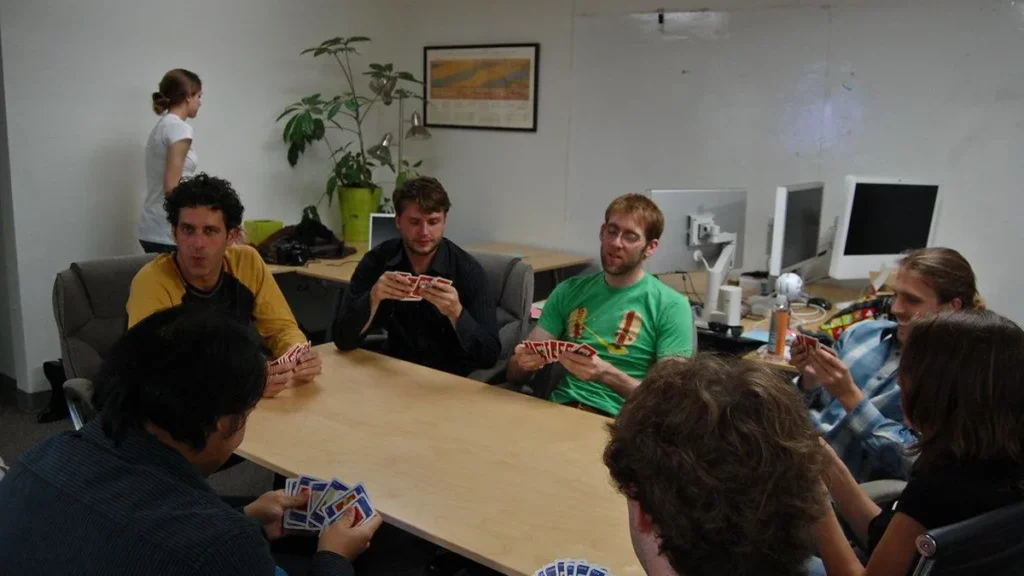
A hall with 508 people in it sounds like a crowd that no card table can hold, and that is exactly why it works. Nobody needs to sit at one table, and nobody needs to learn a long rule book before the first hand is dealt. You split the room into tables, circles and teams, you hand out decks, and you let the same simple rounds run again and again while a host keeps the whole room moving together.
Card titles are a natural fit for a crowd this size because the tools are cheap, the rules travel well, and the play is easy to watch. A deck costs little, a table seats four to eight people, and a round can finish in ten minutes. When one table finishes early, those players can move up, join a new table, or cheer on a neighbour table while the next round is arranged. The evening stays busy without ever feeling rushed.
This guide shows nine card titles that scale to 508 players, how to arrange the room, and how to keep score across dozens of tables. Every title below can run at many tables at once, and every one of them can feed winners into a final round so the night ends with one clear result. Bring plenty of decks, plenty of tables, and a host who likes a microphone.
Key Takeaways
- Split 508 players into tables of four to eight, with a host calling rounds over a microphone so every table starts and stops together.
- Choose titles that finish a round in ten to twenty minutes, so tables stay in step and nobody waits long between rounds.
- Use several copies of each title and plenty of standard decks, with spare decks ready at a central table.
- Move winners up a table after each round, so the strongest players meet in later rounds and the final table earns its place.
- Keep score on one simple sheet per table, with a central board where the whole room can see the leaders.

The 508 Player Card Night at a Glance
| Title | Players per table | What you need | Best for |
|---|---|---|---|
| Bingo | Whole hall | Printed cards, markers, caller | A loud shared opening round |
| Top Trumps | Four to six | Several packs per table | Quick head to head duels |
| Cucumber | Four or five | One standard deck per table | A gentle trick taking warm up |
| Agram | Three to six | One standard deck per table | A fast last trick finish |
| Gaigel | Four | Two short packs per table | Partnership play and points |
| Assassin | Twenty to thirty in a circle | One card per player | A lively hidden role round |
| Scattergories | Teams of four to six | Category lists, pens, timer | A hall wide team contest |
| Pokémon Trading Card Game | Two | A deck per player, judges | A structured tournament |
| Catch the Ten | Four | One short pack per table | A tense final trick chase |
Nine Card Games That Work for 508 Players
1. Bingo
Bingo is the simplest way to start a night for 508 players, because the whole hall plays at once. One caller reads out numbers, every player marks a printed card, and the first person to complete a line or a full card calls out and wins the round. You can run several rounds back to back, with a new card for each round, and you can hand out small prizes such as ribbons, badges, or a place at the final table.
Families who want a gentler start can look at our card titles for younger players before the hall opens, and then join the main Bingo rounds with the rest of the room. For 508 players, print at least two different cards per person, keep a spare box of markers at every door, and put the caller on a raised platform with a microphone so the numbers carry to the back rows. A Bingo round takes about fifteen minutes, which makes it a fine opener before the tables break into smaller groups.
2. Top Trumps
Top Trumps is a comparison title in which each player holds a hand of cards and reads out one value, such as top pace, height, or weight. The highest value wins the round and takes the cards, and the player who collects the most cards wins the table. A table of four to six players can finish a round in about ten minutes, which makes it easy to run again and again with fresh packs.
For a hall of 508, put a different pack on each table so neighbours are not all playing with the same cards. Winners move up one table after each round, and the top tables at the end of the evening play a final round in front of the room. Keep a central box of spare packs, because cards wear out fast when hundreds of hands are dealt in one night, and ask table hosts to check that every pack is complete before a new round starts.
3. Cucumber
Cucumber, also known as Gurka, is a Swedish trick taking title that suits a crowd of beginners. Each player receives seven cards, and the leader plays one card. The other players must follow the suit that was led when they can, and the highest card of that suit takes the trick. The twist is that the player who takes the last trick loses the hand, so the play stays careful right to the end.
Run Cucumber at tables of four or five, with one standard deck per table. A hand takes about fifteen minutes, and the player with the lowest total of lost hands moves up a table. The rules fit on a single card at each table, and a host can teach the whole room in under two minutes by dealing one open hand on a big screen. It is a calm opener for players who have never tried a trick taking title before.
4. Agram
Agram is a trick taking title from West Africa that plays fast and finishes with a clear winner. Each player receives six cards, and the leader plays one card. The other players must follow the suit that was led when they can, and the highest card of that suit takes the trick and leads the next one. The last trick carries the hand, so every trick before it is really about keeping the cards you need for the finish.
Tables of three to six players work well, and a hand takes about ten minutes. For 508 players, run Agram at a row of tables and let the winner of each hand move up one table. The short hands mean that a player who loses early is back in play within minutes, and the room stays lively because new hands start all the time. Keep a printed rule card at each table, because the last trick rule is the one detail that new players forget.
5. Gaigel
Gaigel is a German partnership title that rewards teamwork and a little arithmetic. Four players sit at a table in two partnerships, and each player holds eight cards from a short pack. A king and a queen of the same suit, held together, score points for the partnership, and tricks won during the hand add to the total. The first partnership to reach 101 points takes the table, and the trump suit can turn a weak hand into a strong one.
For a hall of 508, Gaigel works best as a middle round, after the room has warmed up with faster titles. Tables of four keep the play close, and partners can talk quietly between tricks while the host calls the time. Winners move up a table as a partnership, which keeps friends together and gives the evening a friendly rivalry. Allow about thirty minutes per table, and keep a score sheet at each table so the points are clear to everyone.

6. Assassin
Assassin is a hidden role title that needs only one card per player, which makes it ideal for a very large room. Each player draws one card in a circle of twenty to thirty people. One card marks the assassin, one card marks the guard, and the rest are ordinary citizens. The assassin secretly taps victims during the round, while the guard watches the circle and tries to spot the tap. If the guard names the assassin correctly, the round ends. If the assassin taps the guard first, the round goes the other way.
If your crowd is mostly grown ups, our card titles for adults work well for the evening tables, and Assassin fits neatly beside them as a change of pace. Run several circles at once in different corners of the hall, with a host for each circle. A round takes about fifteen minutes, and the guard from each circle can move to a final circle at the end of the night. Keep the rules short, keep the lights bright, and ask players to keep their cards face down until the host calls for a reveal.
7. Scattergories
Scattergories turns a hall of 508 players into a team contest. Teams of four to six players receive a list of categories and a letter, and they have three minutes to write an answer for each category that starts with that letter. Answers that no other team wrote score a point, while answers that two teams share score nothing, so original thinking matters more than quick writing. A host reads out the letter and the categories on a big screen, and every team plays at the same time.
For a crowd this size, print the category lists in advance and hand out pens at every table. Run four or five rounds with a new letter each time, and add up the team totals on a central board between rounds. Teams that finish early can help the host collect the sheets, which keeps the room tidy and the next round on time. Scattergories needs no decks at all, which makes it a useful break for tables that have been dealing cards all evening.
8. Pokémon Trading Card Game
The Pokémon Trading Card Game brings a structured tournament to a hall of 508 players. Two players sit at a table with a deck each, and they take turns playing energy cards, creatures, and trainer cards to win prize cards. A match takes about twenty to thirty minutes, and a Swiss style draw puts winners against winners and newcomers against newcomers, so everyone plays the same number of rounds whatever the results.
Running this title for 508 players takes planning. Ask players to bring a legal deck, keep a box of starter decks at the door for newcomers, and place judges at the end of each row of tables. Print the pairings for each round on large sheets, and call the round number over the microphone so no table starts late. The top eight players after the Swiss rounds play a final bracket in front of the room, which gives the whole hall a finish worth watching.
9. Catch the Ten
Catch the Ten is a Scottish trick taking title that ends with a chase for a single card. Four players sit at a table with a short pack of thirty six cards, and a trump suit is chosen at the start of the hand. The ten of the trump suit is worth ten points, and the player who captures it in a trick takes those points. The rest of the points come from the tricks themselves, so every trick matters even before the ten appears.
A hand takes about twenty minutes, and the player with the most points moves up a table. For 508 players, Catch the Ten works well as a late round, when the room is down to its keenest players and the tables are quieter. Keep the trump suit marked on a card at the centre of each table, because the ten is easy to miss in a fast trick. The title is short to teach, tense to play, and a fine way to close the trick taking part of the evening.
How the Evening Runs
Start with Bingo for the whole hall, then break into tables for Top Trumps, Cucumber, and Agram. After a break, run Gaigel and Assassin in parallel, with Scattergories as a hall wide team round in the middle. Finish with the Pokémon Trading Card Game tournament and Catch the Ten at the keenest tables, then bring the winners together for a final round in front of the room.
The format follows the same rotation we used for our 506 player card night, with winners moving up a table each round. A host with a microphone calls the start and the end of each round, table hosts collect the score sheets, and a central board shows the leaders. Allow about three hours for the whole evening, with a fifteen minute break in the middle for drinks, fresh decks, and a chance for players to find friends at other tables.
Your 508 Player Checklist
- Book a hall with at least 130 tables, plus a stage or raised area for the host and the score board.
- Collect one standard deck per trick taking table, several Top Trumps packs per table, and printed Bingo cards for the whole hall.
- Print a one page rule card for each title, and place it at the centre of every table.
- Recruit a host for the microphone and a table host for every ten tables.
- Prepare score sheets, pens, and a central board where leaders are shown after each round.
- Arrange small prizes for round winners and a larger prize for the final table.
Frequently Asked Questions
Can 508 people really play card titles at the same time?
Yes. The hall plays together for Bingo and Scattergories, and then splits into tables of two to eight players for the other titles. A host with a microphone keeps every table on the same round, so the whole room starts and stops together even though the tables are playing different titles.
How many tables do 508 players need?
About 130 tables of four players, or fewer tables if you run circles of twenty to thirty for Assassin and hall wide rounds for Bingo and Scattergories. Allow a little extra space between tables so hosts can walk the rows, collect score sheets, and answer questions without disturbing the play.
How many decks and copies should I buy?
Allow one standard deck per trick taking table, several Top Trumps packs per table, and a starter deck for any Pokémon Trading Card Game player who arrives without one. Buy about ten percent more decks than you think you need, because cards bend, packs go missing, and a spare deck at the central table saves a round.
What if most players have never played these titles before?
Start with Bingo, which needs no teaching at all, and then teach one title at a time with a single open hand on a big screen. Place a one page rule card at each table, and ask table hosts to deal the first hand slowly while they talk through the rules. Most players learn a new title within one hand.
How long does a 508 player card night last?
About three hours, with a fifteen minute break in the middle. Bingo and Scattergories take about fifteen minutes each, the table titles take ten to thirty minutes per round, and the final round takes about twenty minutes. Keep the rounds short and the breaks clear, and the evening will feel lively rather than long.
How do we pick one overall winner from 508 players?
Move winners up a table after each round, and keep a central board of the leaders. At the end of the evening, bring the top players from each title together for a final round in front of the room, and the winner of that round takes the overall prize. The final round gives the night a clear ending that the whole hall can watch.
The Bottom Line
A night for 508 players works when the plan is simple, the rounds are short, and the room moves together. Bingo opens the hall, the table titles keep every player busy, and a clear path for winners gives the evening a finish worth staying for. Choose titles that are easy to teach, keep plenty of decks and score sheets ready, and let a good host carry the room from one round to the next.
Start with the checklist, book the hall, and deal the first hand. With nine titles, 130 tables, and a room full of players who are ready to play, 508 people can share one card night without anyone feeling left out.


