
Card games for 402 players sound impossible until you see them work in real life. Picture a school hall, a community centre, or a company offsite where four hundred and two people are laughing, dealing cards, and cheering at the same time. Nobody is waiting around. Every single person has cards in hand or a team to support, and the whole room hums with the kind of shared energy that only a game played together can create. That is the promise of card games for 402 players, and it is far more practical than the number suggests.
The trick is that you never actually seat 402 people at one table. Card games for 402 players work because a card game is the easiest kind of game to split, copy, and run in parallel. One deck costs almost nothing, one table seats four to eight people, and one set of rules can be taught in two minutes and repeated at a hundred tables at once. Think of 402 as a range that runs from 3 players all the way up to 402, with teams, stations, and tournaments as the scaling method, and the whole event suddenly looks simple: the same game, played many times over, in the same room, at the same time.
This guide explains exactly why that works, which card games hold up at huge scale, and how to set up an event for 402 players without chaos, long waits, or a budget that makes your eyes water. The same idea already works at a slightly smaller scale, as our guide to card games for 400 players shows, and adding two more players changes nothing about the plan. Whether it is a school fundraiser, a wedding, a corporate team day, or a community festival, the ideas here will turn a crowd that size into a room full of players.
Key takeaways
- One cheap deck and one simple set of rules can be copied across 100 tables of four, 67 teams of six, or 50 stations of eight.
- Think of 402 as a 3-to-402 range: the same game scales up through teams, stations, and tournaments, so nobody ever waits for a turn.
- Team play is the secret ingredient. Pairs and small teams let hundreds of people play at once while keeping every round short and lively.
- Pick fast, easy-to-teach games with short rounds. Slow, complicated games stall a big room; quick shedding, matching, and trick-taking games keep it moving.
- One host with a microphone, printed score sheets, and a clear rotation plan is all the organisation a 402-player card night really needs.
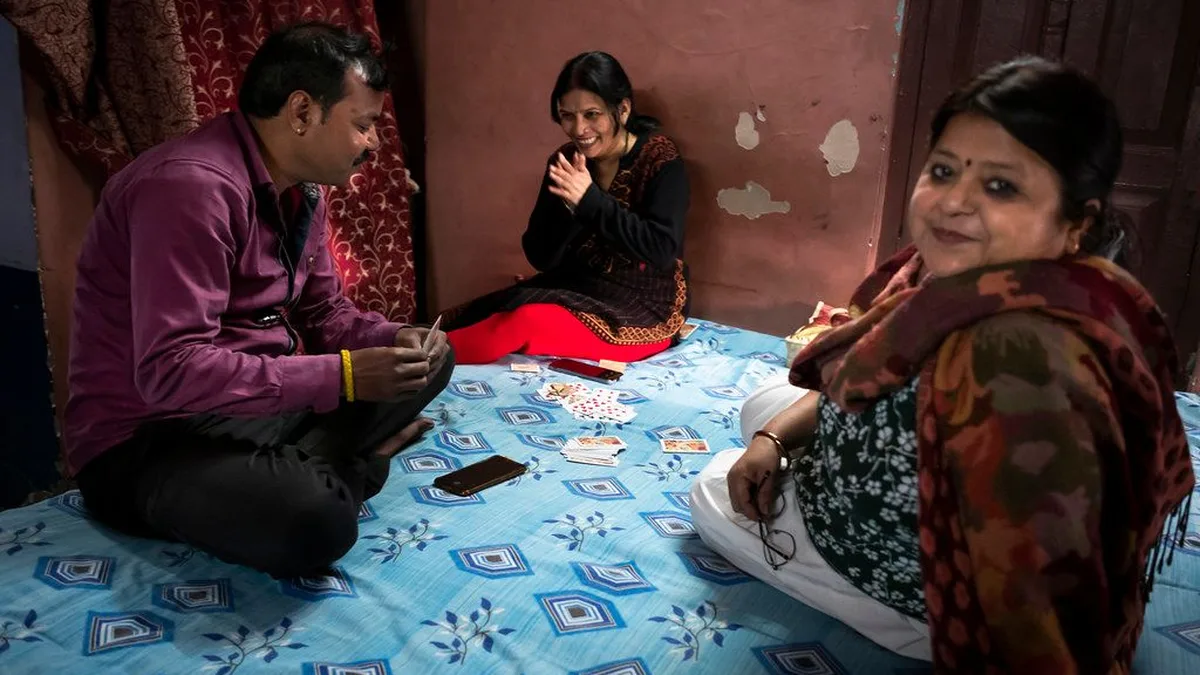
Why 402 Players Changes the Game
Four hundred and two players changes the game in one important way: you stop organising a game and start organising an event. With ten players, the host can deal the cards, explain the rules, and keep score without thinking twice. With 402 players, none of that works by hand. You need a plan for the room, the decks, the scoring, and the tables that finish early. The good news is that card games make all of this easier than almost any other kind of game, because the game itself is small, cheap, and easy to repeat.
A deck of cards is the most portable game ever made. It fits in a pocket, costs less than a cup of coffee, and needs no batteries, no screen, and no internet connection. That matters when you are equipping a hundred tables. A hundred decks fit in a single shopping bag, where board games would need a hundred boxes. Every table plays the same game with the same rules, so one fair leaderboard can cover the whole room.
Most party games break down long before you reach a hundred players. A single board game seats six people. A quiz with one host leaves most of the room sitting and listening. A sport needs a field, referees, and fitness levels that not everyone shares. Card games dodge every one of those problems, and that is why they are the natural choice when the guest list runs into the hundreds.
The 3-to-402 Range
The most useful way to think about card games for 402 players is as a range, not a fixed number. The same game that works for 3 players works for 402 players, because the game itself never grows. What grows is the number of tables, the number of teams, and the number of rounds. A game of Euchre with four players at one table is exactly the same game when it is played at a hundred tables at once. Only the room changes.
The maths stays friendly at every step. Four hundred and two players make 100 tables of four with two players floating as hosts, 201 pairs, 67 teams of six, 50 stations of eight with two spare players, or two divisions of 201 players each. You just add more tables, and the plan bends to fit whatever number actually walks through the door.
That range thinking also solves the hardest problem of a huge game night: mixed ability. In a crowd of 402, you will have keen card players, total beginners, children, grandparents, and people who have not held a deck in twenty years. Seat beginners at gentle tables with Snap and War, while experienced players take on Cribbage or Euchre. It also covers no-shows: if 380 people turn up, you set up 95 tables instead of 100, and if only 200 arrive, you run 50 tables. Build the night around the range, and the exact headcount stops mattering.
How to Set Up Card Games for 402 Players
Setting up for 402 players is mostly about counting: tables, chairs, decks, and score sheets. Get the counting right and the evening almost runs itself. Work through the numbers a week before the event. The three things to get right are the room, the supplies, and the scoring, and the card games for 398 players guide shows a nearly identical setup that works in a hall of the same size.
The Room and the Tables
You need a room that holds 100 tables of four, or 50 tables of eight, with space for people to move between them. A school hall, a sports hall, a large community centre, or a marquee on flat ground all work well. Allow roughly two square metres per player, including walkways, so 402 players need around 800 square metres of floor. Arrange tables in rows with wide aisles, and put the host table and scoreboard where everyone can see them.
A microphone and speakers are essential: no voice carries across a hundred tables. Put a rules card, a score sheet, and a pencil on every table, and number the tables from 1 to 100 so players can find their seats and hosts can find them. Keep the entrance clear so late arrivals can find a seat without crossing the hall.
Decks, Supplies, and Score Sheets
For 100 tables of four, you need 100 standard decks, plus 10 spares. For 50 tables of eight, you need 50 decks, plus spares, though some games need two decks per table. Buy in bulk, and choose one design for every deck so cards never get mixed up between tables. Party card games like Skip-Bo and One Night Ultimate Werewolf need their own special decks, so order one set per table that will play them, plus a few spares.
Score sheets are the quiet hero of a big card night: one sheet per table per round, collected after every round and added up on a big visible leaderboard. Keep scoring simple, or it will slow the whole room down. Add printed score sheets, pens, a few timers, and a loudspeaker for the host, and print the rules for each game on a single card at every table, so nobody has to remember anything under pressure.
The 9 Best Card Games for 402 Players
The nine games below share four qualities that matter at huge scale. Each one is easy to teach in two minutes, each round is short, each works with a standard deck or one cheap special set, and each one stays fun when it is played in teams. Together they cover every kind of player in a hall of 402: the quiet strategist, the loud competitor, the complete beginner, and the child who just wants to shout Snap first.
| Game | Players per table | Round length | Best for |
|---|---|---|---|
| President | 4 to 7 | 10 minutes | Tournaments |
| Cheat | 3 to 8 | 10 minutes | Icebreaker laughs |
| Snap | 2 to 6 | 5 minutes | All ages |
| War | 2 per duel | 5 minutes | Beginners |
| Cribbage | 2 to 4 | 20 minutes | Quiet strategy |
| Euchre | 4 | 15 minutes | Partner play |
| Set | 2 to 8 | 15 minutes | Pattern spotting |
| Skip-Bo | 2 to 6 | 20 minutes | Families |
| One Night Ultimate Werewolf | 3 to 10 | 10 minutes | Grand finale |
1. President
President, also known as Scum, is a shedding game with a built-in ladder: the first player out becomes President, the last becomes Scum, and the titles carry into the next round. That ladder is pure gold at huge scale, because it turns a single table game into a rolling tournament. Winners move up a table, losers move down, and after four rounds the room has a clear champion without anyone running a complicated draw. A standard deck serves four to seven players, and the pecking order gives every round a little story.
2. Cheat
Cheat, also called I Doubt It, is a bluffing game where players discard cards face down and claim they are a certain rank, while everyone else decides whether to call them out. It is loud, funny, and almost impossible to play quietly, which is exactly what a big hall needs. A wrong accusation costs the accuser cards, a right one costs the bluffer, and the table erupts either way. It needs no skill to start, and breaks the ice between strangers faster than any name badge ever will.
3. Snap
Snap is the simplest game on this list and one of the best for a mixed-age hall. Players take turns flipping cards, and the first to shout Snap when two cards match wins the pile. That is the whole game, and a five-year-old can beat a grandparent at it. Rounds last about five minutes, so Snap tables can run quick-fire mini-tournaments all evening, with winners staying on and challengers stepping up.
4. War
War is the great leveller: two players split a deck, flip cards, and the higher card wins, with ties settled by a face-down showdown. There is no skill involved at all, which is precisely the point. In a hall of 402, War gives the least confident player a fair fight against anyone, and team War makes it a spectator sport, with whole tables cheering each flip. Run it as head-to-head duels, tally the wins on the team score sheet, and anyone can join at any moment without a lesson.

5. Cribbage
Cribbage is the quiet corner of a loud night, and every big event needs one. Two to four players score points for pairs, runs, and fifteens, pegging their progress around a board, and the game rewards careful counting over fast hands. It suits the experienced players and the ones who prefer a calm table to a shouting match. Hands take about twenty minutes, so Cribbage works best as a station players visit for one or two games rather than a tournament bracket.
6. Euchre
Euchre is a fast trick-taking game for four players in two partnerships, built around a trump suit and short, sharp hands. A hand takes about fifteen minutes, the scoring is simple, and the partnership format means nobody plays alone, which suits nervous beginners. At huge scale, Euchre shines as a tournament game: pairs stay together, tables are ranked, and the top pair from each table moves up after every round. It is the game to put on the tables nearest the scoreboard.
7. Set
Set is a pattern-spotting game with no turns at all: cards are laid out in a grid, and everyone at the table hunts for matching sets at the same time. That makes it one of the few card games where eight people are genuinely playing every second, with no waiting for a turn to come round. Sharp eyes beat card experience, so children regularly beat adults, and the table stays silent with concentration until someone slaps the table and calls a set. Its small deck is cheap, and it works brilliantly as a station between louder games.
8. Skip-Bo
Skip-Bo is a friendly sequencing game where players build piles in number order, racing to empty their own stock pile first. It is gentle, colourful, and easy to learn, which makes it the best family table on the list: grandparents, parents, and children can all play together without anyone feeling out of their depth. Games run about twenty minutes for two to six players, and the special deck is inexpensive in bulk.
9. One Night Ultimate Werewolf
One Night Ultimate Werewolf is the grand finale a 402-player night deserves. Each table of three to ten players takes a secret role card, closes its eyes, opens them in turn, and then has a few frantic minutes to work out who the werewolves are. It is pure social deduction: accusations, bluffs, and sudden reversals, all in a ten-minute round. Run it as the last game of the evening, with all tables playing the same round at once, and the whole hall finishes the night laughing together.
Keeping 402 Players in the Game
A big card night succeeds or fails on rhythm, not on rules. The games will look after themselves once they start, so the host’s real job is keeping a hundred tables moving in step. The rotation plan below works for any of the games on this list, and the same approach appears in our guide to card games for 396 players, where it holds up in a hall of almost the same size.
- Start every table at the same moment with a loud countdown, so nobody feels left behind.
- Rotate tables every twenty minutes, with winners moving up and new players stepping in.
- Keep a big visible leaderboard updated after every round, so the room can follow the race.
- Float two hosts around the hall to settle disputes, replace lost cards, and help stuck tables.
- Mix ages and abilities at every table, so beginners learn from neighbours instead of struggling alone.
- End the night with one game the whole hall plays together, then announce the winners while the energy is high.
Frequently Asked Questions
Can card games really work for 402 players?
Yes. You never seat 402 people at one table. You split them across about a hundred small tables, and each table plays the same simple game at the same time. Teams, stations, and tournaments do the scaling, so every player is in a game from the first minute.
How many decks do I need for 402 players?
Plan for one deck per table, plus ten spares. That means about 100 standard decks for 100 tables of four, or 50 decks for 50 tables of eight. Games with special decks, like Skip-Bo, Set, and One Night Ultimate Werewolf, need one set per table that plays them. Buy in bulk, use one design throughout, and keep the spares at the host table.
What is the best card game format for a huge group?
Stations with rotation work best. Set up different games at different tables, let players try each one for twenty minutes, then rotate. Add a simple tournament bracket for competitive games like President and Euchre, and finish with one whole-hall game so the night ends together. That mix keeps the evening moving and gives every kind of player a table they enjoy.
How long does a 402-player card night take?
Allow about three hours. That covers a fifteen-minute welcome and rules briefing, four twenty-minute rounds with short breaks between them, and a twenty-minute finale with prize announcements. Keep the last round short so the evening ends on a high note rather than dragging on.
Do I need experienced players to run a big card night?
No. You need one confident host with a microphone and a printed plan, plus two floating helpers. The games on this list take two minutes to teach, the rules are printed on a card at every table, and experienced players naturally help their neighbours.
What size of room do I need for 402 card players?
Allow around 800 square metres, which is roughly two square metres per player including walkways. A school hall, sports hall, or large community centre usually fits the bill. If your room is smaller, use tables of eight instead of four to cut the table count in half, and run more rounds so everyone still gets plenty of play.
The Bottom Line
Card games for 402 players work because the game never has to grow. One cheap deck, one simple set of rules, and one small table can be copied a hundred times over, and suddenly a crowd that looked impossible is a room full of players. Pick fast games, set up stations, keep score simple, and let teams and tournaments do the heavy lifting. Do that, and 402 players stop being a logistics problem and start being the best game night the hall has ever seen.


