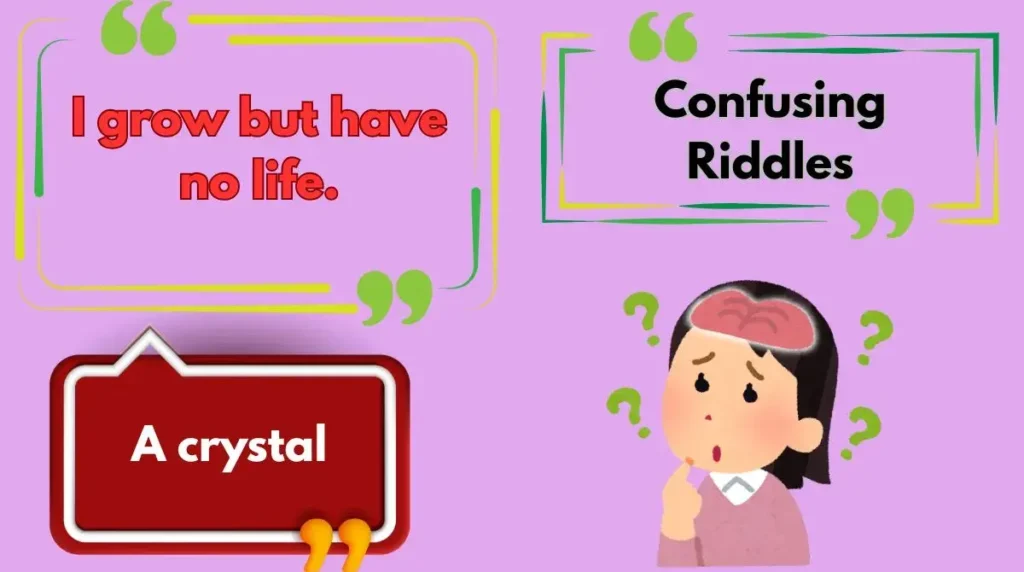
Confusing riddles captivate people by exploiting how the brain naturally processes language, assumptions, and patterns. This introduction sets the stage by showing how even simple-sounding puzzles can mislead us through clever misdirection and cognitive shortcuts, leading to surprisingly wrong answers. It highlights that the appeal of viral riddles lies not in testing intelligence, but in challenging perception and interpretation. By exploring some of the most widely shared brain teasers and the psychology behind them, the guide promises to reveal why these puzzles are so effective—and why they continue to fascinate and frustrate people across the internet.
Here’s a riddle: “The more you take, the more you leave behind. What am I?”
Most people stare at it, second-guess themselves, and still get it wrong. If you’re struggling, you’re not alone — confusing riddles like this one trip up the majority of people who try them. The answer, by the way, is footsteps.
But why do riddles like this confuse us so badly? And what makes certain hard brain teasers go viral while others are forgotten instantly? In this post, we’ll break down some of the most tricky puzzles that stumped the internet — and explain exactly why your brain falls for them every time.
Why Confusing Riddles Trick Smart People
It’s not about intelligence. Seriously.
Confusing riddles are specifically designed to exploit the way your brain processes language and assumptions. Your mind takes shortcuts — called cognitive biases — and riddles are engineered to trigger those shortcuts in the wrong direction.
The “Misdirection” Trick
Riddle writers use misdirection by pushing your brain toward an obvious interpretation. By the time you realize you’ve been led down the wrong path, you’ve already committed to a wrong answer.
For example: “What has hands but can’t clap?”
Your brain immediately pictures human hands. The actual answer? A clock. The word “hands” was used in its secondary meaning — and your brain never considered that possibility until it was too late.
5 Confusing Riddles That Broke the Internet
These aren’t just any riddles. These are the ones that went fully viral riddles — shared millions of times because they genuinely stumped people across all age groups.
Riddle #1 — The Classic Logic Trap
“A man walks into a restaurant and orders albatross soup. After one sip, he goes home and kills himself. Why?”
This is one of the most famous hard brain teasers of all time. It’s a “situation puzzle” — meaning there’s a backstory you have to piece together with yes/no questions.
The answer: The man was a sailor who was once stranded on a desert island. A fellow survivor told him he was eating “albatross soup” — but it wasn’t albatross. When he tasted real albatross soup at the restaurant, he realized what he had actually eaten during the ordeal, and couldn’t live with the truth.
Why it confuses people: It looks like a logic puzzle. It’s actually a narrative mystery. Your brain tries to solve it with logic when it requires imagination.
Riddle #2 — The Number Riddle Everyone Gets Wrong
“I speak without a mouth and hear without ears. I have no body, but I come alive with the wind. What am I?”
This one has been shared millions of times. Based on available data, it’s one of the most Googled riddles in the last three years.
The answer: An echo.
Why it confuses people: Every clue seems to describe a living creature. “Speak,” “hear,” and “come alive” are all action words your brain associates with biological life. The abstract answer — an echo — never feels like it fits until you hear it.
Riddle #3 — The One That Makes You Feel Dumb
“The more you have of it, the less you see. What is it?”
People have answered everything from “money” to “sleep” to “hair.” Most are wrong.
The answer: Darkness.
Why it confuses people: It’s phrased as a paradox. Our brain wants the answer to be something tangible — something you can physically have “more” of. Darkness feels like an absence, not a quantity, which is exactly the misdirection.
Riddle #4 — The Viral Math Riddle
“If you have me, you want to share me. If you share me, you no longer have me. What am I?”
This one went viral on social media with thousands of wrong answers flooding comment sections.
The answer: A secret.
Why it confuses people: The phrasing “have me” and “share me” sounds like it’s describing a physical object. The moment you realize it’s describing an abstract concept — a secret — the whole riddle clicks instantly. But your brain resists abstract answers when concrete ones feel more natural.
Riddle #5 — The Tricky Puzzle for Overconfident People
“What can you catch but never throw?”
Almost everyone overthinks this one. They go straight for tricky puzzle mode — baseball? a fish? a signal?
The answer: A cold.
Why it confuses people: The verb “catch” has multiple meanings, and your brain defaults to its physical meaning. The riddle is designed for confident people who assume they’ve already figured it out — and then feel genuinely silly when they hear the answer.
What Makes a Riddle Go Viral?
Not every riddle spreads across the internet. Viral riddles share a very specific set of characteristics. Based on patterns observed across social media platforms, the most shared riddles tend to:
- Have one clean, satisfying answer — ambiguous riddles frustrate people and don’t get shared
- Exploit a common cognitive bias — the misdirection has to feel universal, not niche
- Be short enough to screenshot — riddles under 20 words spread the fastest
- Create social currency — people share them to challenge friends and look smart
- Have a “slap your forehead” moment — the answer has to feel obvious in hindsight
The best hard brain teasers are simple on the surface and deceptive underneath. That’s the formula.
How to Get Better at Solving Confusing Riddles
Here’s the good news — your brain can be trained to solve confusing riddles faster and more accurately. It’s not about being smarter. It’s about knowing the tricks riddle writers use.
Tips to Solve Tricky Puzzles Faster
1. Question every word Riddles hide the answer in plain sight. Ask yourself: does this word have another meaning? “Bank” could mean a river bank or a financial institution. “Light” could mean weight or illumination.
2. Think in abstracts, not objects Many riddle answers are emotions, concepts, or natural phenomena — not physical things. If your answer is a concrete object and it doesn’t fit, try an abstract concept instead.
3. Don’t commit too early Your first instinct is usually wrong. That’s by design. Pause, breathe, and deliberately consider at least three different interpretations before settling on an answer.
4. Read the riddle literally Riddle writers are precise. Every word is chosen carefully. Re-read it word by word — don’t skim. The answer is always hiding in the exact phrasing.
5. Practice regularly Based on available research in cognitive psychology, regular exposure to tricky puzzles and lateral thinking problems genuinely improves pattern recognition and problem-solving speed over time.
The Psychology Behind Why We Love Riddles
There’s a reason viral riddles dominate social feeds. Humans are wired for curiosity and closure.
When you encounter an unanswered question, your brain enters a state of mild discomfort — it wants the loop closed. This is sometimes called the “curiosity gap.” Riddles create that gap on purpose, making you want to solve them compulsively.
And when you do solve one? The dopamine hit is real. That sense of satisfaction — of your brain clicking into place — is why riddles have existed in every human culture for thousands of years, from ancient Egypt to modern TikTok.
Quick Reference: The 5 Viral Riddles + Answers
| # | Riddle (Short) | Answer |
|---|---|---|
| 1 | Albatross soup | Survivor ate human flesh |
| 2 | Speaks without a mouth | Echo |
| 3 | More you have, less you see | Darkness |
| 4 | Have me, share me | A secret |
| 5 | Catch but never throw | A cold |
Conclusion
Confusing riddles aren’t a test of how smart you are — they’re a test of how your brain handles misdirection, assumption, and language. The five riddles in this post all went viral for the same reason: they make you feel clever for trying and humbled for failing, which is the perfect combination for a shareable moment.
Whether you’re here for hard brain teasers, tricky puzzles, or just something fun to share with friends, the best riddles always teach you something about the way your mind works.
Want more mind-bending riddles, brain teasers, and puzzle challenges? Visit riddlepuzzle.com — your go-to destination for the best riddles on the internet, updated regularly with new challenges for all skill levels.
Frequently Asked Questions (FAQs)
Q1: What are confusing riddles?
Confusing riddles are puzzles specifically designed to mislead your brain through misdirection, double meanings, and cognitive bias. They appear simple but hide their answers in plain sight.
Q2: Why do hard brain teasers confuse smart people?
Because they exploit cognitive shortcuts rather than testing raw intelligence. Smart people are often more likely to commit confidently to a wrong answer, which is exactly what riddles are designed to trigger.
Q3: What makes a riddle go viral?
Viral riddles are short, have one clean answer, create a “slap your forehead” moment, and give people a reason to share — usually to challenge or impress others.
Q4: How can I get better at solving tricky puzzles?
Practice questioning every word in the riddle, think abstractly, resist committing to your first answer, and read the riddle literally word by word. Regular practice genuinely improves lateral thinking ability.
Q5: What is the most famous confusing riddle of all time?
Based on available data, “The more you take, the more you leave behind” (answer: footsteps) is among the most widely recognized confusing riddles globally, followed closely by the “echo” riddle.