
Best puzzle games for 267 players turn a huge crowd into one shared challenge, and that is exactly why they work so well for school halls, community festivals, company gatherings, and family reunions. When 267 people sit down to solve something together, nobody has to wait on the sidelines for a turn, and nobody needs to be an expert to contribute something useful. A good puzzle gives every table a piece of the answer, every team a reason to talk, and every player a small win along the way to the finish.
The best puzzle games for 267 players are the ones that scale without losing their spark, and scaling well means thinking about teams, timing, and clear rules before the first clue is read out. Instead of one giant free-for-all, the strongest formats split the crowd into teams of six to ten, give each team the same puzzle or a linked part of a larger puzzle, and use a simple scoring system that everyone can follow. That structure keeps the room lively, keeps the noise at a friendly level, and makes sure that a single loud voice cannot carry a whole team.
This guide brings together ten puzzle games that genuinely work at this size, from classic jigsaws and crosswords to escape-room challenges, logic grids, and digital puzzle races. Each game includes practical advice on group size, setup, timing, and materials, so you can choose the right mix for your venue, your audience, and your budget. Whether you are planning a relaxed afternoon or a competitive evening, these ideas will help 267 players feel like one big team rather than a crowded room.
Key takeaways
- Split 267 players into teams of six to ten so every person has a real job and nobody is left watching.
- Choose puzzles with clear rules, visible progress, and a finish line that every team can reach.
- Mix puzzle types, such as jigsaws, word puzzles, logic grids, and escape-room clues, to suit different strengths.
- Use a simple scoring system, a visible timer, and a central scoreboard to keep the whole room involved.
- Test every puzzle in advance, prepare spare copies, and keep instructions short enough to explain in two minutes.
Why Puzzle Games Work So Well for 267 Players
Puzzle games suit very large groups because they reward thinking together rather than speed alone, and that makes them fair for mixed ages and mixed abilities. A teenager who is quick with word puzzles, a grandparent who is patient with jigsaws, and a colleague who loves logic can all help the same team in different ways. The best sessions feel collaborative from the start, because progress is visible, clues build on each other, and every solved step gives the team fresh energy for the next one.
Large puzzle events also work because they are easy to run in parallel, which matters when you have 267 people in one building. While one team finishes a crossword, another team can be sorting jigsaw edges, and a third team can be decoding a cipher, and nobody is stuck waiting for a single board or a single host. A central host can call out time checks, reveal hints at set intervals, and announce scores, while team captains handle the small decisions at each table. That balance keeps the event moving without turning it into chaos.
The other advantage is cost and simplicity, since most puzzle games need little more than printed sheets, pens, tables, and a timer. You do not need expensive equipment, special clothing, or a large outdoor space, and you can run a strong event in a school hall, a community centre, or a large office floor. If you want a digital element, a single shared screen or a simple quiz app can add excitement, but the heart of the evening is still people talking, sorting, guessing, and solving together.
The 10 Best Puzzle Games for 267 Players
The ten games below were chosen because they scale cleanly, suit a wide range of ages, and can be prepared in advance without specialist skills. Each one works as a standalone activity, and several of them combine well into a longer puzzle tournament. Read through the list, pick three or four that fit your group, and build the rest of your evening around them.
1. Giant Team Jigsaw Race
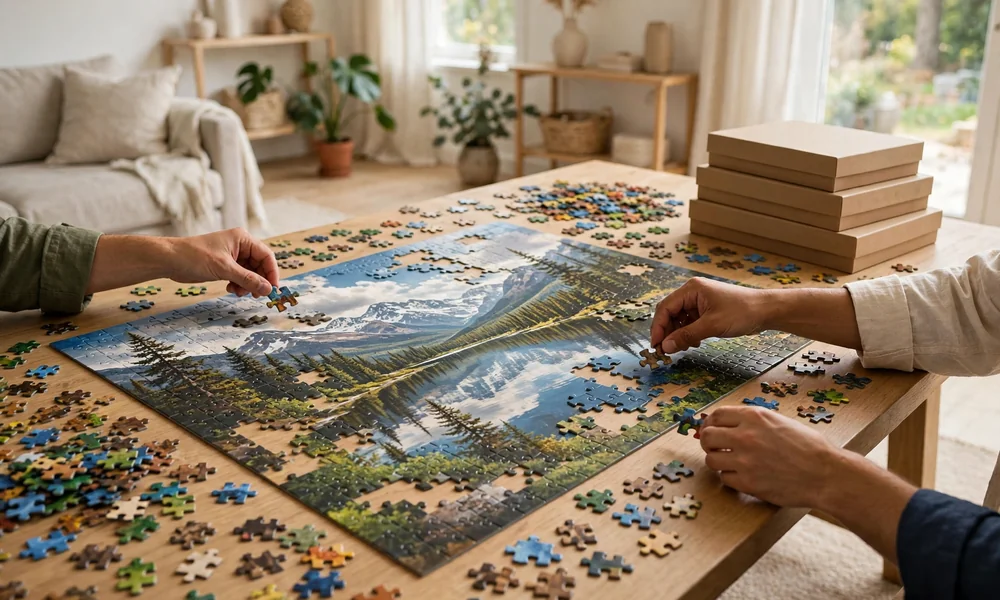
A giant team jigsaw race is the simplest large-group puzzle to run, and it is also one of the most satisfying, because everyone can see the picture coming together. Give each team the same 500-piece or 1,000-piece jigsaw, depending on the time you have, and set a clear finish time of 45 to 60 minutes. Teams usually start by sorting edges and colours, then divide the picture into sections, which gives quieter players a natural way to join in without having to shout over the group.
2. Escape Room Relay
An escape room relay turns a classic escape game into a team challenge that works for dozens of tables at once, and it is ideal when you want drama and a clear winner. Each team receives a locked box, a set of clue envelopes, and a story, such as a missing key, a lost treasure, or a mystery message. Teams solve one puzzle to open the next clue, and the chain continues until the final code opens the box or reveals the answer.
The relay format works well for 267 players because every team follows the same clue chain at its own pace, and the host can release a group hint every ten minutes if teams get stuck. Keep the puzzles varied, with a mix of word clues, number codes, picture puzzles, and simple riddles, so different team members can lead different stages. You can find a similar large-group format in our guide to the best puzzle games for 265 players, which uses the same relay structure with different clue themes.
3. Crossword Tournament
A crossword tournament is a calm, clever choice for a large crowd, and it suits players who enjoy words, general knowledge, and quiet teamwork. Give each team the same large-print crossword, with a mix of easy, medium, and tricky clues, and allow 30 minutes for solving. Teams can split the grid by sections, with one person reading clues aloud, another writing answers, and others checking spellings and cross-references as the grid fills in.
Scoring is simple and fair, with one point for each correct answer and a bonus for a fully completed grid, and you can add a tie-breaker question if two teams finish level. To keep the tournament lively, reveal the answers on a big screen at the end and let teams mark their own sheets before the host announces the winners. Crosswords also pair well with a word game round, and players who enjoy this format often like the variety in our roundup of the best word games for 263 players, which covers word searches, anagrams, and team word races.
4. Logic Grid Challenge
A logic grid challenge asks teams to solve a puzzle by working through a set of clues, such as matching five people to five hobbies, five towns, and five favourite foods. Each clue rules out some options and confirms others, and the team that fills the grid correctly wins the round. The format rewards careful reading and patient discussion, which makes it a good contrast to faster, noisier games in the same evening.
5. Picture Puzzle Hunt
A picture puzzle hunt sends teams around the room, or around a building, to find and solve picture clues, and it is perfect when you want people moving and talking. Place numbered picture cards, close-up photos, or cropped images around the venue, and give each team a sheet with questions about what each picture shows. Teams must visit the pictures in order, or in any order, and write down their answers before returning to their table.
6. Sudoku Team Sprint
A sudoku team sprint is a fast, focused puzzle that suits players who like numbers and patterns, and it needs almost no equipment beyond printed grids and pens. Give each team the same sudoku at a medium difficulty, and set a 20-minute timer for the sprint. Teams can divide the grid into blocks, with each person taking a section, or work through the grid together, calling out numbers and checking each row, column, and box as they go.
7. Riddle Relay Race
A riddle relay race combines quick thinking with team spirit, and it is one of the easiest games to prepare for 267 players. The host reads out a riddle, or shows it on a screen, and each team writes down its answer and holds it up. Teams score a point for each correct answer, and the host moves on to the next riddle after 30 seconds, which keeps the pace brisk and the room engaged.
Choose riddles with a mix of easy, medium, and hard questions, and include some funny riddles alongside clever ones, so the round feels light as well as competitive. A relay of 20 riddles takes about 20 minutes, including scoring, and it works as a strong opener or a closing round. You can also let each team submit one riddle of its own, with the best team riddle earning a bonus point, which adds a creative twist to the competition.
8. Word Search Marathon
A word search marathon is a relaxed, inclusive puzzle that suits all ages, and it is ideal for a large group because everyone can play at the same time. Give each team a large-print word search with 20 to 30 hidden words, and allow 25 minutes for the marathon. Teams can split the list, with each person hunting for different words, or work through the grid together, circling words as they find them.
9. Tangram and Shape Puzzle Battle
A tangram and shape puzzle battle uses simple geometric pieces to create animals, houses, boats, and other pictures, and it is a refreshing change from word and number puzzles. Give each team a set of tangram pieces, or printed shape cards, and show a silhouette on a screen that teams must recreate. The first team to match the shape correctly wins the round, and you can play five or six rounds in 30 minutes.
10. Digital Puzzle Race
A digital puzzle race uses tablets, phones, or laptops to run a timed puzzle competition, and it adds a modern twist to a traditional puzzle night. Teams log into the same puzzle app or website, or scan a code to open the same puzzle, and race to finish a jigsaw, a sliding puzzle, a memory match, or a word puzzle. A shared screen shows the leaderboard, which builds excitement as teams climb the ranks.
How to Run a Puzzle Night for 267 Players
Running a smooth puzzle night for 267 players starts with simple planning, and the most important decision is how to divide the crowd. Teams of six to ten work best, which means about 27 to 44 teams, and each team needs a table, chairs, pens, and enough space to spread out its materials. Give each team a number, a captain, and a score sheet, and place a clear sign on each table so players can find their team quickly when they arrive.
Puzzle Games at a Glance
The table below gives a quick comparison of the ten games in this guide, so you can choose the right mix for your group at a glance. Look at the time, the team size, and the materials needed, and pick a balance of quiet and active games. A good evening usually includes one jigsaw or hands-on game, one word game, one logic game, and one fast relay, which gives every player a format they enjoy.
| Game | Time | Best for | Materials |
|---|---|---|---|
| Giant Team Jigsaw Race | 45 to 60 minutes | All ages, hands-on players | Jigsaws, tables |
| Escape Room Relay | 45 minutes | Drama and teamwork | Boxes, clue envelopes |
| Crossword Tournament | 30 minutes | Word lovers | Printed crosswords, pens |
| Logic Grid Challenge | 20 minutes | Careful thinkers | Printed grids, pencils |
| Picture Puzzle Hunt | 30 minutes | Active players | Picture cards, answer sheets |
| Sudoku Team Sprint | 20 minutes | Number lovers | Printed sudoku grids |
| Riddle Relay Race | 20 minutes | Quick thinking | Riddles, score sheets |
| Word Search Marathon | 25 minutes | Relaxed play, all ages | Printed word searches |
| Tangram Shape Battle | 30 minutes | Spatial thinking | Tangram sets, screen |
| Digital Puzzle Race | 15 to 20 minutes | Tech-friendly groups | Devices, Wi-Fi |
Checklist for a Great Puzzle Night
- Divide 267 players into teams of six to ten, and give each team a number, a captain, and a table.
- Choose three to five puzzle games that mix words, numbers, pictures, and hands-on solving.
- Print spare copies of every puzzle, and pack extra pens, pencils, and answer sheets.
- Test the timer, the screen, the speaker, and the Wi-Fi before the first guest arrives.
- Explain each round in under two minutes, and show the rules on a screen as well as saying them aloud.
- Update the scoreboard after every round, and finish with a short prize ceremony for the winners.
Frequently Asked Questions
How many teams should 267 players form?
Aim for teams of six to ten players, which gives you about 27 to 44 teams, and choose the exact size based on your tables and your venue. Teams of eight work well for most puzzle games, because they are large enough to split tasks, but small enough for everyone to hear each other. If your tables seat six, use teams of six, and if you have large tables, teams of ten can work well, as long as every player has a clear role.
What is the best puzzle game for a mixed-age group?
A giant team jigsaw race is usually the safest choice for a mixed-age group, because it needs no special knowledge and everyone can help. Younger players can sort pieces by colour, older players can work on the edges, and the whole team can see the picture grow. If you want a second game for mixed ages, a word search marathon or a picture puzzle hunt also works well, because both reward observation rather than speed or specialist knowledge.
How long should a puzzle night for 267 players last?
Plan for two to three hours in total, including breaks, which allows time for four to six rounds without tiring the room. Each round should last 20 to 45 minutes, with five-minute breaks between rounds for scoring and refreshments. A shorter evening of 90 minutes can work if you choose three rounds, but a longer evening gives teams time to settle in, try different puzzle types, and enjoy the social side of the event.
Do puzzle games for 267 players need a lot of equipment?
No, most puzzle games need only printed sheets, pens, tables, and a timer, and you can run a strong evening with very little equipment. Jigsaws, tangram sets, and locked boxes cost more, but they are reusable, and you can borrow them from a school, a library, or a community group. A screen and a speaker help the host, but they are not essential, and a printed backup for every digital puzzle keeps the evening running if the technology fails.
How do you keep 267 players engaged for the whole evening?
Keep the pace varied, with a mix of quiet and active rounds, and update the scoreboard after every round so teams can see their progress. A good host makes a real difference, by explaining rules clearly, calling out time checks, and celebrating small wins as well as overall winners. Short breaks, simple prizes, and a friendly tone also help, because players stay engaged when they feel included, even if their team is not in first place.
Can puzzle games for 267 players work outdoors?
Yes, several puzzle games work well outdoors, especially a picture puzzle hunt, a riddle relay, and a large team jigsaw on picnic tables. Outdoor events need shade, seating, and a backup plan for rain, and printed puzzles should be kept in folders or clipboards so they do not blow away. For a large outdoor group, choose games that need little equipment, keep the rules simple, and use a loudspeaker or a whistle so the host can be heard across the whole area.
The Bottom Line
The best puzzle games for 267 players are the ones that turn a very large crowd into a room full of small, focused teams, each working on a puzzle they can actually solve together. A giant jigsaw race, an escape room relay, a crossword tournament, and a riddle relay give you a strong mix of hands-on, word, logic, and fast-thinking play, and a simple scoreboard keeps every team involved from the first round to the last. If you plan your teams, test your puzzles, and keep the rules short and clear, 267 players will not feel like a crowd at all, and the evening will feel like one big shared puzzle that everyone helped to finish. For more ideas in the same series, see our guide to the best puzzle games for 263 players, which offers another set of team formats that pair well with the games above.


