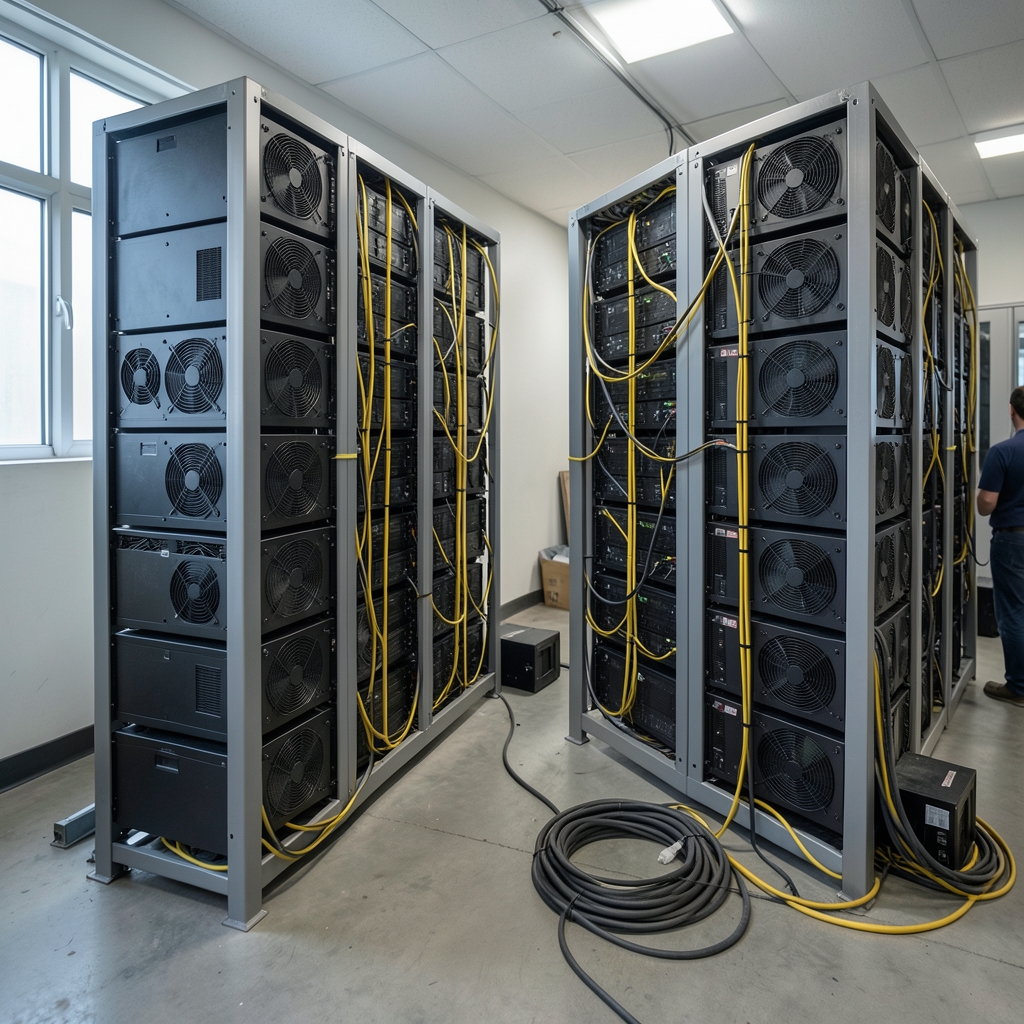
What happens when the dashboard that tells you your mining rigs are healthy becomes the thing that quietly drains your budget or exposes your operation? That question applies directly to the ASIC monitoring tool market, and most buyers do not ask it until after they have signed a contract or flashed unofficial firmware onto a six-figure fleet. The fees look small on a per-device basis. The risks do not.
This article breaks down how ASIC monitoring tools are priced, what those fees actually buy, and the operational and security risks that rarely appear on a vendor’s pricing page. It focuses on monitoring hardware, meaning the application-specific integrated circuits built to compute proof-of-work hashes, rather than the Australian Securities and Investments Commission, though that naming collision is worth flagging early because it confuses plenty of buyers searching for the wrong product entirely.
What ASIC Monitoring Tools Actually Do
An ASIC is an application-specific integrated circuit, a chip designed for exactly one job. In mining, that job is computing hashes for Bitcoin’s SHA-256 algorithm or another proof-of-work network. The chip cannot be repurposed for anything else, which makes the hardware expensive and the monitoring of it unusually important.
Monitoring tools sit on top of that hardware. At the most basic level, the manufacturer’s own firmware exposes a local web dashboard and an HTTP API reporting hashrate, temperature, fan speed, and pool status at no charge. That free layer is genuinely useful and many small operators never need anything else.
Third-party platforms add fleet-level management: aggregated dashboards across hundreds or thousands of machines, automated alerts, overclocking and undervolting profiles, power draw tracking, and remote configuration pushes. That is where the fees start. The jump from “free firmware dashboard” to “paid fleet platform” is the single biggest decision in this category, and it should be driven by machine count and how much of your time the free tools actually waste.
How the Fee Structures Actually Work

Pricing in this market is not standardized, and vendors structure charges in ways that make direct comparison difficult. Most fall into a handful of patterns.
| Fee model | How it works | Best fit | Main catch |
|---|---|---|---|
| Free firmware dashboard | Manufacturer-provided web UI and API | Under 20 rigs, single site | No fleet aggregation, limited alerting |
| Per-device monthly | Fixed charge for each ASIC monitored | Growing fleets with mixed hardware | Costs scale linearly and punish expansion |
| Per-rig subscription | Flat monthly fee per rig or control unit | Hobbyists and small farms | Rig definitions vary between vendors |
| Revenue share | Percentage of mining output | Operators with no upfront capital | You pay more as you earn more |
| Free tier with caps | Limited device count or retention window | Testing before commitment | Feature walls appear exactly when you scale |
The per-device model deserves particular scrutiny. A fee that looks trivial at 50 machines becomes a serious line item at 2,000, and it scales in lockstep with your growth rather than your profitability. Revenue-share arrangements flip that problem: they cost nothing when margins are thin but become expensive precisely when the operation succeeds. Neither model is inherently better, but operators should model both against their expected fleet size over two to three years rather than judging on the first invoice.
The same structural confusion shows up across adjacent software categories. Buyers comparing subscription models in other tool markets run into identical problems, which is why breakdowns like this affiliate marketing tools pricing comparison of flat fees versus usage-based charges are worth reading even outside mining, since the underlying math is the same. The lesson transfers directly: identify whether a vendor charges for access, for volume, or for outcomes, because those three models behave very differently as you scale.
What the Subscription Typically Includes
Paid platforms generally bundle a few core capabilities: multi-site dashboards, alert routing to email or messaging apps, historical performance data, and firmware or configuration management. The value is real for anyone running more than a few dozen machines, mostly because manual checks do not scale. A single overheated unit can degrade quietly for days before it fails, and the labor cost of catching that by hand usually exceeds the subscription.
What the subscription often does not include is meaningful support during an incident, exportable raw data without an upsell, or any guarantee about uptime. Read the terms on data ownership before committing. Some platforms treat your hashrate history as their asset.
The Risks Nobody Puts on the Pricing Page
Credential Exposure
This is the big one. Monitoring tools need credentials to work: pool API keys, miner admin logins, sometimes full remote access to the devices. Every one of those can become an entry point. A misconfigured tool or a compromised vendor account can expose your hashrate data or, worse, redirect payouts to an address you do not control.
The practical defense is unglamorous but effective. Use dedicated credentials for monitoring rather than admin accounts, restrict tool access to specific IP ranges, and audit which integrations still have live keys every quarter. General cybersecurity guidance on remote-access risk applies here exactly as it does to any other networked system, and mining operators often skip it because the hardware feels like an appliance rather than a server.
Firmware Tampering
Unofficial firmware and third-party “monitoring” utilities that flash devices are a recurring problem. Flashing can void warranties, and there are documented patterns of malicious mining software being bundled with tools that promise better performance or deeper telemetry. The background on cryptojacking is instructive: the techniques used to hijack mining capacity are well established, and a fleet of ASICs is an unusually attractive target because the payoff is immediate and measurable.
The rule that works in practice is simple. If a tool requires flashing firmware to monitor a device, treat it as a modification, not a monitoring tool, and require a clear answer about what the firmware changes and how to revert it.
Data Reliability Gaps
Pool-reported hashrate and device-reported hashrate can diverge, sometimes substantially. A monitoring platform that trusts only one source may misstate performance, and if your fee is tied to measured output, that misstatement has a price. Ask any vendor which source their numbers come from and whether you can see both side by side. If the answer is vague, that is your answer.
Vendor Lock-In and Discontinuation
Proprietary dashboards tied to a single manufacturer can become unusable when firmware support ends. Fleets outlive software more often than vendors admit. Export your historical data regularly in a plain format, and prefer tools that can read from multiple hardware brands so a single vendor’s decision does not strand your entire operation.
Energy Blind Spots
ASIC efficiency is measured in joules per terahash, and power draw is the dominant operating cost in mining. A monitoring tool that tracks hashrate but not power consumption is telling you half the story. Two machines with identical hashrate can have very different profitability, and monitoring that ignores the energy side cannot justify its own fee. Any serious platform should surface power data at the device level as well as the facility level.
Practical Tips That Save Money and Headaches
Start with the free firmware layer and measure how much time it actually costs you. Many operators upgrade to paid platforms before they need to, paying for fleet features while running thirty machines.
When you do evaluate paid tools, run a structured comparison rather than a feature-list scan. The approach in this guide to brand monitoring tools and which features actually matter when budgets are tight applies almost word for word: separate features you will use weekly from features that exist to fill a comparison table.
Test on a small subset first. Import ten machines, run the tool for a month, and check whether the alerts are accurate and actionable. False positives are the most common reason operators abandon a platform they have already paid for.
Negotiate on device count, not on list price. Vendors in this space routinely adjust per-device rates for larger fleets, and the published tier is rarely the final number.
Finally, keep a manual fallback. If the dashboard goes down, someone on the team should know how to check a miner directly through its local interface. Tools fail. The hardware does not care.
How Fees Compare Across Adjacent Tool Categories
Operators often run mining alongside other software stacks, and the pricing patterns rhyme. Teams comparing low-cost options across multiple categories frequently find the same trade-off between seat-based and bundled pricing, which is why resources like this breakdown of best low cost brand monitoring tools for small teams on tight budgets read as familiar to anyone who has negotiated an ASIC platform contract. The mechanics of free tiers, per-unit charges, and feature walls are close to universal.
The comparison is not academic. An operator deciding whether to pay per device for mining telemetry is making the same calculation as a marketing team deciding whether to pay per seat for monitoring: what does growth cost, and who bears the risk if usage spikes unexpectedly? For a broader view of how vendors structure these charges and where the hidden costs sit, this analysis of brand monitoring tools pricing and what you actually pay is a useful parallel read, and the alternatives-focused piece on brand monitoring tools alternatives that fit tight budgets covers the switching calculus in similar terms.
The pattern across all of these categories is consistent. Vendors price access, volume, or outcomes. Buyers who know which lever they are pulling negotiate better and get surprised less.
Conclusion
ASIC monitoring tools are not expensive in absolute terms, but the fee structure you choose shapes your costs as you grow, and the risks you ignore shape everything else. The free firmware dashboard is a legitimate starting point, not a compromise. Paid platforms earn their fees through fleet visibility and alerting, and they should be judged on whether those features prevent losses larger than the subscription.
The risks deserve equal weight. Credential exposure, firmware tampering, unreliable data, vendor lock-in, and energy blind spots are all manageable, but only if they are on your checklist before you sign. Ask vendors hard questions about data sources, export formats, and what happens to your fleet if they disappear. The operators who come out ahead are rarely the ones who found the cheapest per-device rate. They are the ones who knew what they were buying and what they were exposing.
Frequently Asked Questions
Are ASIC monitoring tools free?
The basic layer usually is. Manufacturer firmware typically includes a local web dashboard and an HTTP API reporting hashrate, temperature, fan speed, and pool status at no charge. Third-party platforms that aggregate multiple machines, route alerts, and manage configuration remotely generally charge subscription or per-device fees. Most operators can run a small fleet on free tools indefinitely.
How much should a small mining operation expect to pay?
There is no standard rate, and pricing changes often enough that any specific figure should be verified directly with vendors. What matters more is the model: per-device charges scale with fleet size, revenue-share arrangements scale with output, and free tiers usually cap device counts or data retention. Model all three against your expected growth before choosing.
What is the biggest security risk with these tools?
Credential exposure. Monitoring platforms need pool API keys and miner admin logins to function, and each one can become an entry point. A compromised or misconfigured tool can expose hashrate data or redirect payouts. Use dedicated monitoring credentials rather than admin accounts, restrict access by IP, and audit live keys regularly.
Can monitoring tools damage my ASIC hardware?
Monitoring alone generally cannot. The risk comes from tools that flash unofficial firmware, which can void warranties and has been associated with malicious mining software. If a tool requires flashing to monitor a device, treat it as a hardware modification and demand clear documentation of what changes and how to revert it.
Why do pool hashrate and device hashrate disagree?
They are measured at different points. The device reports what it computes locally, while the pool reports what it actually receives and credits. Network latency, rejected shares, and pool-side accounting all create gaps. A good monitoring platform shows both figures so you can spot divergence rather than trusting a single number.
How do I avoid vendor lock-in?
Export your historical data regularly in a plain, portable format, and prefer platforms that support multiple hardware brands. Proprietary dashboards tied to one manufacturer can become unusable if firmware support ends, and fleets typically outlive the software that monitors them. Multi-brand support is the single best hedge against a vendor decision you cannot control.




